
Category: Uncategorized

The Rise of the Personal Curriculum: Reclaiming Learning in the Digital Age

Ready to Learn

In an era defined by endless scrolling, algorithm-driven content, and fragmented attention, a surprising countertrend has emerged: the “personal curriculum.” What began as a niche social media idea has quickly evolved into a broader cultural movement centered on intentional learning, curiosity, and self-directed growth. Rather than passively consuming information, individuals are now designing their own “syllabi for life,” choosing what, how, and why they learn.

This blog post explores the origins of the personal curriculum trend, how to create one, its benefits, and key resources to help you begin.


So Much to Study!

What Is a Personal Curriculum?

A personal curriculum is a self-designed learning plan built around your interests, goals, and curiosities. Unlike traditional education systems, it is not tied to grades, credentials, or institutional requirements. Instead, it emphasizes intrinsic motivation—learning for the sake of growth, enjoyment, and personal enrichment.

At its simplest, a personal curriculum might include:

  • A reading list
  • A schedule of podcasts or lectures
  • Creative projects or skill-building exercises
  • Reflection practices like journaling

The defining feature is intentionality. Rather than consuming content randomly, participants choose subjects and engage with them deliberately. As one explanation notes, it is “a self-directed ‘course’ in the subjects and ideas that spark something inside you.” 


How the Personal Curriculum Trend Started

The personal curriculum trend emerged in the mid-2020s, largely through social media platforms like TikTok and Instagram. It is widely credited to creator Elizabeth Jean (@xparmesanprincessx), who began sharing videos outlining monthly learning plans and personal “semesters.” 

Social Media and the “Back-to-School” Aesthetic

The trend gained traction during seasonal transitions—particularly autumn—when “back-to-school” nostalgia is culturally prominent. Users began recreating that feeling by designing their own curricula, complete with subjects, schedules, and goals. 

A Response to Digital Burnout

Equally important, the movement arose as a response to digital fatigue. Many participants explicitly frame their personal curriculum as an antidote to “doomscrolling”—the passive consumption of social media content. 

Instead of spending hours scrolling, individuals redirect that time toward structured, meaningful learning. This shift reflects a broader desire to reclaim attention and engage more deeply with knowledge.

A Push Against Anti-Intellectualism

Some commentators also interpret the trend as a cultural response to anti-intellectualism. By making learning aesthetic, accessible, and self-directed, the personal curriculum reframes education as enjoyable rather than obligatory. 


Choose Your Own Path

How to Create a Personal Curriculum

Designing a personal curriculum is flexible and highly individualized. However, several common steps can help structure the process.

1. Choose Your Themes

Start by identifying one or two areas of focus. These could include:

  • Creative subjects (writing, art, music)
  • Academic topics (history, philosophy, science)
  • Practical skills (cooking, coding, languages)

Focusing on a small number of themes encourages depth rather than superficial engagement. 

2. Define Your Learning Formats

A strong personal curriculum balances different modes of learning:

  • Input: books, podcasts, lectures
  • Action: projects, practice, experimentation
  • Reflection: journaling, note-taking, discussion

This combination helps reinforce understanding and retention. 

3. Build a Flexible Schedule

Unlike formal education, a personal curriculum should be adaptable. Many people structure their learning around:

  • Weekly reading sessions
  • Monthly themes
  • Daily or hourly learning blocks

The key is consistency without rigidity. Even one hour per week can be effective if done intentionally. 

4. Set Gentle Goals

Goals should be realistic and motivating rather than overwhelming. For example:

  • Read one book per month
  • Complete a short online course
  • Practice a skill twice per week

Importantly, the emphasis is on progress, not perfection. 

5. Track and Reflect

Reflection transforms activity into learning. Consider:

  • Keeping a learning journal
  • Writing weekly summaries
  • Recording insights or questions

This step helps consolidate knowledge and maintain motivation.

6. Stay Flexible

Interests evolve, and your curriculum should too. Adjust topics, pacing, and goals as needed. The process is meant to be dynamic, not fixed.


Chart Your Own Path

Benefits of a Personal Curriculum

The popularity of the personal curriculum trend is not accidental. It offers a wide range of psychological, intellectual, and emotional benefits.

1. Rekindling Curiosity

Many adults lose their sense of curiosity after formal schooling. A personal curriculum reintroduces learning as a joyful, self-directed activity rather than an obligation.

2. Improved Mental Health

Engaging in meaningful activities can improve mood and reduce stress. Completing small learning tasks can trigger dopamine release, enhancing motivation and well-being. 

Additionally, structured learning can help counter seasonal or motivational slumps by providing purpose and routine. 

3. Reduced Screen Fatigue

By replacing passive scrolling with active learning, individuals can develop a healthier relationship with technology. This shift promotes deeper engagement and reduces feelings of time wasted.

4. Habit Building

A personal curriculum introduces gentle structure into daily life. This can help build consistent habits without the pressure of external evaluation. 

5. Lifelong Learning

The trend reinforces the idea that education does not end with formal schooling. It encourages continuous intellectual growth and adaptability in a rapidly changing world.

6. Personal Empowerment

Designing your own curriculum fosters a sense of agency. You are no longer limited by institutional frameworks—you decide what knowledge matters to you.


Challenges and Criticisms

Despite its benefits, the personal curriculum trend is not without drawbacks.

1. Risk of Over-Optimization

Some critics argue that the trend can become another form of productivity pressure. When overly structured, it may replicate the stress of formal education.

2. Social Media Distortion

As the trend spreads online, some versions emphasize aesthetics or unrealistic goals (e.g., mastering multiple skills in a month). This can lead to burnout or feelings of inadequacy. 

3. Lack of Accountability

Without external deadlines or evaluation, it can be difficult to maintain consistency. Success depends heavily on self-discipline and intrinsic motivation.


Resources for Building Your Personal Curriculum

Creating a personal curriculum is easier than ever thanks to the abundance of online resources. Below are some of the most useful tools and platforms.

Online Learning Platforms

  • Coursera
  • edX
  • Udemy
  • MIT OpenCourseWare
  • Khan Academy

These platforms offer structured courses across a wide range of subjects, often for free or at low cost.

Educational YouTube Channels

  • CrashCourse
  • TED-Ed
  • freeCodeCamp
  • Kurzgesagt

Video-based learning can make complex topics more accessible and engaging.

Books and Libraries

  • Project Gutenberg
  • Open Library
  • Libby

These services provide access to free or low-cost reading materials.

Note-Taking and Organization Tools

  • Notion
  • Obsidian
  • Google Docs

These tools help track progress, organize materials, and reflect on learning.

Community Platforms

  • Reddit
  • Discord groups
  • Book clubs

Learning alongside others can provide motivation, accountability, and new perspectives.

Many learners recommend combining multiple resources to create a well-rounded curriculum that includes both structured courses and exploratory content. 


Any Time, Any Place

Conclusion: A New Model of Learning

The personal curriculum trend represents more than a passing social media fad. It reflects a deeper cultural shift toward intentional living, self-directed education, and reclaiming time in an attention economy.

By designing their own learning paths, individuals are rediscovering the joy of curiosity and the value of lifelong education. In doing so, they challenge traditional notions of schooling and demonstrate that meaningful learning does not require a classroom—only commitment, creativity, and curiosity.

Whether you dedicate an hour a week or build a full “semester” of study, the personal curriculum offers a powerful framework for growth in the modern world.


Bibliography (Chicago)

Cannon, Sophie Liza. “From Homeroom to Home: Enroll in TikTok’s Personal Curriculum Trend Now.” Forbes, October 27, 2025. 

Jackson, Erica. “Transform Your Fall With the ‘Personal Curriculum’ Trend.” Goodnet, November 3, 2025. 

Philogene, Haniyah. “Adults Are Reclaiming Their Time and Minds With the ‘Personal Curriculum’ Trend.” TheGrio, January 12, 2026. 

“Personal Curriculum 101.” Plant Based Bride, December 1, 2025. 

“Personal Curriculum: What Is It and How Do You Make One?” Her Campus

Pursley, E.V. “TikTok’s Personal Curriculum Trend, Explained.” Her Campus

“The Personal Curriculum Trend: How to Design a Path to Growth.” Camille Styles

“The ‘Personal Fall Curriculum’ Trend: TikTok’s New Way of Battling Anti-Intellectualism.” Her Campus

“Personal Curriculum 101.” Reddit, 2025. 

“Feeling the Fall Slump? Try Building a ‘Personal Curriculum’ to Get Back on Track.” Real Simple, 2025. 
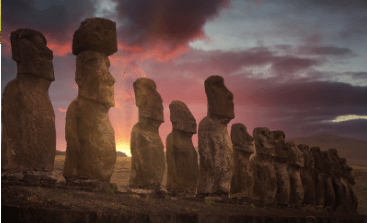
Easter Island: History, Culture, and Travel Guide to One of the World’s Most Remote Destinations

Basking in the Sunset

Introduction

Located in the southeastern Pacific Ocean, Easter Island—known locally as Rapa Nui—is one of the most isolated inhabited places on Earth. Situated roughly 3,700 kilometers west of mainland Chile, the island is famous for its mysterious moai statues, monumental stone figures carved centuries ago by the island’s early inhabitants. Today, Easter Island is both a UNESCO World Heritage Site and a fascinating travel destination where archaeology, Polynesian culture, and dramatic landscapes converge. 

For travelers, the island offers a unique combination of history, natural beauty, and cultural heritage. This blog post explores the history of Easter Island and highlights the most important places visitors should see when exploring this extraordinary location.


The Early History of Easter Island

Archaeological evidence suggests that Easter Island was first settled by Polynesian voyagers sometime between 300 and 1200 CE. These settlers likely arrived in large seafaring canoes from other islands in the Polynesian triangle. Once established, they developed a unique culture largely isolated from outside influences. 

Over several centuries, the inhabitants of Rapa Nui built a complex society characterized by monumental architecture and elaborate religious traditions. The most iconic creations of this civilization are the moai, enormous stone statues carved from volcanic rock. From approximately the 10th to the 16th centuries, the Rapa Nui people carved hundreds of these statues and erected them on ceremonial platforms known as ahu. 

The moai typically represent deified ancestors or important leaders. Facing inland toward villages, they were believed to protect communities and channel spiritual power known as mana. Today, nearly 900 moai statues are known to exist across the island, forming one of the most remarkable archaeological landscapes in the world. 

Despite the achievements of the early Rapa Nui society, the island experienced significant internal conflict and social change. Oral histories and archaeological evidence indicate that civil wars and shifts in political power led to many moai being toppled from their platforms. Some sites were later restored in modern times. 

The island came into contact with Europeans in 1722, when Dutch explorer Jacob Roggeveen arrived on Easter Sunday, giving the island its modern name. Over the following centuries, outside contact, disease, slave raids, and colonial pressures dramatically affected the indigenous population. Eventually, the island was annexed by Chile in 1888, and today it remains a special territory of the country while retaining a strong Indigenous cultural identity. 


Rapa Nui National Park: A Living Cultural Landscape

Much of Easter Island is protected within Rapa Nui National Park, a UNESCO World Heritage Site that preserves the archaeological and cultural remains of the ancient Rapa Nui civilization. The park contains hundreds of ceremonial platforms, agricultural structures, and moai statues spread across a dramatic volcanic landscape. 

The island itself is triangular and shaped by extinct volcanoes, including Terevaka, Poike, and Rano Kau. Rolling grasslands, rugged coastlines, and volcanic craters create a striking natural setting for the archaeological sites. Visitors exploring the park can experience not only ancient monuments but also the environmental context that shaped Rapa Nui culture.


Major Historical and Archaeological Attractions

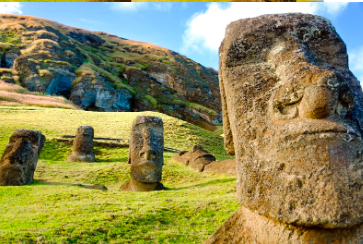
Meet the Moai

Ahu Tongariki

Ahu Tongariki is the largest ceremonial platform on Easter Island and one of the most impressive sights for travelers. The site features 15 massive moai statues standing in a row facing inland. 

Historically, this location served as the political and ceremonial center for the Hotu-iti clan. During periods of internal conflict, the statues were knocked over, and in 1960 a tsunami caused by an earthquake in Chile pushed them inland. A major restoration project in the 1990s returned the moai to their current positions. 

For visitors, sunrise at Ahu Tongariki is considered one of the most memorable experiences on the island. As the sun rises over the Pacific Ocean, it illuminates the towering statues, creating a powerful and unforgettable view.


Rano Raraku Quarry

Rano Raraku is the volcanic quarry where most of the island’s moai were carved. Here visitors can see dozens of statues in various stages of completion—some partially buried, others still attached to the bedrock.

The quarry provides valuable insight into the production process of the statues. Craftspeople carved the moai from volcanic tuff using stone tools before transporting them to ceremonial platforms across the island. Modern research suggests that the statues may have been “walked” upright using ropes and coordinated movements. 

This site is often considered the most important archaeological location on the island.


Orongo Ceremonial Village

Located on the rim of the Rano Kau volcanic crater, Orongo is a stone ceremonial village associated with the famous Birdman cult. The site consists of dozens of low stone houses built along dramatic sea cliffs. 

The Birdman ritual was a major religious competition in which representatives from different clans attempted to retrieve the first egg of a migratory seabird from nearby islets. The winner’s sponsor would gain political and spiritual authority for the year.

Today, visitors can walk among the restored stone houses while enjoying spectacular views of the crater lake and the Pacific Ocean.


Anakena Beach

Anakena is one of the few sandy beaches on Easter Island and holds both historical and recreational importance. According to Rapa Nui tradition, this was the landing place of Hotu Matu’a, the legendary Polynesian chief who founded the first settlement on the island. 

The beach is also home to restored moai on the platform Ahu Nau Nau, making it one of the most photogenic sites on the island. Visitors often combine sightseeing with swimming or relaxing beneath the palm trees.


Father Sebastian Englert Anthropological Museum

Travelers interested in learning more about Rapa Nui culture should visit the Father Sebastian Englert Anthropological Museum in the town of Hanga Roa. The museum houses thousands of artifacts related to the island’s archaeology, language, and traditions, including items associated with the mysterious rongorongo script. 

Exhibits help visitors understand the cultural significance of the moai, the island’s settlement history, and the challenges faced by the Rapa Nui people during the colonial period.

Sunset Serenity

Travel Tips for Visiting Easter Island

Traveling to Easter Island requires careful planning because of its remote location. Most visitors arrive by flight from Santiago, Chile, which takes about five hours. The island’s main town, Hanga Roa, serves as the hub for accommodations, restaurants, and tour services.

Some helpful travel tips include:

  • Rent a car or bike: Many archaeological sites are spread across the island, making independent exploration easier.
  • Purchase a national park ticket: Most historical sites are within Rapa Nui National Park.
  • Hire local guides: Indigenous guides can provide valuable cultural context and stories behind the monuments.
  • Respect cultural heritage: The moai are sacred ancestral symbols for the Rapa Nui people.

Conclusion

Easter Island is far more than a collection of mysterious statues. It is a living cultural landscape shaped by centuries of Polynesian history, spiritual traditions, and remarkable engineering achievements. From the imposing moai of Ahu Tongariki to the dramatic cliffs of Orongo and the tranquil sands of Anakena Beach, the island offers a unique travel experience unlike any other destination on Earth.

For visitors willing to journey to one of the world’s most remote islands, Easter Island provides a rare opportunity to explore ancient history while witnessing the enduring culture of the Rapa Nui people.


References (Chicago)

Flenley, John, and Paul Bahn. The Enigmas of Easter Island: Island on the Edge. Oxford: Oxford University Press, 2003.

UNESCO World Heritage Centre. “Rapa Nui National Park.” Accessed March 2026. 

Wikipedia contributors. “Rapa Nui National Park.” Accessed March 2026. 

Wikipedia contributors. “Ahu Tongariki.” Accessed March 2026. 

Wikipedia contributors. “Orongo.” Accessed March 2026. 

Wikipedia contributors. “Anakena.” Accessed March 2026. 

Wikipedia contributors. “Father Sebastian Englert Anthropological Museum.” Accessed March 2026. 

EasterIsland.travel. “Rapa Nui National Park: Protection, Heritage, and Living Culture.” Accessed March 2026. 


Celebrating America in Great Smoky Mountains National Park

Historic colonial water wheel at Cades Cove
Cades Cove Water Wheel

The Great Smoky Mountains

Great Smoky Mountains National Park is undeniably one of the most cherished National Parks in the United States. According to the National Park Service, the Great Smoky Mountains National Park receives more visitors than any other National Park in the country. And this is a particularly impressive feat considering there are 59 National Parks in the system.

In this picturesque Park you will discover many natural wonders, including sweeping vistas, majestic mountains, crystal-clear waters, and wondrous wildlife. The Park straddles the states of Tennessee and North Carolina in the southeastern United States, and spans more than 800 square miles of natural backdrops that bewilder.

Practicing Patriotism in the Park

Visiting our National Parks is an act of patriotism. And Smoky Mountains National Park is a great place to celebrate our country’s beauty and bounty. Here we can reflect on the country we cherish, while surrounded by one of the great reasons why. As Theodore Roosevelt famously said, “Here is your country. Cherish these natural wonders, cherish the natural resources, cherish the history and romance as a sacred heritage, for your children and your children’s children.” Our National Parks are one of our country’s greatest treasures, and, thankfully, one we can pass on from generation to generation.

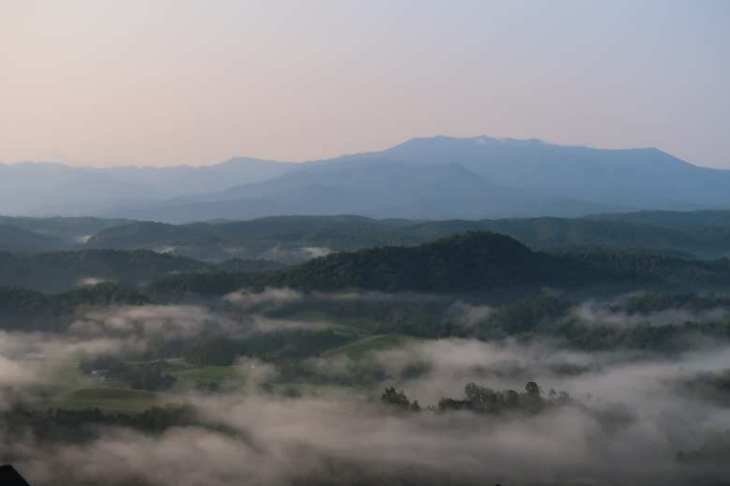
Smoky mountains bathed in morning mist
Typical foggy mountain morning

A Free-for-All

Significantly, Smoky Mountains National Park is one of the only National Parks that remains completely free to visitors, and we have the State of Tennessee to thank for that. The States of Tennessee and North Carolina cooperatively constructed Newfound Gap Road, which runs through the park. They later donated the road to the federal government to be a part of the National Park. As a stipulation to this donation, Tennessee included a deed requirement that “no toll or license fee shall ever be imposed…” as a way to assure their State’s residents would continue to have access to efficient transportation through the area. Presently, everyone has free admission.

Take the Slow Road

On the downside of free admission, the park tends to be very crowded, especially during peak season. But consider the traffic an opportunity to slow down, enjoy the scenery, and meditate on how amazing it is that we can all share in this breathtaking spectacle together! In this fast-paced world, it’s not every day we can stop and smell the pine trees. Occasionally we need to decompress. Amid the peace of the Park, this is possible.

Historic colonial cabin of John Oliver, from 1822
John Oliver Cabin – 1822

Being Steeped in History

The National Park Service explains here that, “One of the best collections of log buildings in the Eastern United States [is here]. Over 90 historic structures – houses, barns, outbuildings, churches, schools, and grist mills – have been preserved or rehabilitated in the park.” (nps.gov) These charming yet rustic structures give a good glimpse of what life was like in the 1800s in the rural South. Not surprisingly, many of these historic cabins and other buildings in the park are registered with the National Register of Historic Places. When you freely explore them inside and out, you can imagine a life in a distant time.

Woman hiking on a forested hiking trail
Hiking heaven

Hit the Hiking Trails

For the energetically-inclined there are an array of hiking trails available. No matter what your preferred difficulty level, there’s a trail here to suit you. They range from short to long, and from easy to challenging. You can plan ahead, as hiking options are listed on the National Park Service’s Smoky Mountains website here. Once on-site, hiking trail maps are conveniently available at the Welcome Center.

Exploring on foot surrounds you with remarkable waterfalls, streaming creeks, and dense forests hosting an encyclopedic variety of trees, many of which are inaccessible by car. A hike here stimulates all of the senses… The spectacular views of the mountains, soothing sounds of bubbling brooks and trees rustling in the wind, plus the pristine smell of pine… there’s truly a feast for the senses to indulge in here.

Want to commemorate the memories of your hike? For $1 you can purchase a book to log your miles. Those who’ve hiked 100 miles or more can share their mileage booklet with the Visitor Center to receive a mileage pin and be immortalized in their “Hike the Smokies” record book.

Giant black bear
Grin and bear it

Black Bears and Other Wildlife

Observing the fascinating antics of the local wildlife is one of the greatest perks of a visit to Smoky Mountains National Park. The Park is most well-known for its black bear population. When you see a log jam of cars parked illegally along the road and no scenic overlook, you can safely assume it’s a makeshift wildlife viewing stop. And if people are looking up into the trees, your first thought might be that they’re bird-watching. But, instead, they are likely viewing black bears: surprisingly highly capable climbers! The National Park Service suggests on their website here that there are approximately 1,500 black bears who call the Park home. Deer and other wildlife are also abundant in the park. Your next furry friend might be around the next bend…

Joy-Riding

With 384 miles of road, there’s plenty of opportunity to get off the beaten path here. Driving is certainly the most efficient way to explore the many historic buildings in the park and enjoy the scenery in two different states. Yet patience is still advised, however. As the most-visited park in the country, the roads and parking areas can get pretty crowded. So you may not be able to make every stop, or may need to repeat your tracks more than once if you don’t want to miss a thing. Savor every minute of it! Auto tour maps are available at the Park’s information center, to help you navigate your way to all of the historic sites, hiking trails, scenic overlooks, facilities, and more.

Cozy Camping

If your idea of a great night’s sleep is a night under the stars breathing in the pristine, pine-scented air, you may want to consider staying in one of the Park’s campsites. Indeed, a variety of options are available depending on your tolerance level for “roughing it.” For the truly adventurous, there are back-country campsites that can only be reached via hiking several miles. Front-country campsites are accessible by car and offer facilities with modern plumbing. Campsites for groups, and others that are able to accommodate horses, are also available should they better suit your needs.

Conclusion

The Great Smoky Mountains are named for the puffy plumes of mist that float freely among their plentiful peaks. Bask in the mist, and the beauty and vitality of our great nation that this charming Park exemplifies. This Park is free, but the scenery is priceless! To find out more about Great Smoky Mountains National Park, you can visit their official website here. If you want to read more from us, check out our last blog post here.

St. Patrick’s Day: History, Traditions, and Global Celebrations

Amazing Landscapes

Celebrating Ireland

Every year on March 17, millions of people around the world celebrate St. Patrick’s Day—a holiday filled with parades, music, green clothing, and festivities honoring Irish culture. What began as a religious feast day dedicated to Ireland’s patron saint has evolved into a global celebration of Irish heritage. From church services in Ireland to massive parades in North America and festivals across Asia and the Caribbean, St. Patrick’s Day illustrates how cultural traditions can spread and transform across the world. This article explores the history of St. Patrick’s Day, the life of the saint it commemorates, and the many ways the holiday is celebrated today.

The Historical Origins of St. Patrick’s Day

St. Patrick’s Day commemorates St. Patrick, the patron saint of Ireland, who lived during the fifth century. Although strongly associated with Irish identity, Patrick was not Irish by birth. Most historical sources indicate that he was born in Roman Britain in the late fourth century. At age sixteen he was kidnapped by Irish raiders and taken to Ireland, where he was enslaved and forced to work as a shepherd. After several years, he escaped and returned to Britain. According to tradition, Patrick later experienced a religious calling that compelled him to return to Ireland as a missionary.¹

Patrick returned to Ireland around 432 CE and spent decades spreading Christianity across the island. He established churches, schools, and monasteries and became one of the most influential figures in early Irish Christianity. Over time, stories and legends about Patrick grew within Irish culture. One famous legend claims he used a three-leaf clover, or shamrock, to explain the Christian concept of the Holy Trinity—Father, Son, and Holy Spirit.² Another popular myth says he drove snakes out of Ireland, though historians consider this symbolic rather than literal.³

Patrick is believed to have died on March 17, around the year 461 CE. The date later became his feast day in the Christian liturgical calendar.⁴ By the ninth or tenth century, Irish Christians were commemorating the day with religious observances, making it one of the earliest traditions associated with the holiday.⁵

Cozy Castles

Early Religious Celebrations in Ireland

For centuries, St. Patrick’s Day in Ireland was primarily a religious occasion. Families attended church services in the morning and spent the rest of the day with modest celebrations. Because the feast day occurred during the Christian season of Lent—a time traditionally marked by fasting and restrictions on eating meat—the church allowed those restrictions to be lifted for the day. As a result, families often celebrated with special meals, typically featuring Irish bacon and cabbage.⁶

Interestingly, some aspects of the modern holiday were absent from early Irish celebrations. Parades, large public festivals, and widespread drinking were not traditional features in Ireland until relatively recently. In fact, Irish law required pubs to close on March 17 until 1970, reinforcing the holiday’s religious character.⁷

Over time, however, the meaning of the holiday began to change—largely due to Irish emigrants abroad.

The Role of the Irish Diaspora

Irish migration, particularly to North America, played a crucial role in transforming St. Patrick’s Day from a religious observance into a large cultural celebration. Irish immigrants in the United States used the holiday as a way to express pride in their heritage and maintain a connection to their homeland.

The first recorded St. Patrick’s Day parade did not occur in Ireland but in the Spanish colony of St. Augustine, Florida, in 1601.⁸ Later, Irish soldiers serving in the British army marched in New York City in 1762 to honor their patron saint. These early parades gradually evolved into annual celebrations organized by Irish community groups.

During the nineteenth century, waves of Irish immigrants—particularly those fleeing the Great Famine—arrived in North America. Many faced discrimination and poverty, and public celebrations of St. Patrick’s Day became a way to demonstrate unity and cultural pride. By the mid-1800s, cities such as Boston, New York, Chicago, and Philadelphia were hosting large parades and community gatherings.⁹

Today, the New York City St. Patrick’s Day Parade is considered the largest in the world, drawing more than 150,000 participants and millions of spectators each year.¹⁰

Spectacular Cities

Symbols and Traditions

Several well-known symbols are closely associated with St. Patrick’s Day.

The Color Green

Green has become the dominant color of the holiday, although historically blue was originally associated with St. Patrick. Over time, green became linked to Irish nationalism and the lush landscape of Ireland, often called the “Emerald Isle.”¹¹ Wearing green clothing on March 17 is now one of the most recognizable traditions of the holiday.

The Shamrock

The shamrock remains one of the most enduring symbols of St. Patrick’s Day. According to legend, Patrick used the plant’s three leaves to explain Christian theology. Today it represents Irish identity and heritage.¹²

Leprechauns and Folklore

Irish folklore also contributes to the imagery of the holiday. Leprechauns—small mythical shoemakers said to guard hidden pots of gold—are often featured in decorations and popular culture. While they are not directly connected to St. Patrick historically, they have become a playful part of the holiday’s imagery.

Food and Drink

Traditional foods associated with St. Patrick’s Day include Irish soda bread, champ (mashed potatoes with butter and green onions), and corned beef with cabbage—especially popular in North America.¹³ Drinking Irish beer or whiskey is also common, although this aspect developed largely in diaspora communities.

St. Patrick’s Day in Ireland Today

Modern celebrations in Ireland combine religious tradition with cultural festivities. Many people still attend church services on the morning of March 17, particularly in smaller communities. However, the holiday now includes large public events such as parades, music performances, and cultural festivals.

In 1995, the Irish government launched the St. Patrick’s Festival in Dublin to promote tourism and showcase Irish culture to the world. The multi-day festival includes parades, concerts, historical exhibitions, and community events.¹⁴ The main parade attracts hundreds of thousands of spectators each year and features elaborate floats, performers, dancers, and marching bands.

Other Irish cities, including Cork, Galway, and Limerick, also host major celebrations.

Charming Towns

Global Celebrations

Today, St. Patrick’s Day is celebrated in more countries than almost any other national holiday. The global reach of Irish migration and culture has transformed the event into an international festival.

North America

The United States and Canada host some of the largest celebrations outside Ireland. Major cities organize parades, cultural festivals, and public gatherings.

Chicago is famous for dyeing the Chicago River green each year, a tradition that began in 1962 when city workers discovered that dye used to trace pollution could also create a festive effect.¹⁵ Montreal hosts one of the oldest St. Patrick’s Day parades in North America, dating back to 1824.¹⁶

Europe

Across Europe, cities with Irish expatriate communities host parades and festivals. London, Munich, and Paris all organize large St. Patrick’s Day celebrations featuring Irish music, dance, and food.

Asia and Oceania

The holiday has spread far beyond traditional Irish diaspora regions. Tokyo has hosted St. Patrick’s Day parades since 1992, organized partly by Japanese enthusiasts of Irish culture.¹⁷ Similar celebrations occur in Singapore, Seoul, and Sydney.

The Caribbean

One of the most unique celebrations occurs on the Caribbean island of Montserrat. Because of its strong Irish heritage dating to the seventeenth century, the island hosts a week-long St. Patrick’s festival that blends Irish and Afro-Caribbean cultural traditions.

Global “Greening”

In recent years, landmarks around the world have participated in a symbolic “greening” campaign, illuminating famous sites with green lights. Structures such as the Sydney Opera House, the Eiffel Tower, and Niagara Falls have all been lit green in honor of the holiday.

A Global Cultural Celebration

What began as a religious feast day in medieval Ireland has become one of the most widely celebrated cultural holidays in the world. St. Patrick’s Day now represents not only the legacy of a fifth-century missionary but also the enduring influence of Irish culture across continents.

The transformation of the holiday demonstrates how traditions evolve as communities migrate and adapt to new environments. Irish immigrants helped reshape St. Patrick’s Day into a public celebration of identity and heritage, while modern globalization has turned it into a worldwide festival of music, culture, and shared joy.

Whether through attending a parade, wearing green, sharing traditional foods, or simply learning about Irish history, people across the globe participate in this annual tribute to Ireland’s patron saint and the vibrant culture he came to symbolize.

Lucious Landscapes

References (Chicago)

Britannica Editors. “St. Patrick’s Day.” Encyclopaedia Britannica. Last updated December 20, 2025. https://www.britannica.com/topic/Saint-Patricks-Day
History.com Editors. “History of St. Patrick’s Day.” History.comhttps://www.history.com/topics/st-patricks-day/history-of-st-patricks-day
History.com Editors. “St. Patrick’s Day Traditions and Origins.” History.comhttps://www.history.com/articles/history-of-st-patricks-day

“Saint Patrick.” Wikipediahttps://en.wikipedia.org/wiki/Saint_Patrick

“Saint Patrick’s Day.” Wikipediahttps://en.wikipedia.org/wiki/Saint_Patrick%27s_Day

Cronin, Mike. “St. Patrick’s Day Is the Most Global National Holiday.” TIMEhttps://time.com/3746018/st-patricks-day-global/

Tale of Two Hotels: New York City Edition

IMG_1143

Homewood Suites Lobby

On my last visit to New York I stayed at two hotels, one downtown (Hilton Garden Inn Times Square South in Manhattan), and one easily accessible to downtown in the suburbs (Homewood Suites Edgewater-NYC Area in New Jersey). Depending on your priorities, one or the other may be more suitable for you, but either one is a great choice!

IMG_0267

Hilton Garden Inn Guestroom

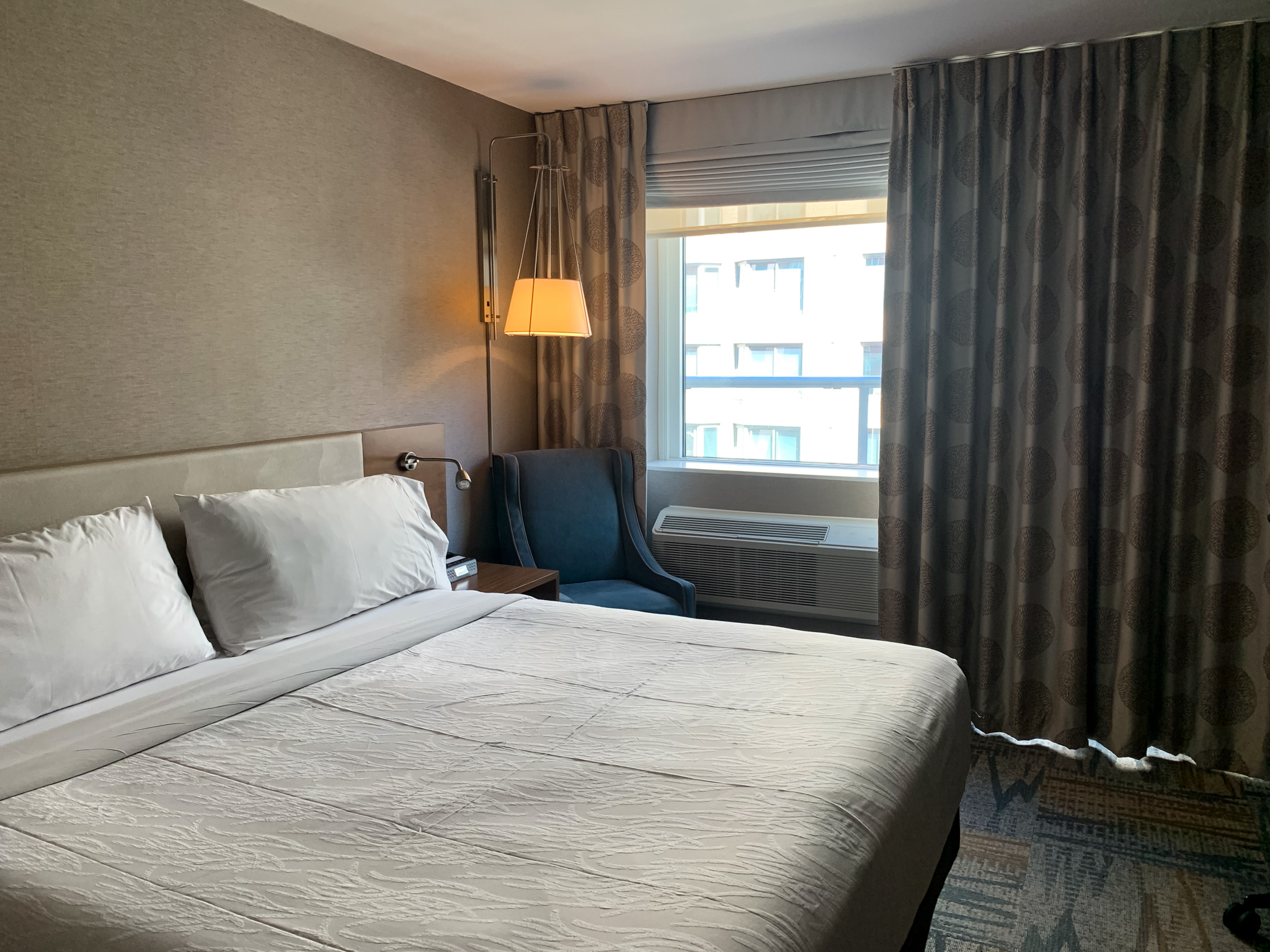
The Hilton Garden Inn Times Square South is a stone’s throw from the Port Authority, and very centrally located to all of the action. It’s a short walk to the nearest subway, double decker bus stop, Theater District, and heart of Times Square. The neighborhood is abundant with great restaurants in all price ranges, and felt safe to traverse by night or day. The staff was professional and friendly. The room was small, but comfortable.

IMG_6994

Hilton Garden Inn View from the Balcony

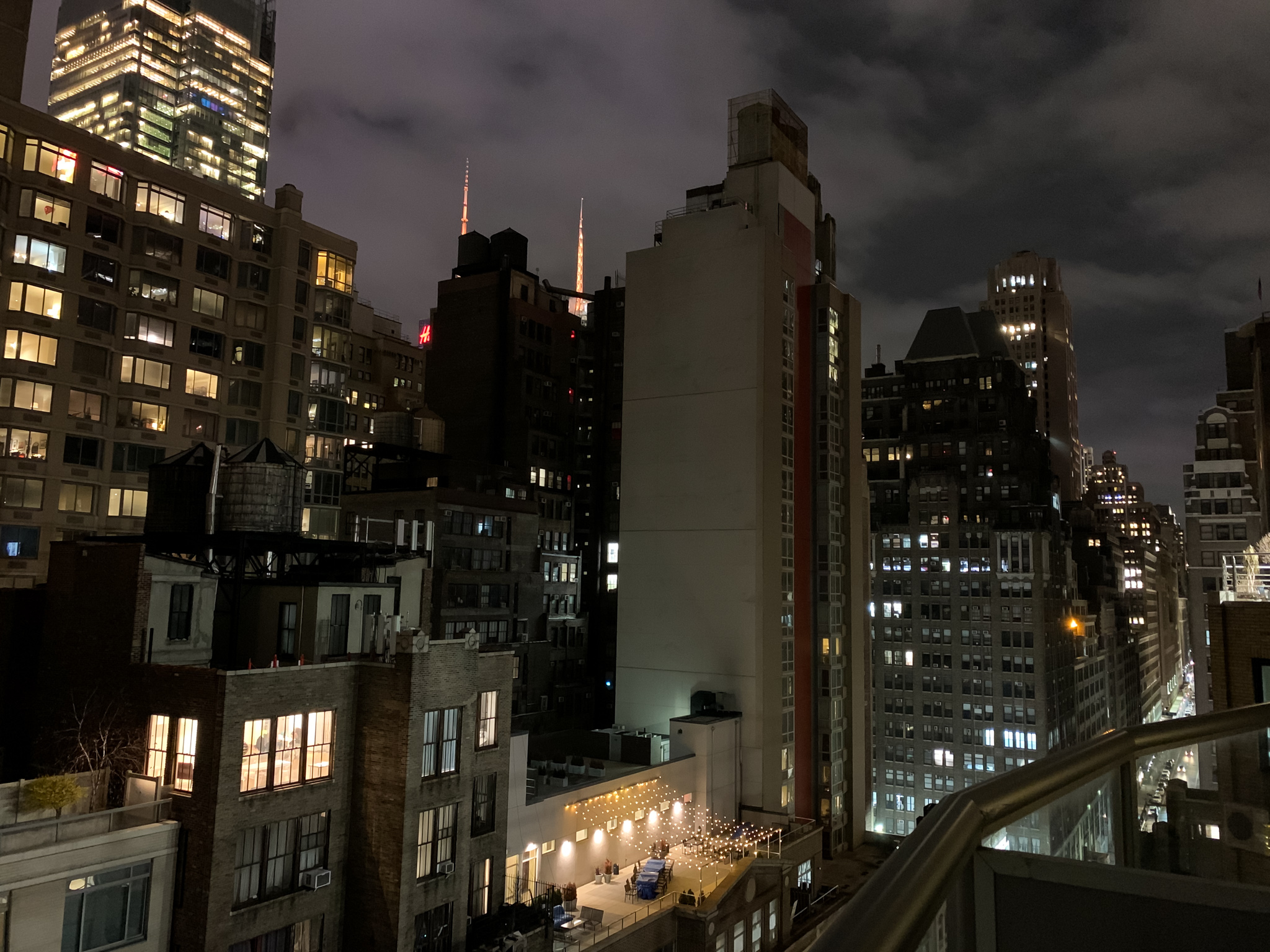
I was fortunate to get one of only two rooms in the hotel with a balcony, where I enjoyed soaking in the city sights and sounds bird-like from my high perch. The refrigerator was smaller than usual for a Hilton room – rather than “dormitory” size it was very narrow. Normal size water bottles or soda cans wouldn’t fit – but the mini size soda you can sometimes find in the store would have. Not a suitable fridge for dining leftovers, either. Fortunately (or unfortunately!) the weather was cold in March and I used the balcony as a fridge…

The bath was trendy, and shower provided good water pressure and temperature. There’s an ample closet, as well as a desk for working. I had a great nights’ sleep on the very cozy bed.

IMG_9371

Hilton Garden Inn Bed

Breakfast at the Garden Inn brand of Hilton is available but there is an extra charge if you are not gold level or higher in their rewards program. But if you are gold, or pay, it’s made to order fresh and delicious. The menu was not as extensive as I’m used to, but that may have been due to the timing (pre/early COVID in mid-March).

There’s no parking on-site, but there is a public parking garage across the street charging $50 per night. Room rates vary depending on your timing… but usually run relatively steep due to the incredible central location in Manhattan. If location is your top priority, I highly recommend this hotel. If price is your highest priority, I suggest another property…

NYHotel3

Homewood Suites Living Room

The Homewood Suites Edgewater-NYC Area in Edgewater, New Jersey may not be in Manhattan, but it’s extremely convenient to it for prices usually well below what you’ll pay in Manhattan. It’s also situated in a charming neighborhood of its own, next to lots of interesting shops and restaurants along a pedestrian boulevard.

IMG_2223

Homewood Suites Kitchen

Like other properties in the Homewood Suites brand, this hotel is all suites. Each room has a full kitchen (full size fridge, small stove, microwave, sink, dining table, and dishes and utensils). There are also separate lounge and bedroom areas, and an extra-spacious bathroom. There’s two televisions – one in the “living” room and another in the bedroom. Consistent with other hotels under the Hilton umbrella, the bed, furnishings, and showers are very accommodating here.

NYHotel2

Homewood Suites Bedroom

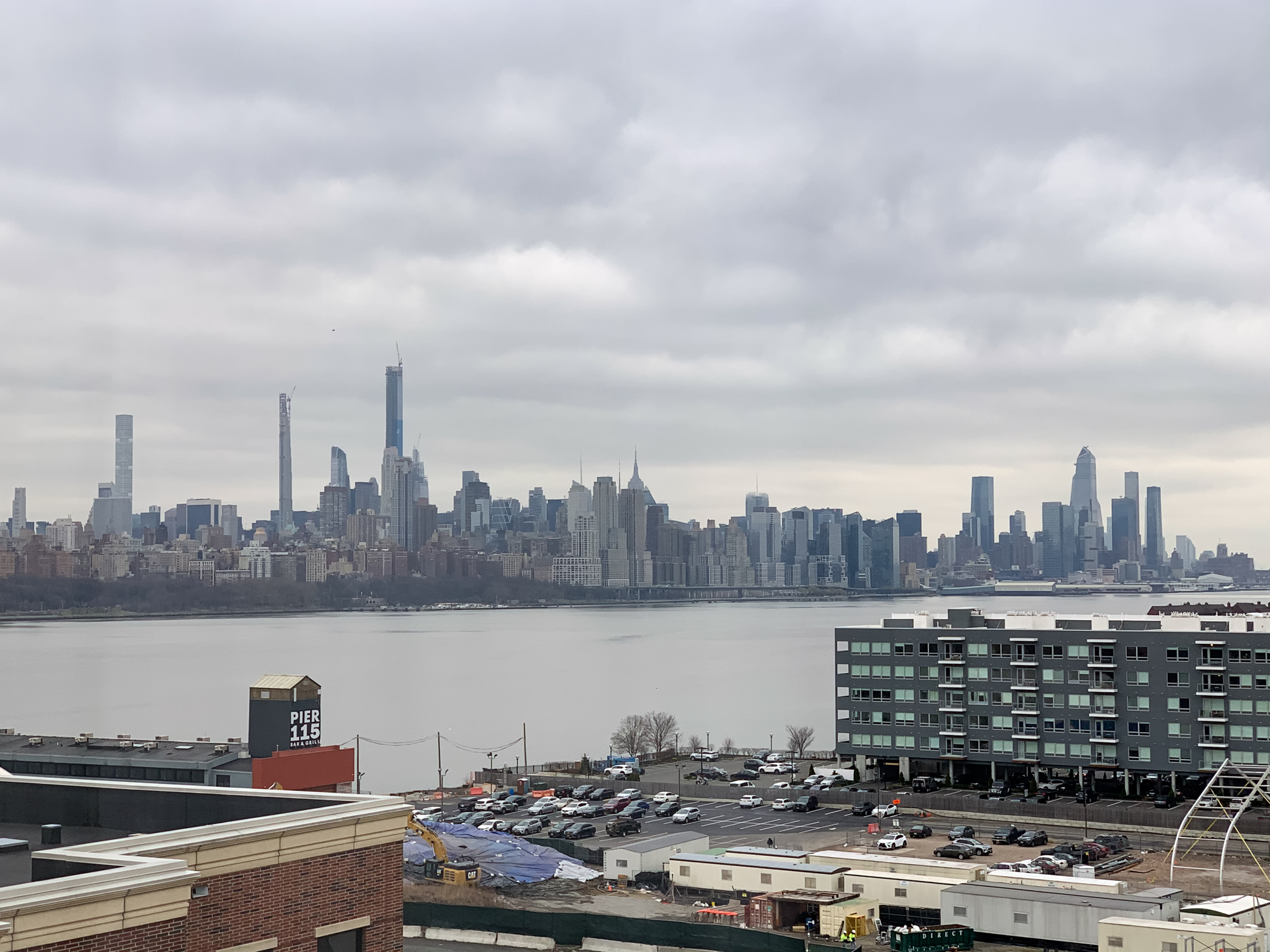
Some rooms have New York City views – in my opinion worth the splurge. Breakfast is free for all and consists of a small buffet. Socials are held in the evenings on some days of the week where snacks, beer, and wine are offered. Parking here is free for hotel guests. As for the location – if you want to get into downtown Manhattan it’s no problem. There’s a local bus that picks up across the street that goes straight to the Port Authority in the Times Square area. The ride takes about 10 minutes, and only costs a few dollars each way (seniors also get a discount). I suggest buying a roundtrip ticket when you board in New Jersey – it’s easier than waiting and buying a return ticket at the station when you’re ready to return.

IMG_2732

Homewood Suites View from the Room

Both of these hotels are great options if you visit New York City. For a full tour of each, view my YouTube video here:


New York City Tour! (Pre/early COVID)

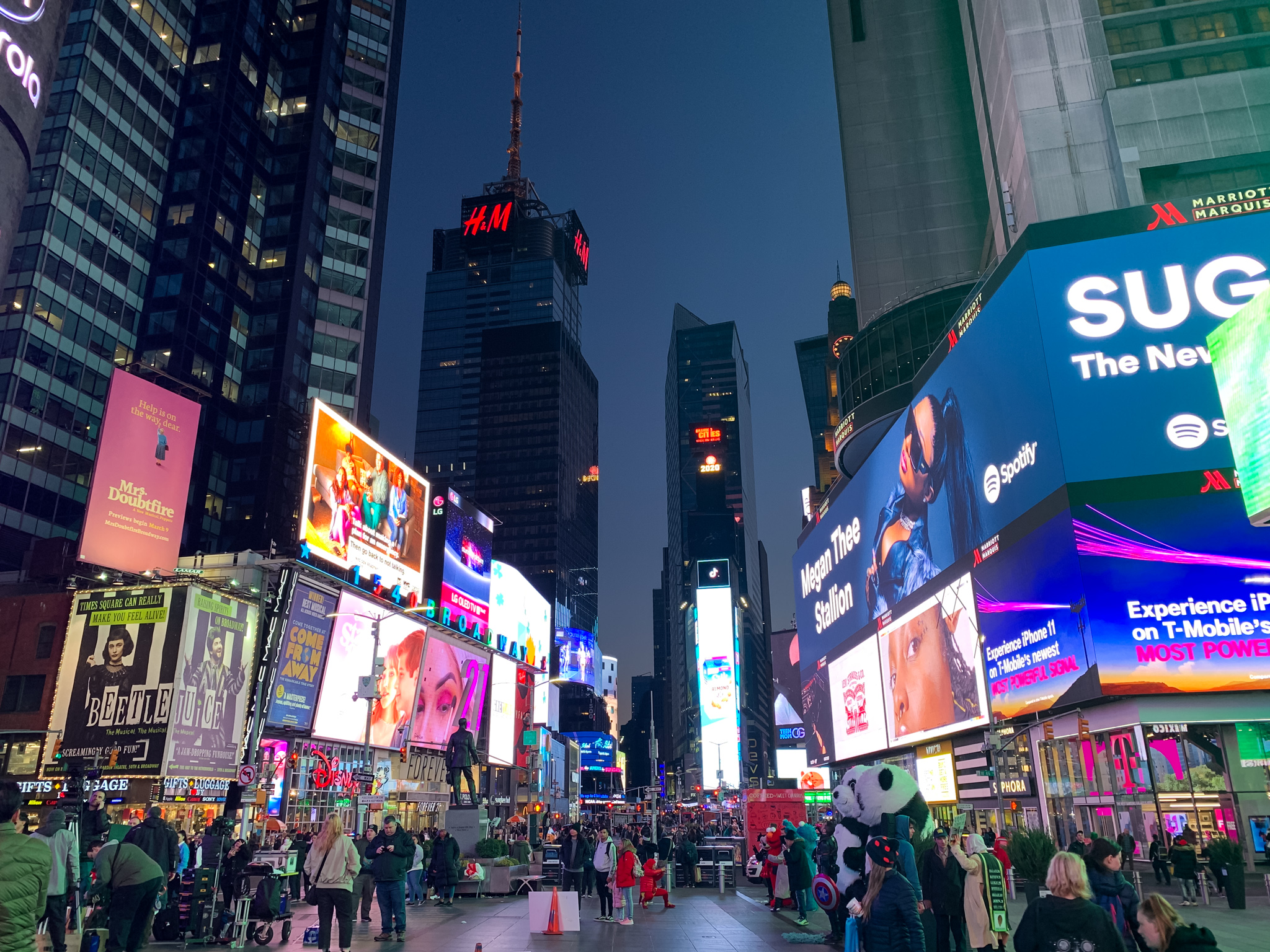
TimesSqNight2

Times Square at Night

These are tough times for all of us, no thanks to the COVID outbreak, and New York City in particular is facing challenges. I know a lot of us can’t wait until the “city that never sleeps” wakes up again. In the meantime, I can share some images with you from my visit in mid-March, when news was beginning to surface about COVID but the city wasn’t in full shutdown mode yet.

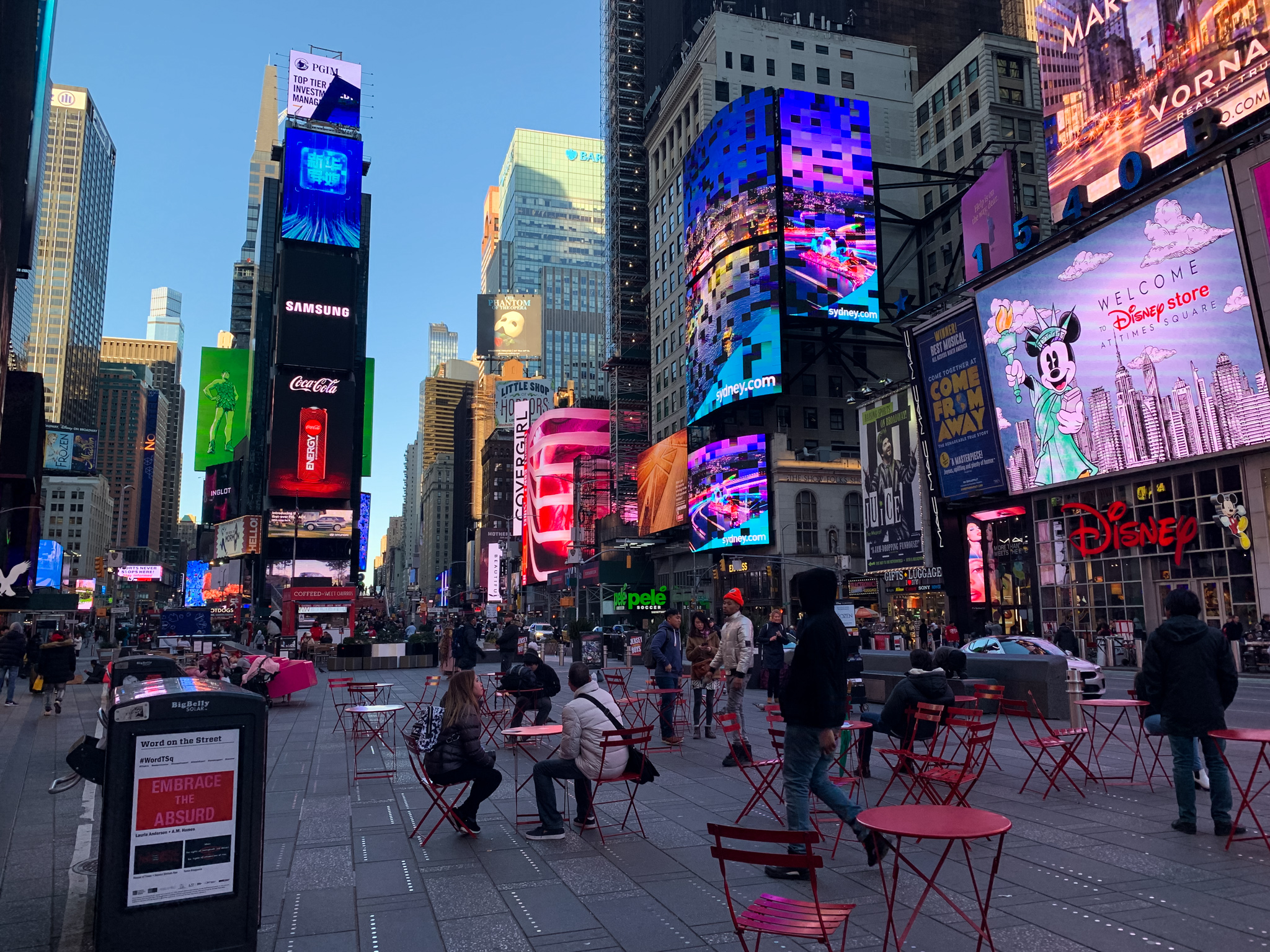
TimesSq10HEIC

Times Square by Day

Times Square is arguably one of the most iconic locations in New York – and usually one of the most crowded, too. But auto and pedestrian traffic was a little lighter, and became even lighter day by day during my visit. The square was still alive with its signature bright neon lights and colorful characters, though…

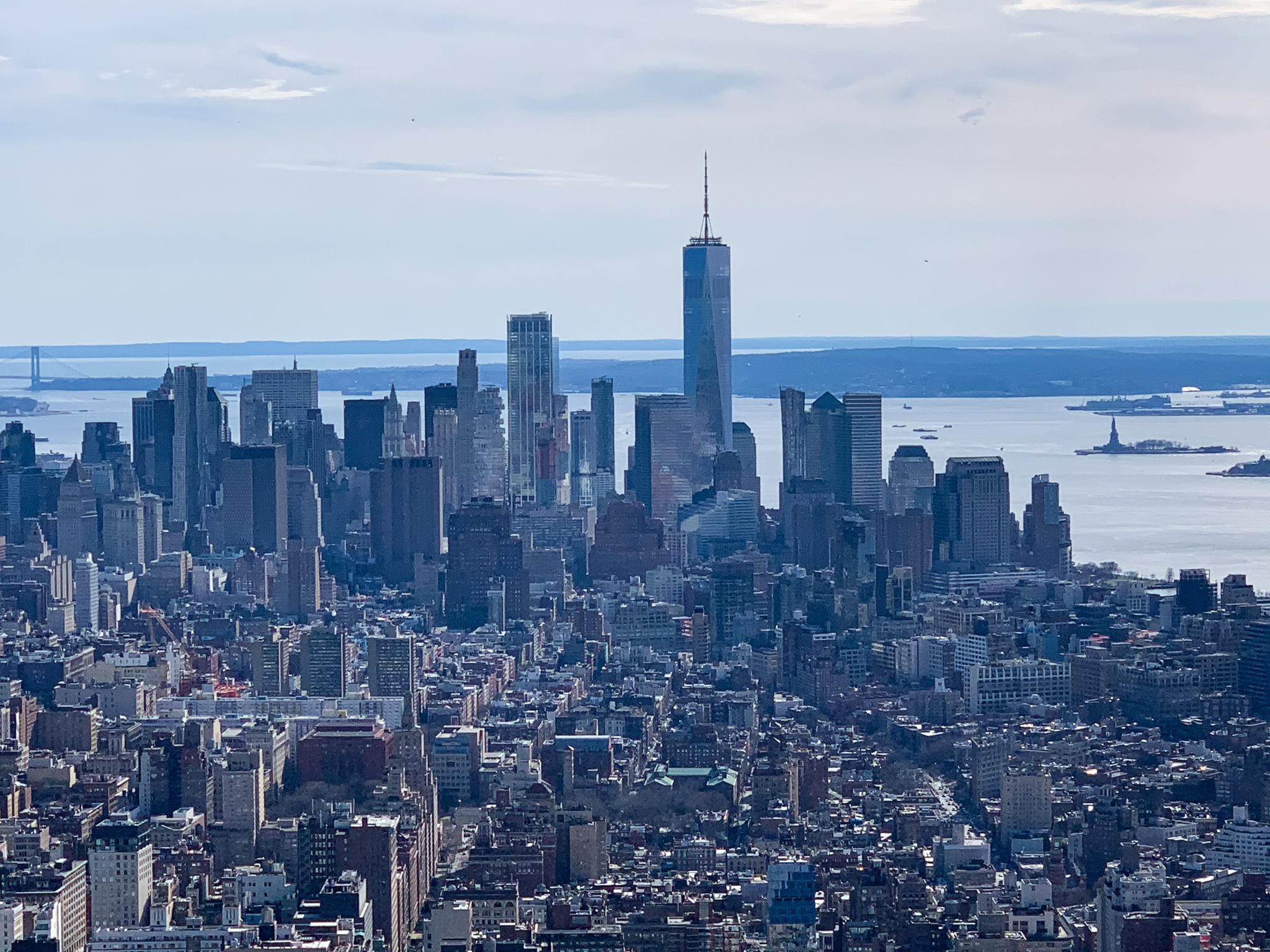
Empire6

Views from Empire State Building

We managed to visit the Empire State Building observatory two days before it closed due to COVID. What a lucky break for us, not to miss these incredible views. Here is a view of downtown, including the towering One World Trade Center standing guard over the rest of the city, symbolically. In the background you can also see the Statue of Liberty in the distance.

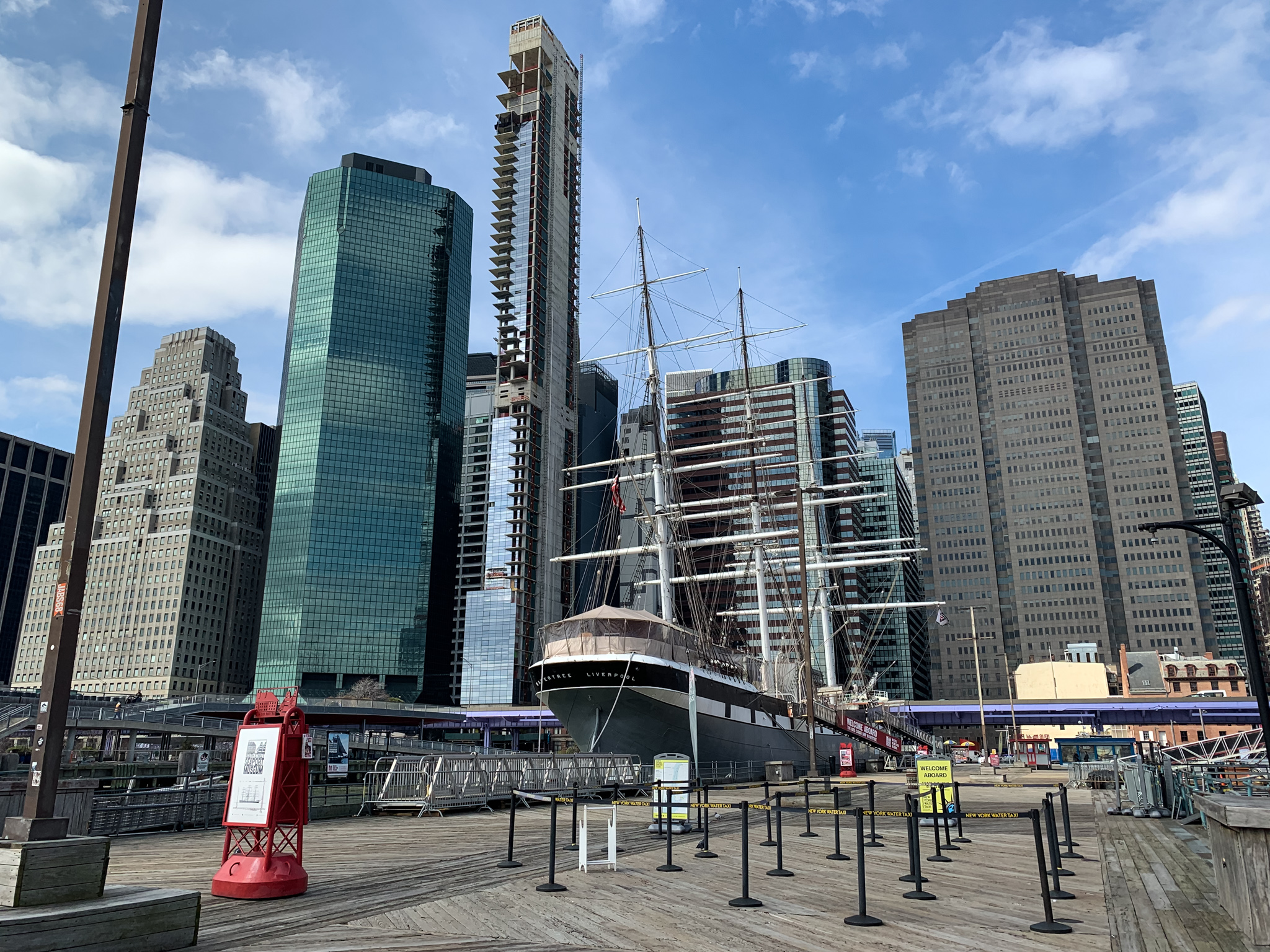
SouthStSeaport12

South Street Seaport Pier

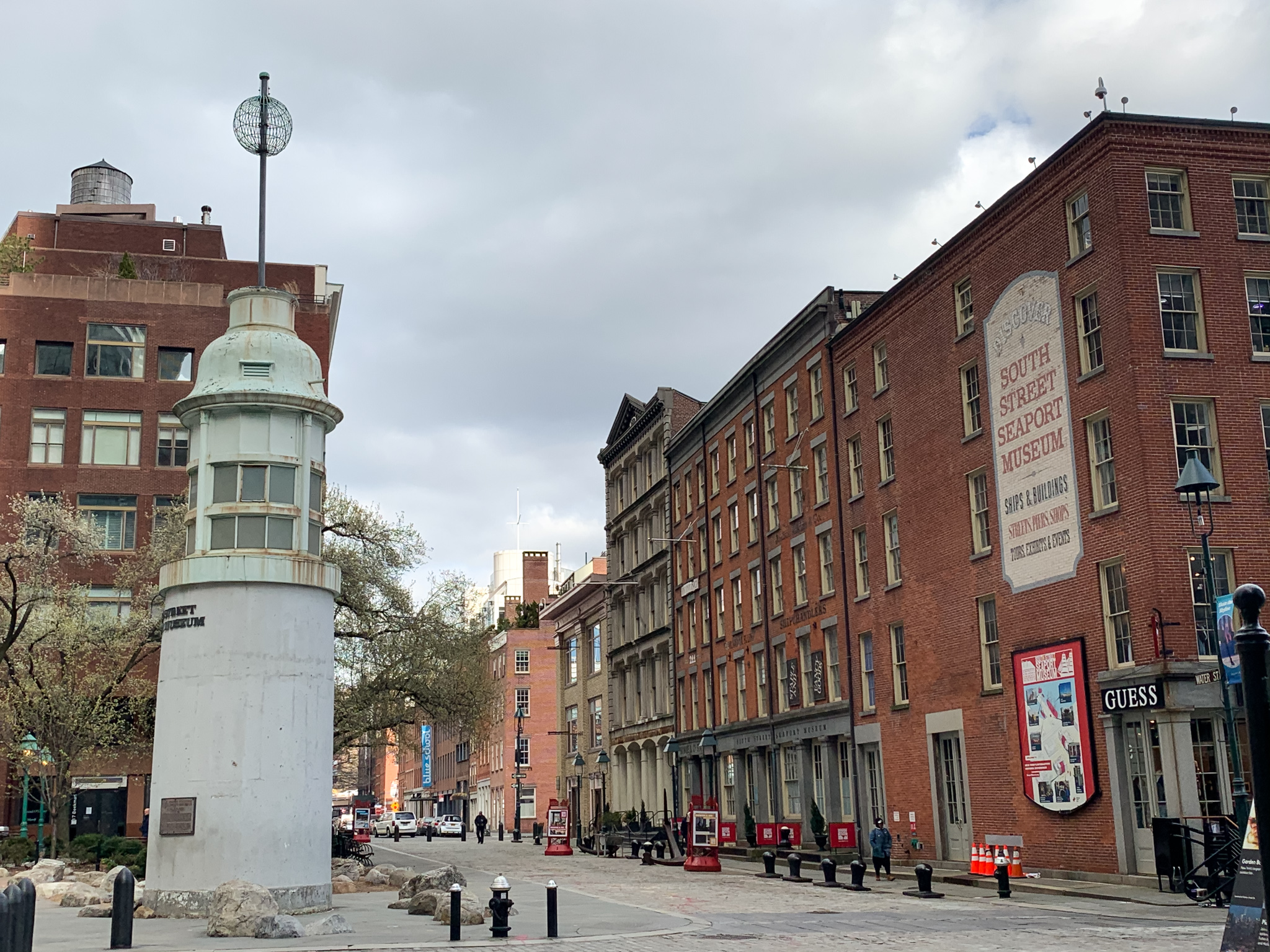
South Street Seaport is one of my favorite neighborhoods in New York. Here you can inspect historic ships on the pier, or catch the New York Water Taxi for a tour of the harbor. Along cobbled streets stand the South Street Seaport Museum, and many opportunities for shopping.

SouthStSeaport21

South Street Seaport Museum

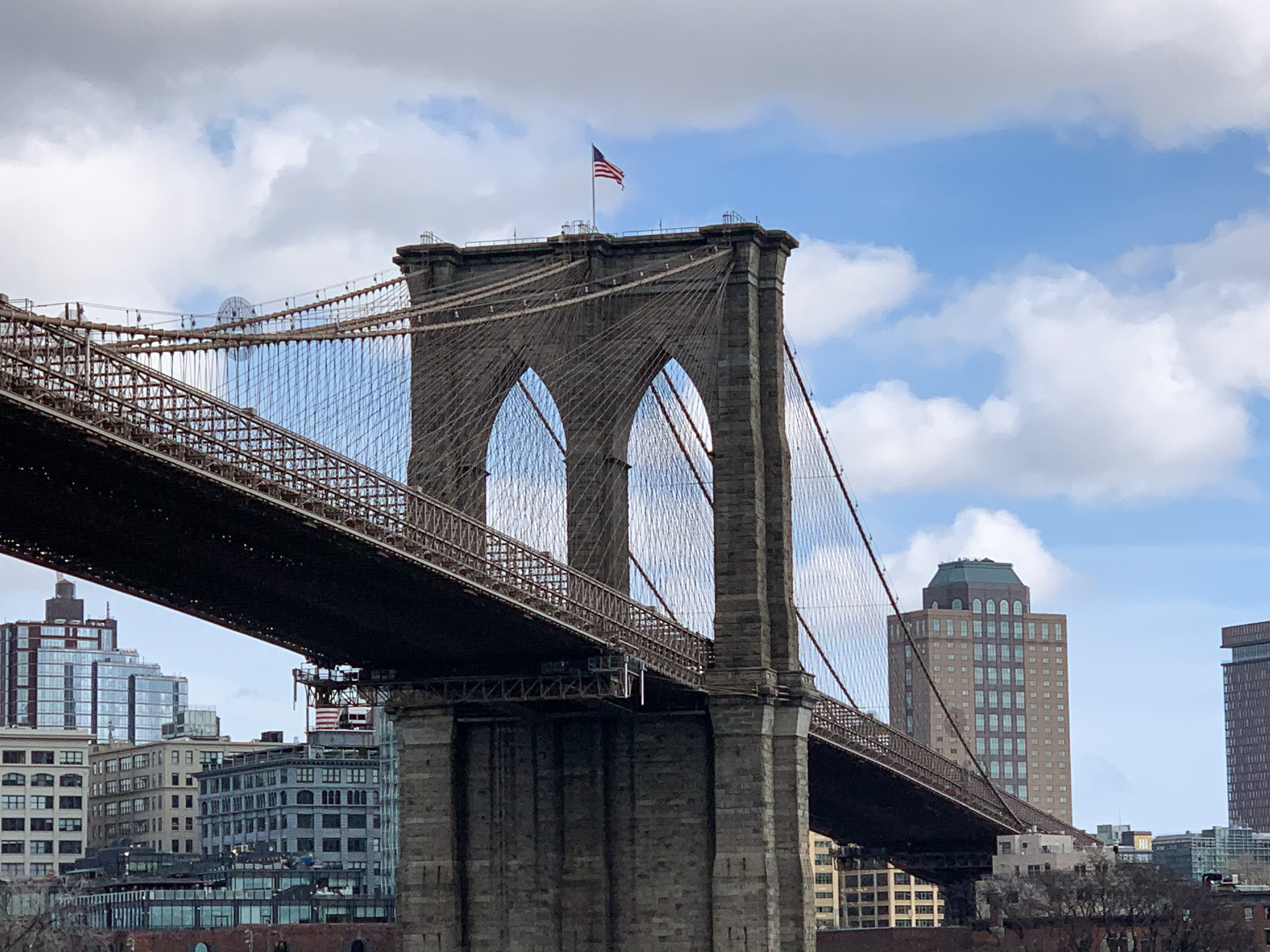
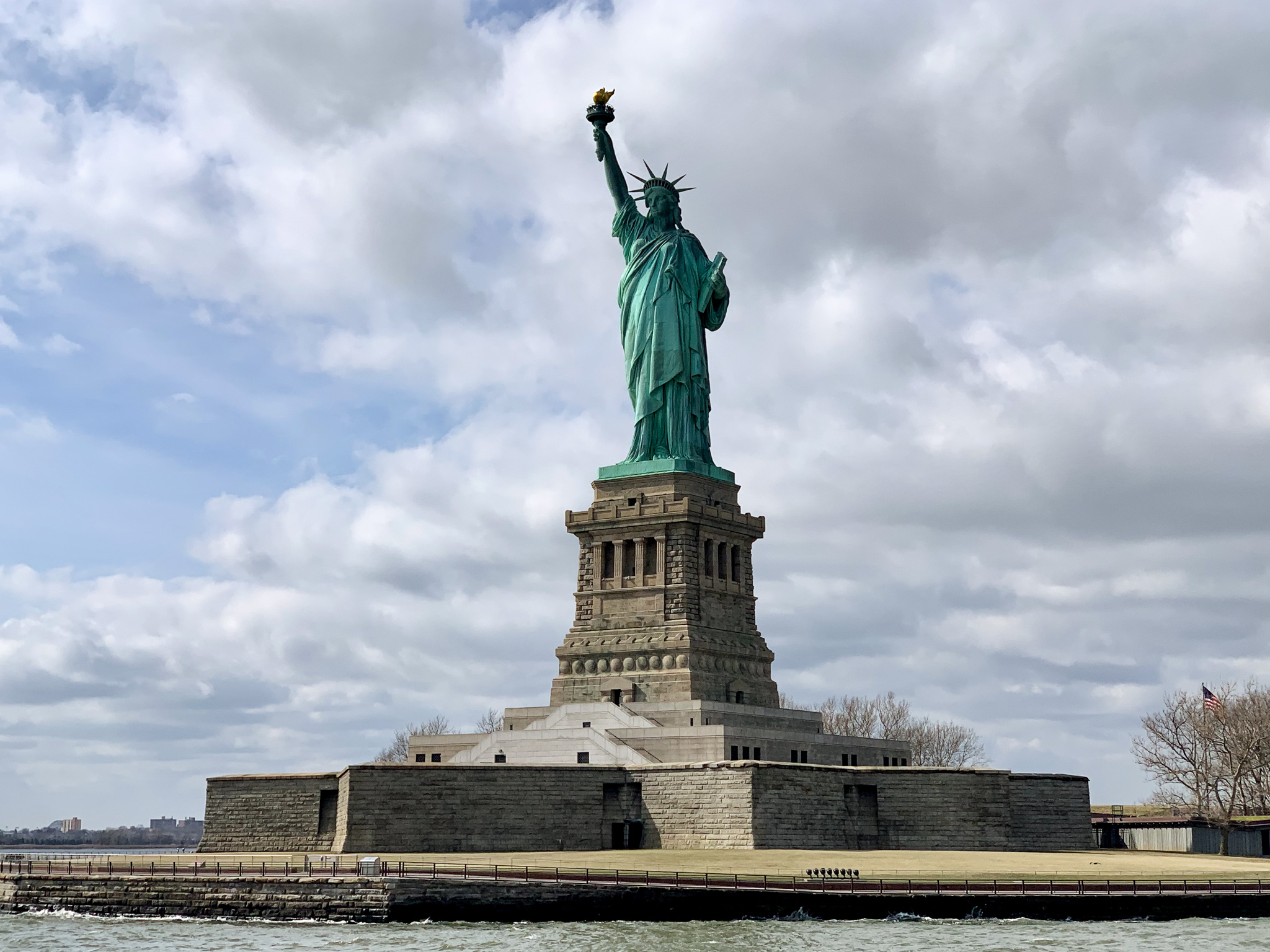
I recommend an outing on the New York Water Taxi from South Street Seaport, which will grant you outstanding views of the Brooklyn Bridge and Statue of Liberty, and which will take you to additional stops where you can disembark and explore, like Midtown and Brooklyn.

WaterTaxi5

Brooklyn Bridge

We managed to catch the very last Water Taxi running – as soon as our trip was over it was shut down due to COVID. We were relieved to have caught the last one, but sad to see it have to shut down. This is one of the best experiences for visitors to New York.

StatueLiberty8

Statue of Liberty

Ordinarily the Statue of Liberty would be swarmed with huge crowds, but not on this day… apparently it was already closed. And although the Water Taxi closed after this run, we were able to enjoy the double-decker bus for another day, which allowed us to explore downtown, midtown, uptown, Harlem, and Brooklyn, with the ability to hop on and hop off at various sights. It’s a very convenient way to get around the city, and with great views, that I highly recommend.

MM World2

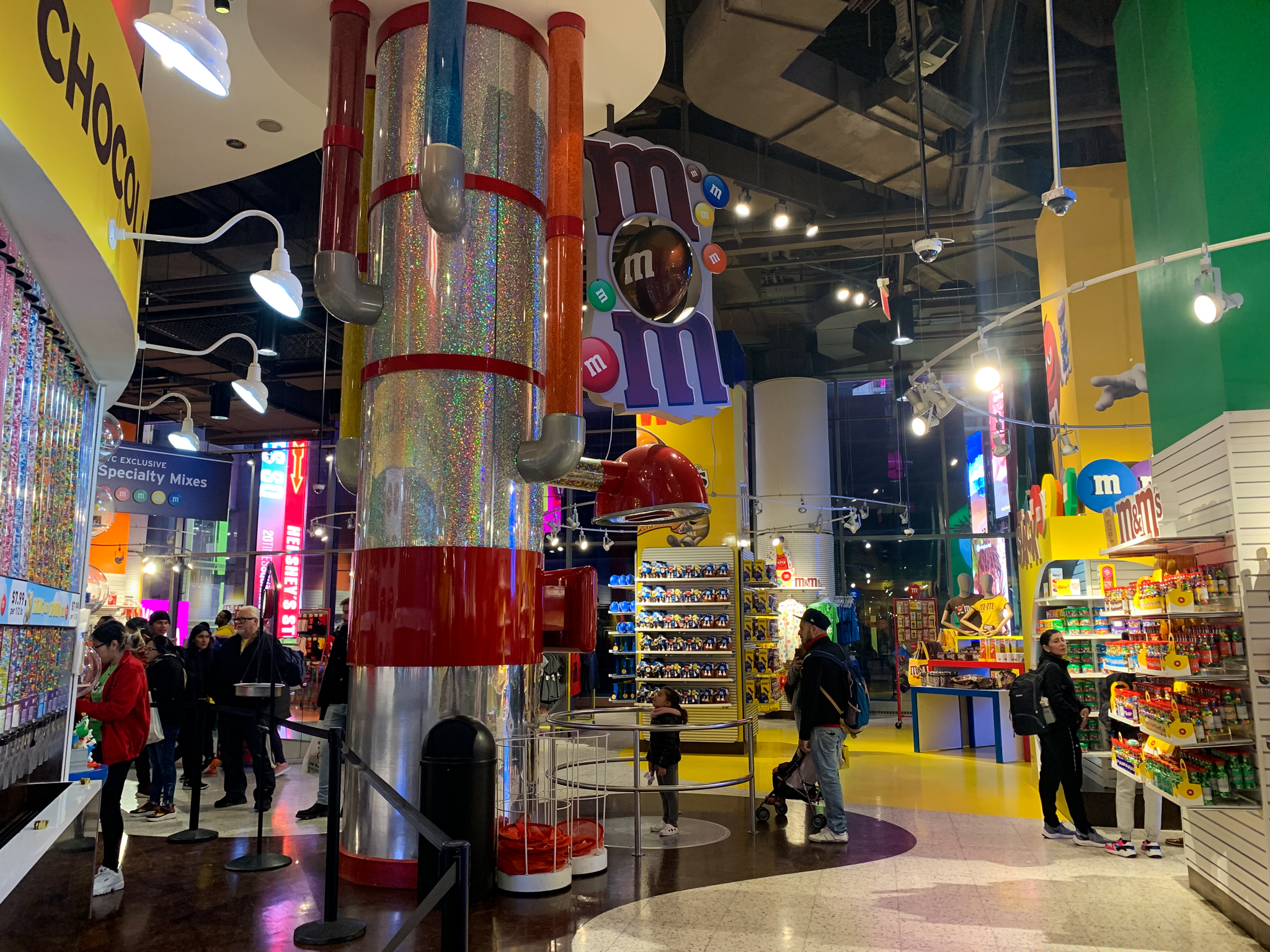
M & M’s World

If you have a sweet tooth, no visit to New York is complete without a stop at M & M’s World in Times Square! Here you will find rows and rows of tubes of a rainbow of these delights, and samples are available! Many varieties are available here that you won’t find at your local grocery or pharmacy. You can also shop for an array of branded merchandise.

NY Deli6

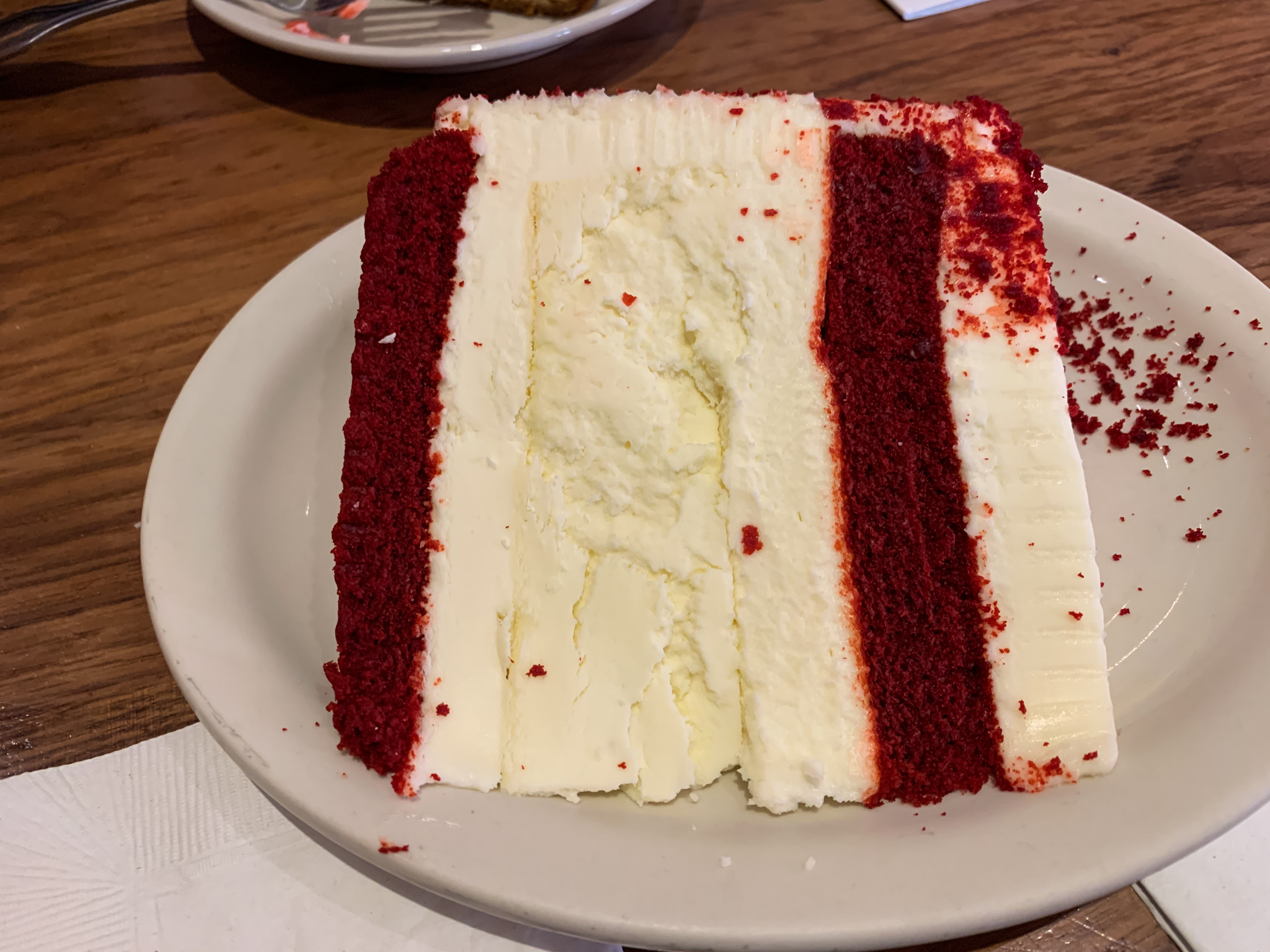
Junior’s Cheesecake

I recommend trying out Junior’s restaurant in the Theater District. Here you can indulge in authentic New York specialties like a Brooklyn Egg Cream, Pastrami Sandwich, and world-renown New York Cheesecake! It’s a little pricey, but portions are huge – take a friend and share and you’ll both be satisfied!

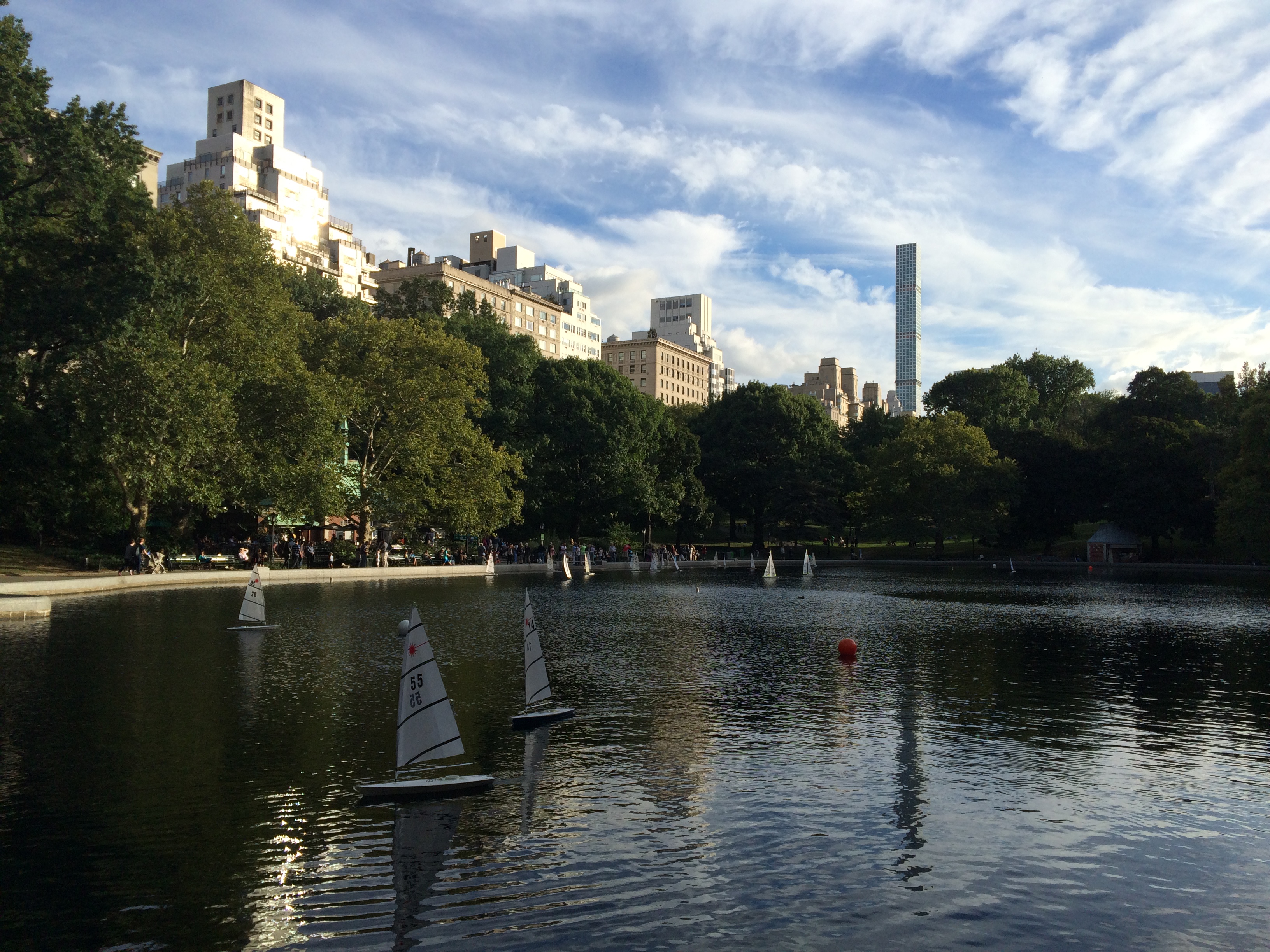
CentralPark

Central Park

What better way to stroll off those calories than a stroll through Central Park? It’s a relaxing oasis amid this bustling concrete jungle.

I realize that this post may be controversial – that there may be some who feel it was irresponsible of us to visit New York in mid-March, 2020. And I’m sure there are others who applaud our determination to keep living our lives. We were in New York anticipating a cruise on the 15th that ended up being canceled two days before embarkation, so we remained in the city a couple more days before departing. At that time, there was a lot of confusion, and news of the virus was newly surfacing. The extent of the danger was not yet clear. To those who may be distressed by this post, know that after our visit we returned straight home and quarantined for 14 days. And to anyone wondering, no, we didn’t get sick.

Please join us for our full New York City tour here:

Thank you for reading! A review of two New York City hotels is coming up next!

Camel Riding Cabo San Lucas

camel riding cabo san Lucas

Epic desert journey

Camel riding… in Cabo San Lucas Mexico?

It’s true – you really can go camel riding in Cabo San Lucas on the Baja Peninsula of Mexico! I had a really unique adventure embarking on a camel ride out in the Mexican desert. Tours are available out of Cabo heading deep out into the desert, where you’ll feel transported to an Arabian desert-like wonderland. Bring a book for the bus – it takes a couple hours, but is well worth the trip! It’s truly a peaceful oasis, and I felt refreshed and rejuvenated after my visit!

camelriding2

Camel introductions

Preparing to Ride the Camels

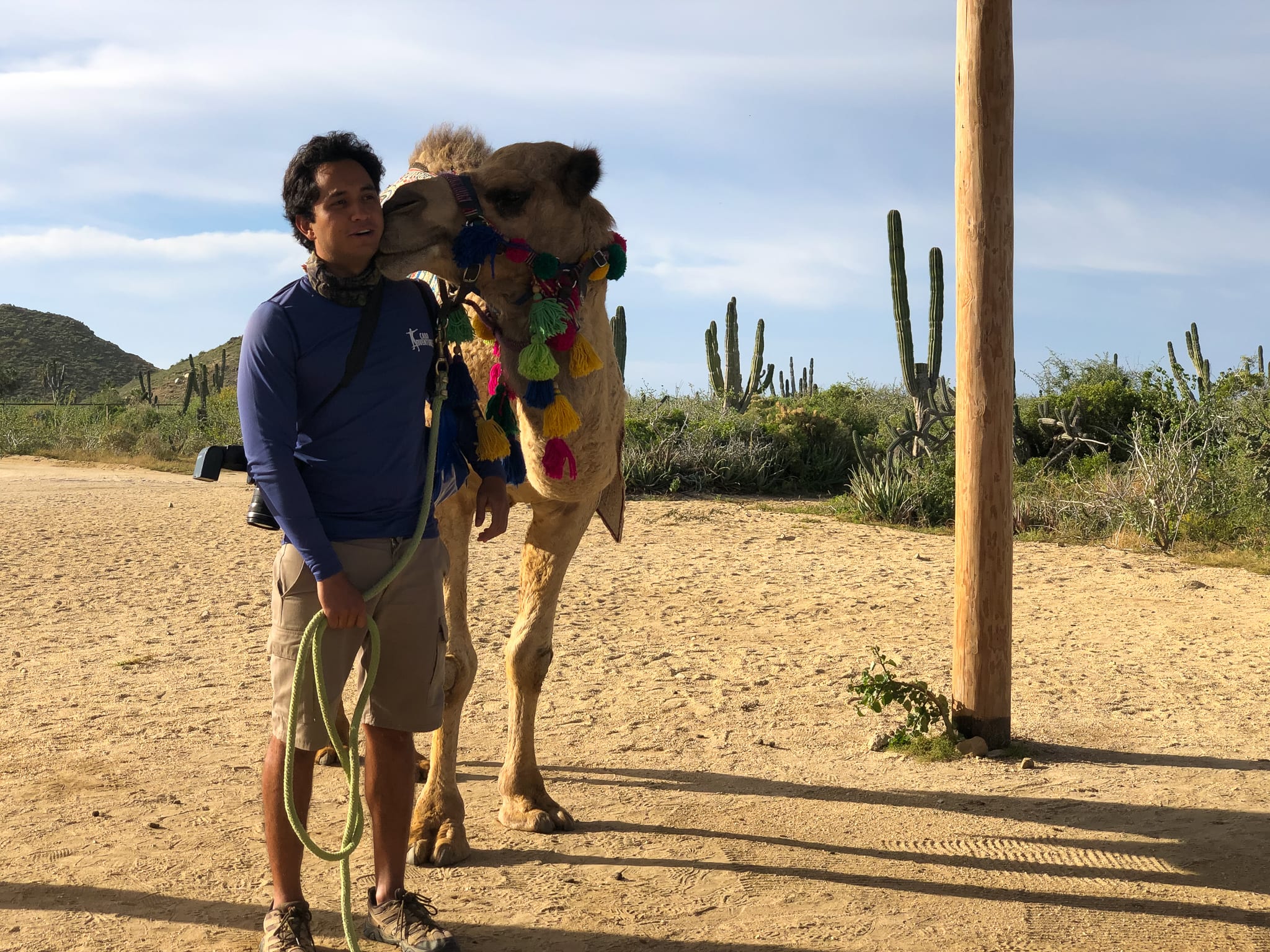
This is a three phase experience. First, you meet the camels and learn about them followed by a photo op (and, if you’re camel’s feeling frisky, a Casanova-like kiss!) If you’ve always wished you had long eyelashes, prepare to get jealous! The camels are very friendly and serene, and are decked out in colorful accessories! They make quite the fashion and beauty statement…

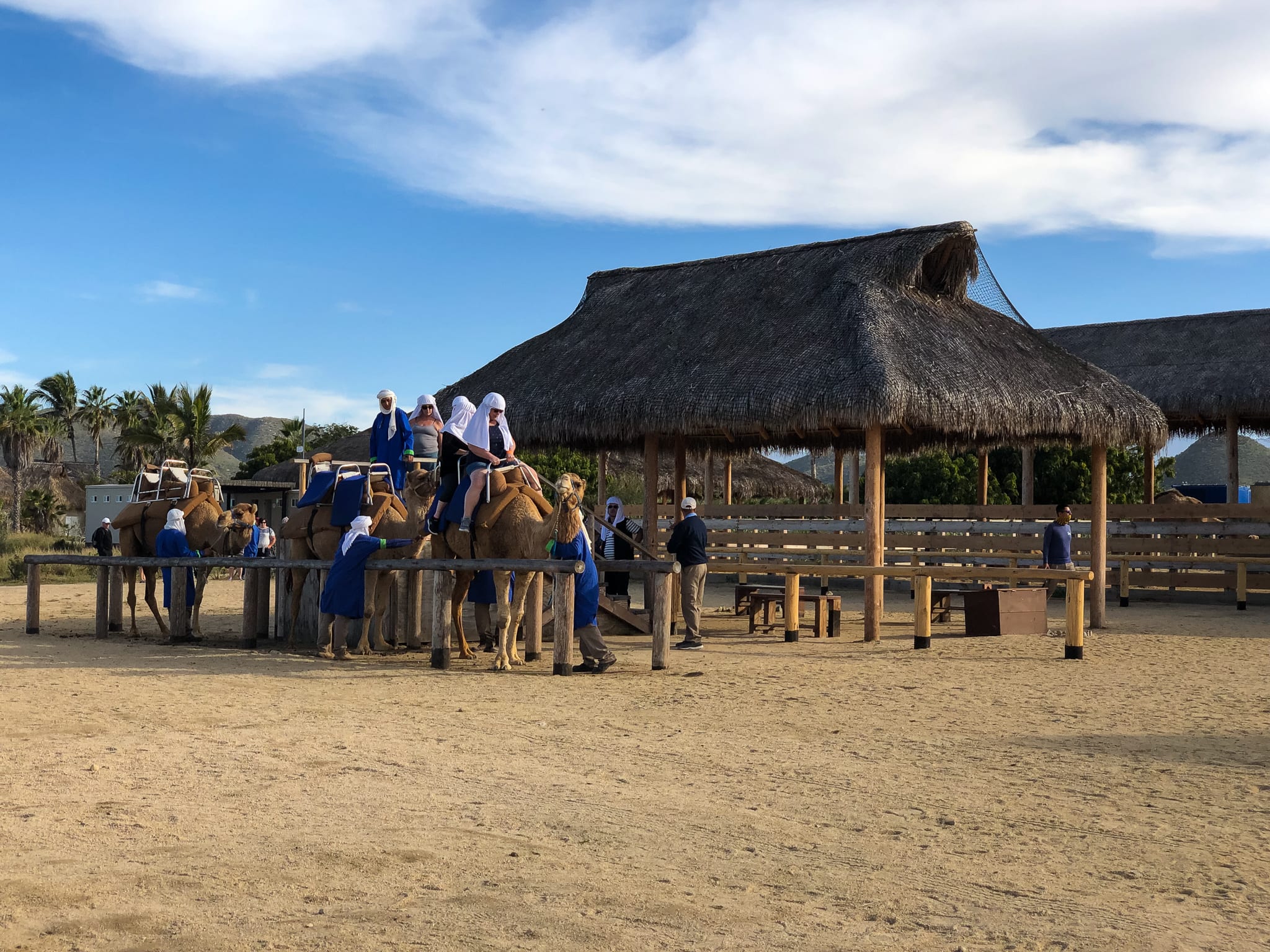
camel riding ranch

Staging area for mounting the camels

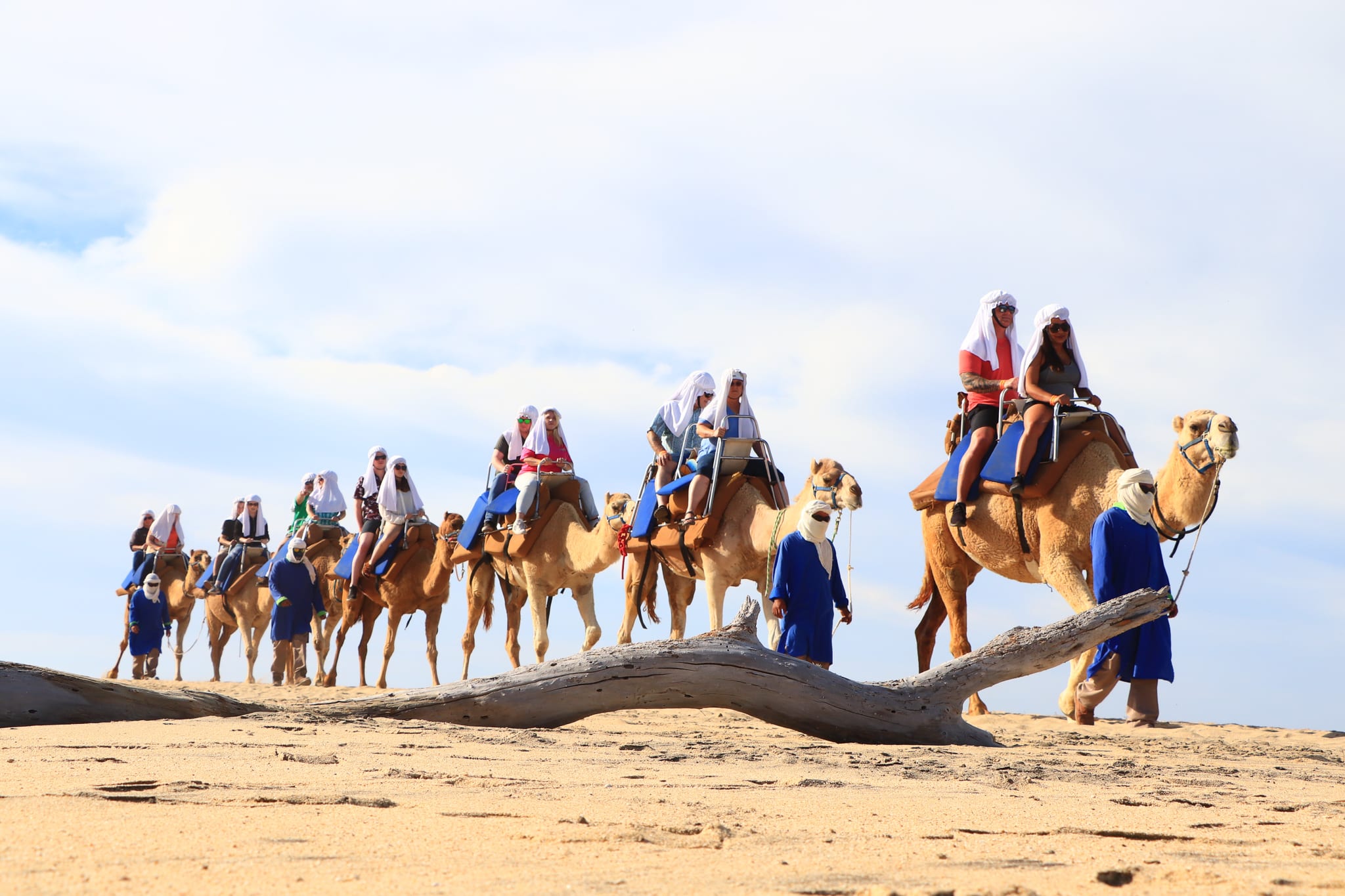
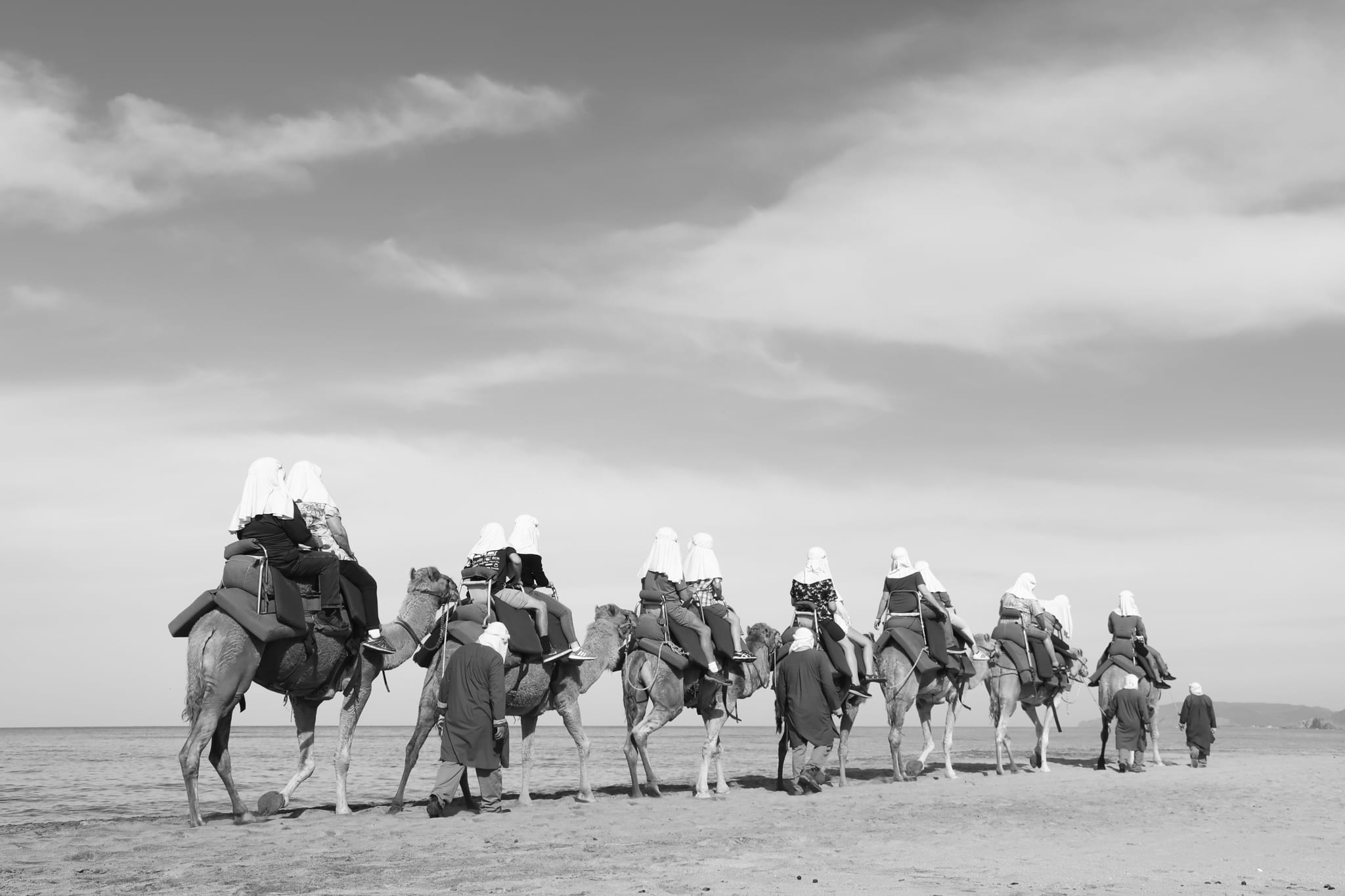
Second, you mount the camels in groups of two (solo traveler? no problem, you’ll share with another solo). Third, you embark on an enlightening journey along the beach and through the desert. I had an easy time getting on the camel. I was able to step on a platform, and then I was helped by one of the friendly guides. Each camel passenger is given a headscarf to adorn for protection from the desert sun during the journey. I was feeling very Lawrence of Arabia.

camel riding cabo san Lucas black white

Camels on parade

Camels are Comfortable!

I found riding a camel surprisingly comfortable and relaxing. Before mounting, I was warned that since the camels are wider than horses some people consider them uncomfortable. That was not my experience. My camel felt a lot more sturdy and the ride smoother compared to the horseback rides I’d been on. My camel was better behaved than any of the horses I’d ridden, and refrained from any jerky motions. Given the choice, I would choose a camel over a horse any day. It was a wonderful way to travel!

mexicandesert

The Mexican Baja desert

Incredible Desert Views

The landscapes of the desert were beautiful. I was there in January, when temperatures were mild. This dazzling desert wonderland is flanked on one side by beach and the other side by mountains, a breathtaking pleasure to behold! And it was so peaceful, so far away from the bustle and commotion of the city of Cabo. Yep, this place has it all!

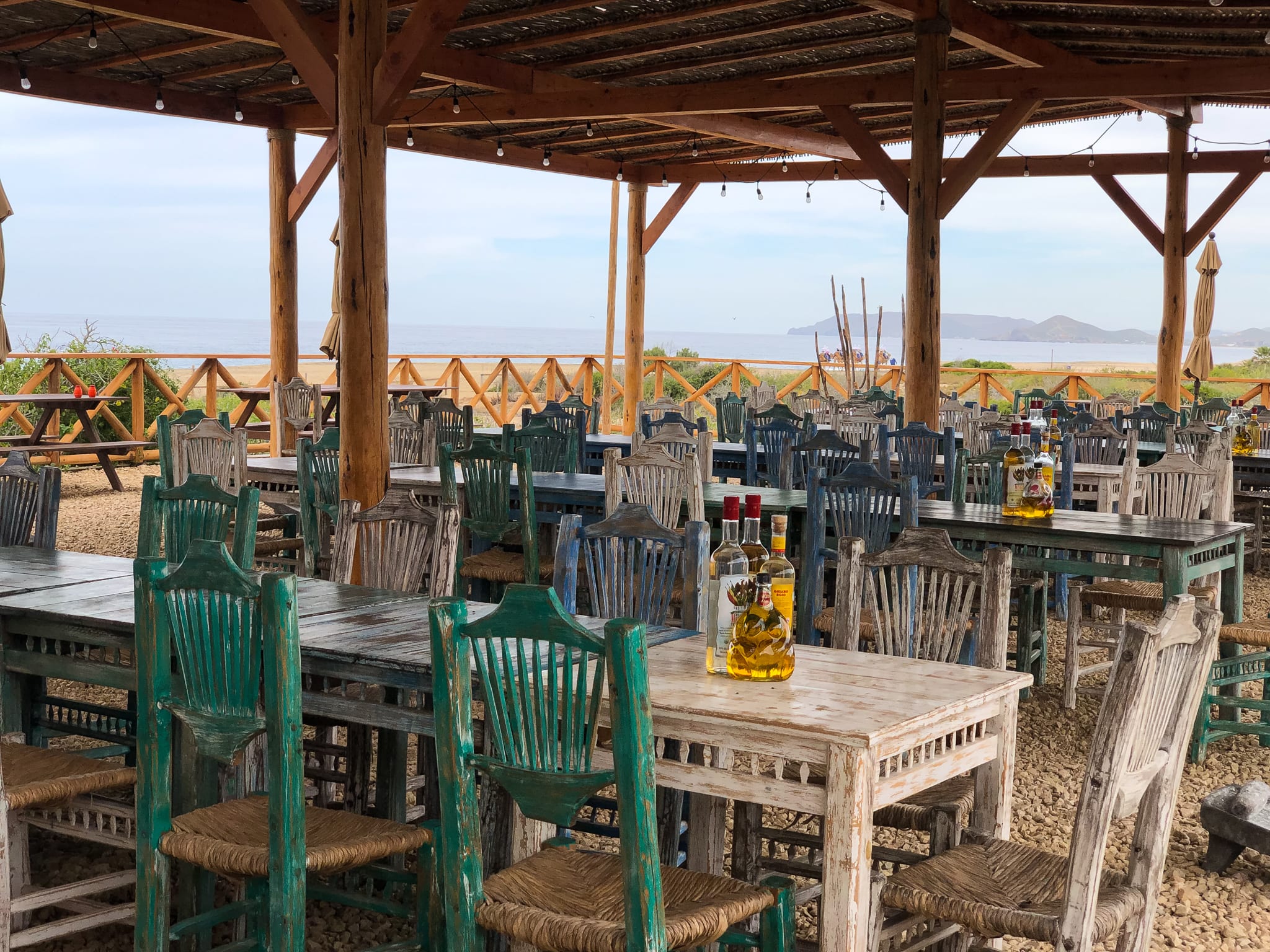
mexicanalfresco dining

Alfresco dining a-la Mexico

Delicious, Authentic Lunch Break

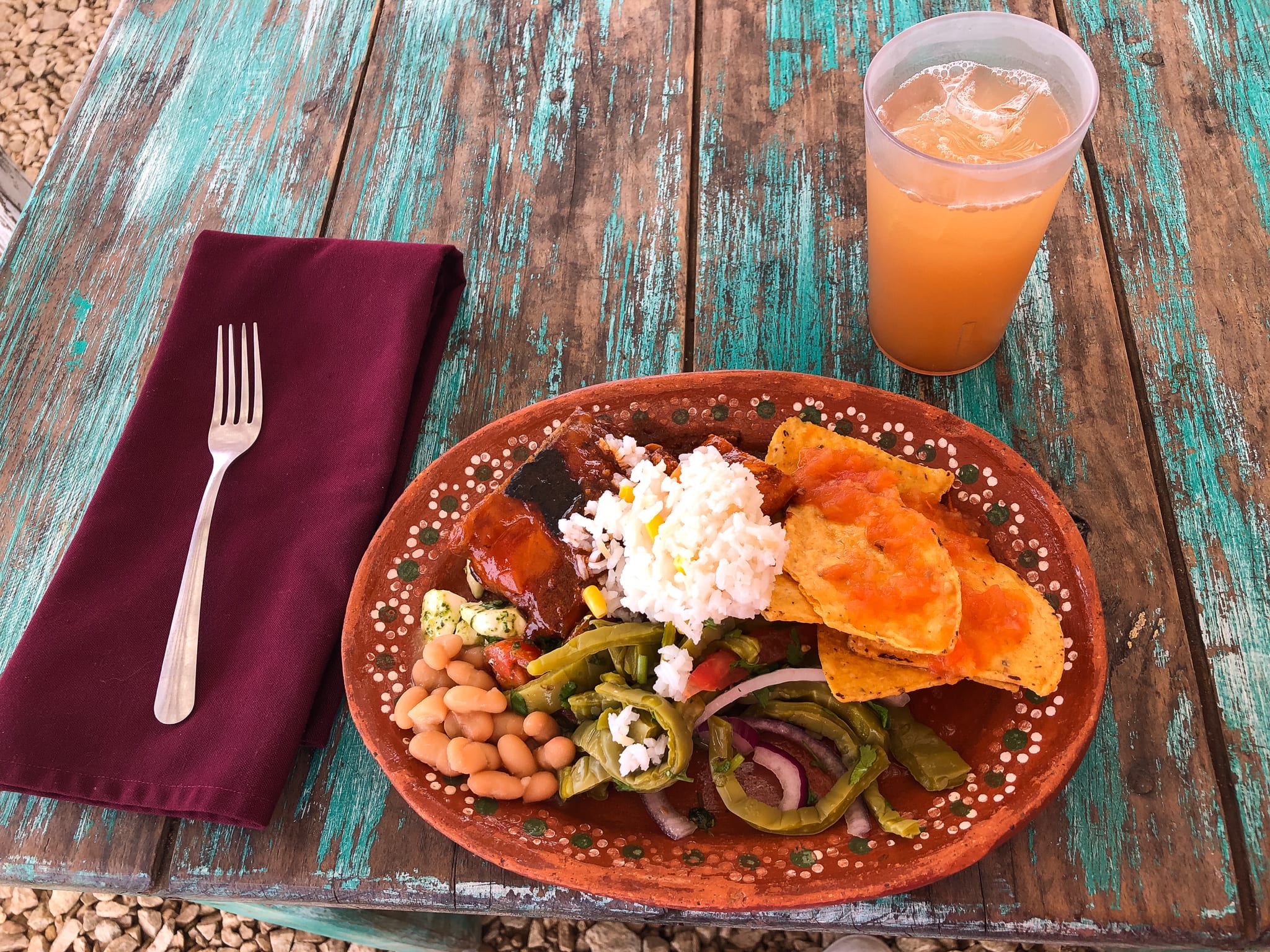
The last experience of the tour was an authentic, alfresco lunch buffet with a wonderfully rustic ambience. Fabulous food in an amazing atmosphere – what more can you ask for after an exhilarating ride? (And, yes, camel meat was available… and optional!) A variety of choices were served… each one of them more delectable than the last!

delicious authentic lunch

Delicious authentic Mexican lunch!

Tequila Time!

Also on the menu: a tequila tasting, featuring abundant varieties of tequila! What a great way to quench your desert thirst…! Non-alcoholic Mexican beverages were also available. It was a fun treat to cap off what was an incredible day, one I will cherish for a lifetime!

resting camel

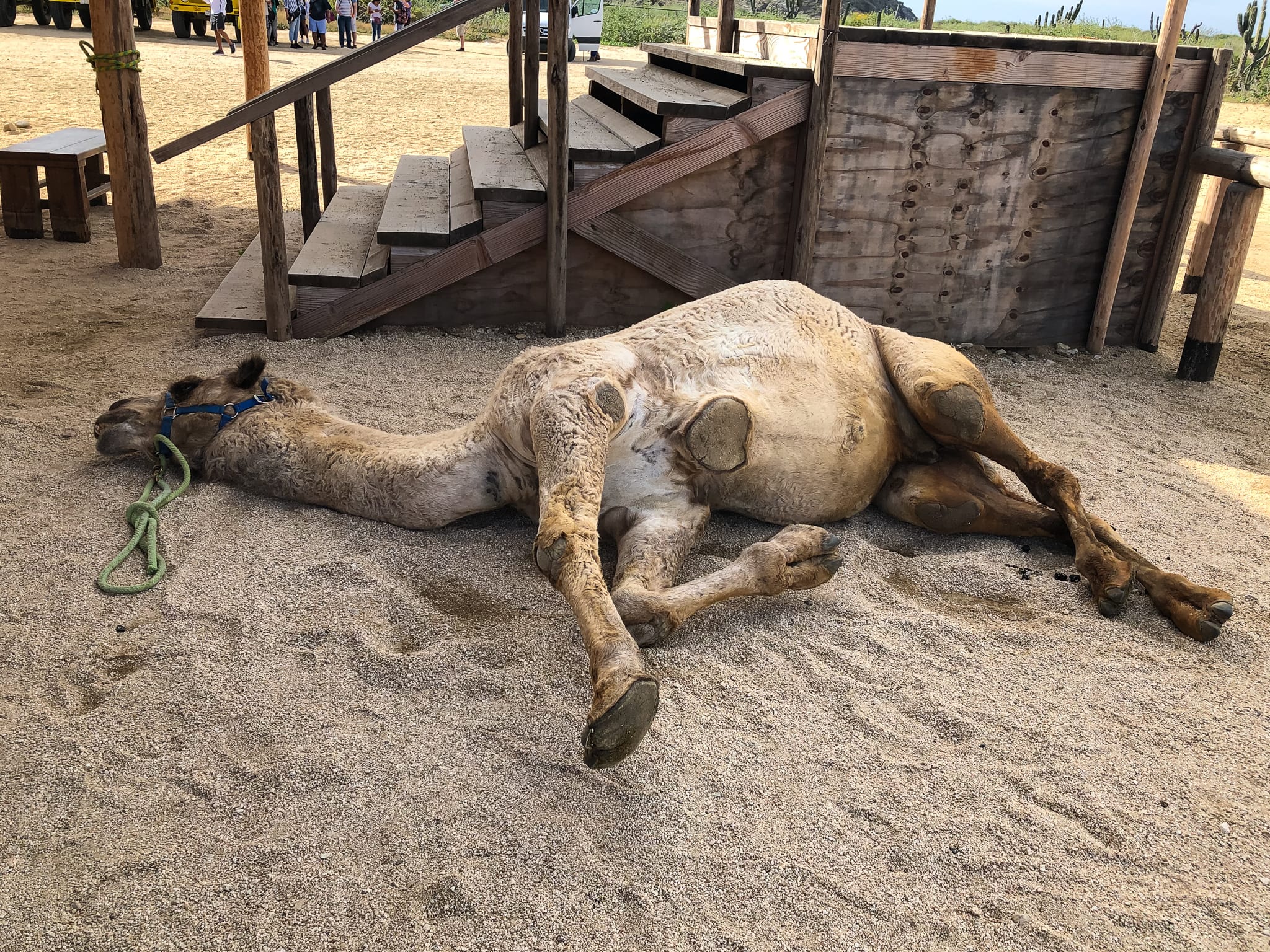
Too much tequila?!

More on Camel Riding in Cabo San Lucas

Camel riding in Cabo San Lucas was a total blast! You can see a video of my experience here (note – filming while riding was not allowed, but I was able to purchase drone video and film the rest of the time):!

Visit my YouTube channel for more videos of exciting destinations!:

Ultimate Travel Adventures YouTube Channel

Check out more of Mexico in my Chichen Itza blog post!:

Mayan Ruins of Chichen Itza, Yucatan, Mexico!

Chichen Itza, Mexico: Ancient Mayan City

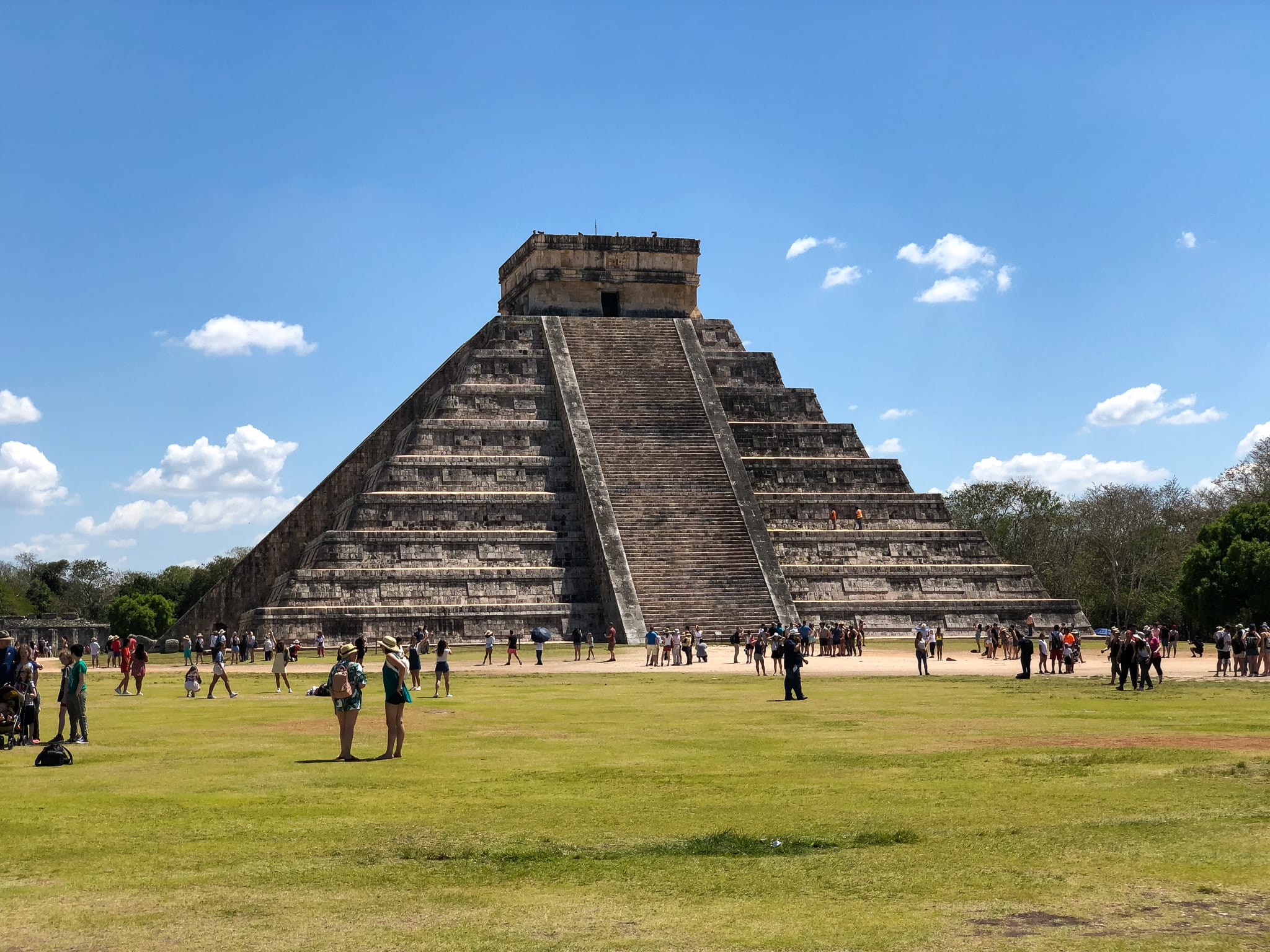
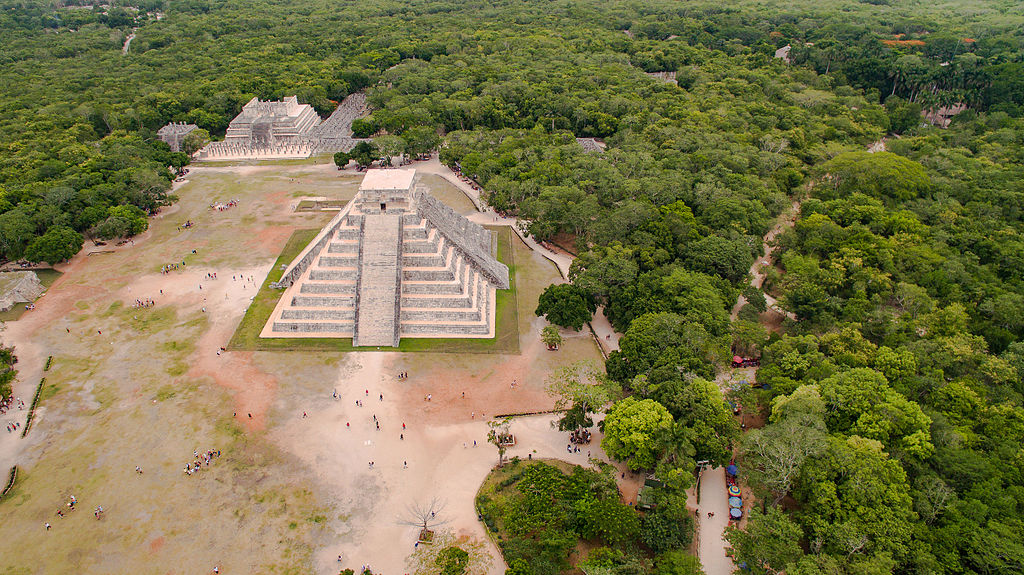
chichen itza Mexico

El Castillo (“The Castle”)

Chichen Itza, Mexico: Great Mayan City

Chichen Itza, Mexico is on the Yucatan Peninsula. This ancient city boasts some of the most spectacular Mayan ruins in the world. Chichen Itza has stood the test of time superbly, considering it dates from 600-900AD. The phrase “Chichen Itza” means “the well at the mouth of the Itza.” Although remote, Chichen Itza is frequently featured in bus tour excursions from Playa del Carmen (2 hours, 7 minutes), Cancun (2 hours, 15 minutes), and Cozumel (3 hours, 25 minutes). If that sounds like a long trek, don’t be discouraged. The treasures to be found once you’re at Chichen Itza make every second on the bus worth the journey!

The Castle

El Castillo is, perhaps, the most enthralling architectural marvel of all here. El Castillo, Temple of Kukulcan, or “the castle,” is a 98 foot high enormous ziggurat temple. (Art History tip: when there are steps it is a ziggurat, not a pyramid.) Sacrifices were performed on the platform at the top. This structure may be the most iconic symbol in the world of the ancient Mayan civilization.

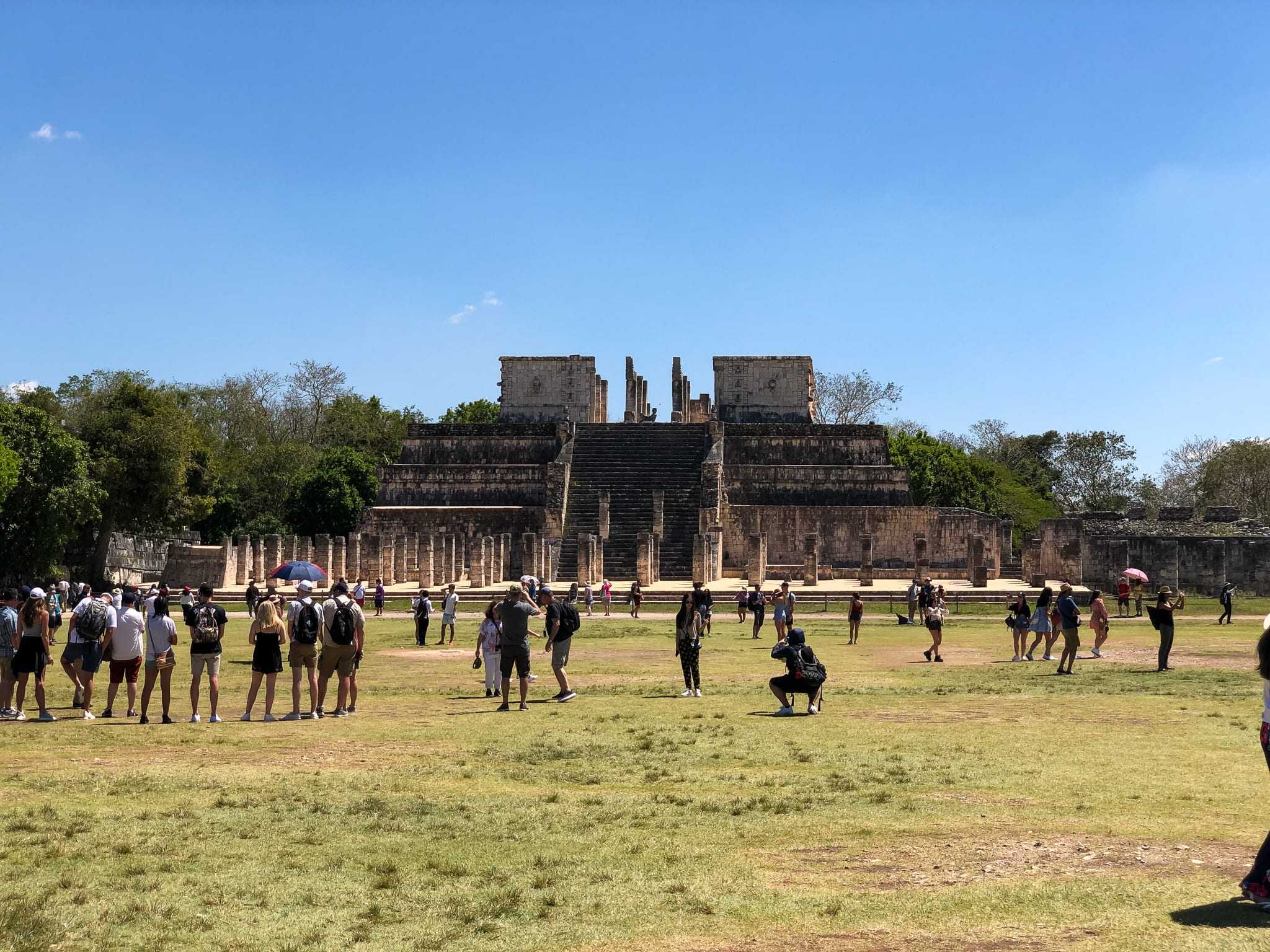
chichen itza temple warriors

Templo de los Guerreros (“Temple of the Warriors”)

Mayan Warrior Tradition

The Temple of the Warriors is near the castle, where a forest of columns is adorned with depictions of the most honored fighting champions. The Mayans took pride in their fighting prowess, and they’ve immortalized this tradition here. Polities fought over limited natural resources such as obsidian, water, and land for farming. The capture of sacrifices, which is now considered a gruesome part of their spiritual traditions, also sparked violent conflict.

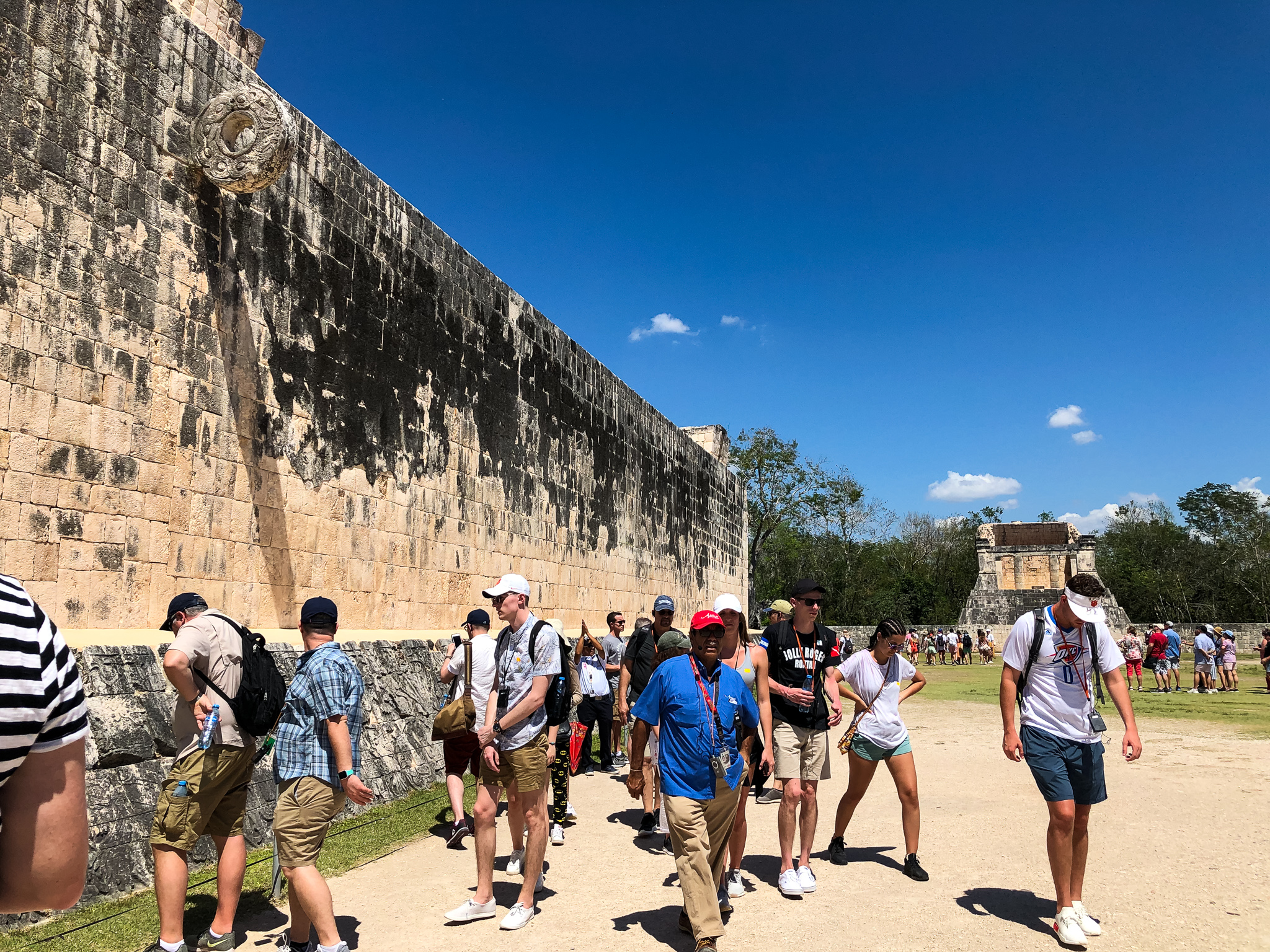
IMG_4849

“Great Ball Court”

Mayan Athletic Skill

Athletes were champions, too. And a favorite structure with visitors here is the Great Ball Court, the largest (551 by 230 feet) and most well-preserved Mayan ball court in the world. The court is surrounded by “stands,” or audience seating areas. Different classes were assigned to different seating areas, becoming increasingly more lavish and “with a better view of the action” as the audience member elevated in social class. It reminded me of the seating structure of the amphitheaters of Ancient Rome, although a whole ocean away. Notice the donut-shaped carving (top left on the photo above.) The ball had to get through this hole, and seeing this, you contemplate the tremendous skill of the Mayan athletes!

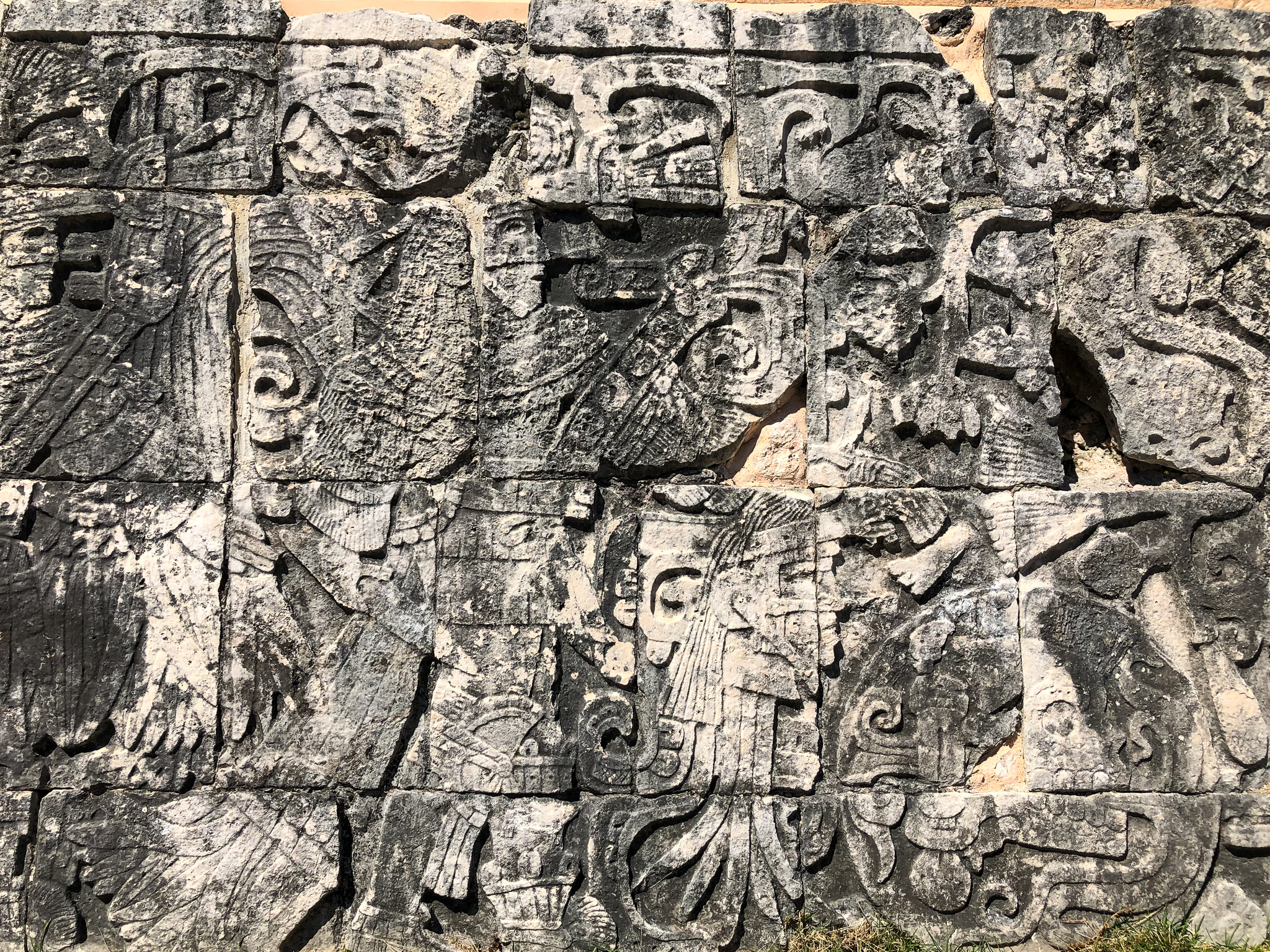
IMG_2770

Carvings on the wall of the Ball Court

Sport in Art

Carvings on the walls of the ball court are extremely detailed, and tell the story of the ball game and its athletes. The “winner” had the privilege of being selected for sacrifice through decapitation (also depicted here!) The artwork at Chichen Itza is extremely well preserved and maintained, so it’s a joy to ponder the Mayan culture here! For example, it’s fascinating to consider how much ancient Mayan culture differed from cultures of today!

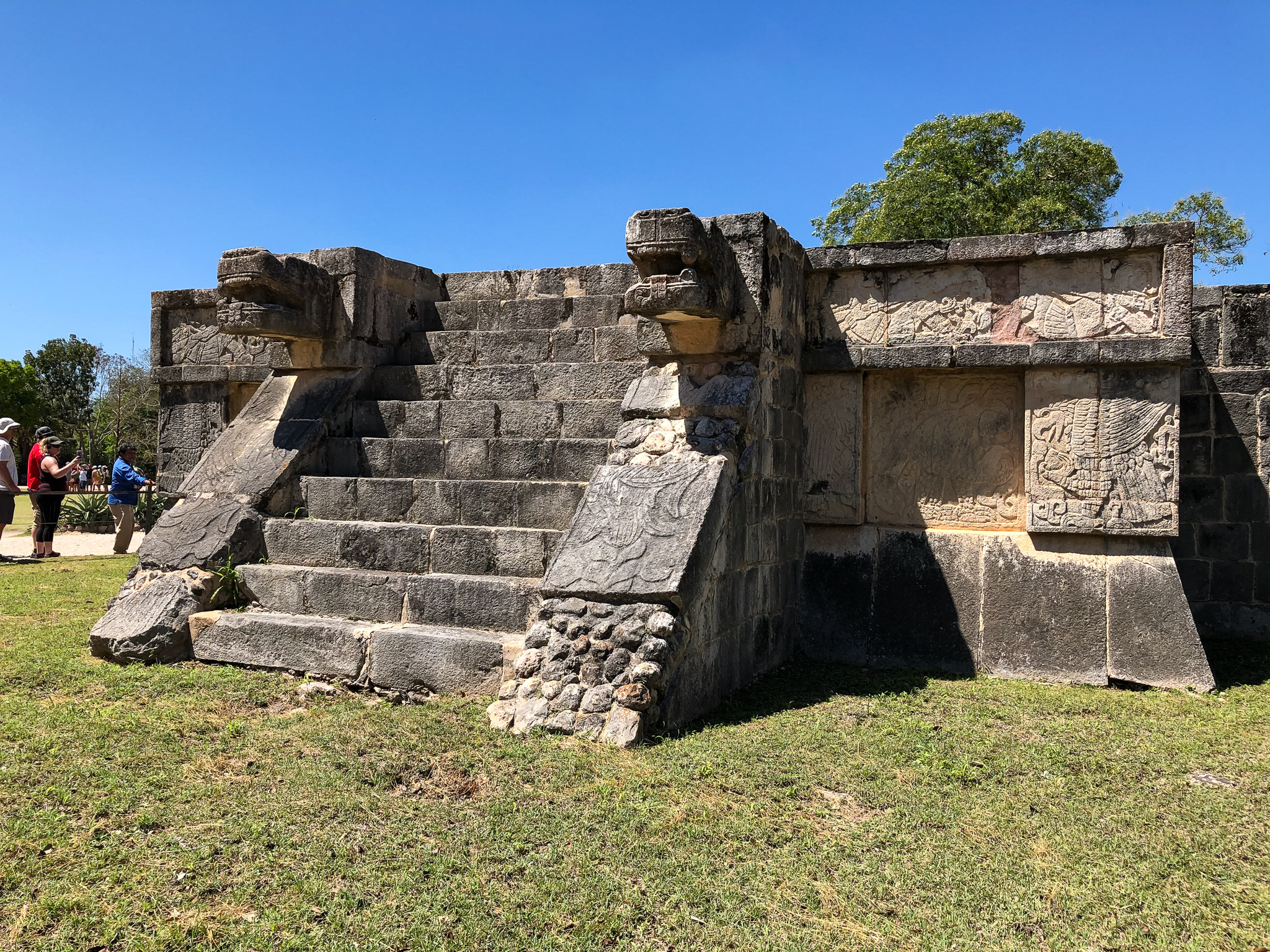
IMG_6153

“Venus Platform”

More to Explore!

There are many other buildings here to explore, so take your time to notice the intricate detail on many of these structures. There is absolutely no better way to learn about a time and place in history than from the original people, who, here, eternally tell their first-hand story through their artwork. No modern tour guide can tell it so well. The crowds can be enormous here, but there’s lots of room to spread out, making the experience more comfortable than smaller ancient sites. But be sure to bring some sunscreen and cool clothing, because there’s little shade here and it tends to get stiflingly hot, even in shoulder season!

Chichen_Itza-16

Overhead view*

*Open source (credit: dronepicr, http://www.commons.wikimedia.org)

In conclusion, you can explore more of Chichen, Itza, Mexico in my full video tour here!:

For videos on more destinations, as well as hotel and cruise ship tours, check out my YouTube channel here!:

Ultimate Travel Adventures YouTube Channel

And for more Mexico, check out my camel riding in Cabo San Lucas blog here!:

Camel Riding Cabo San Lucas

Amazing Mazatlan, Mexico!

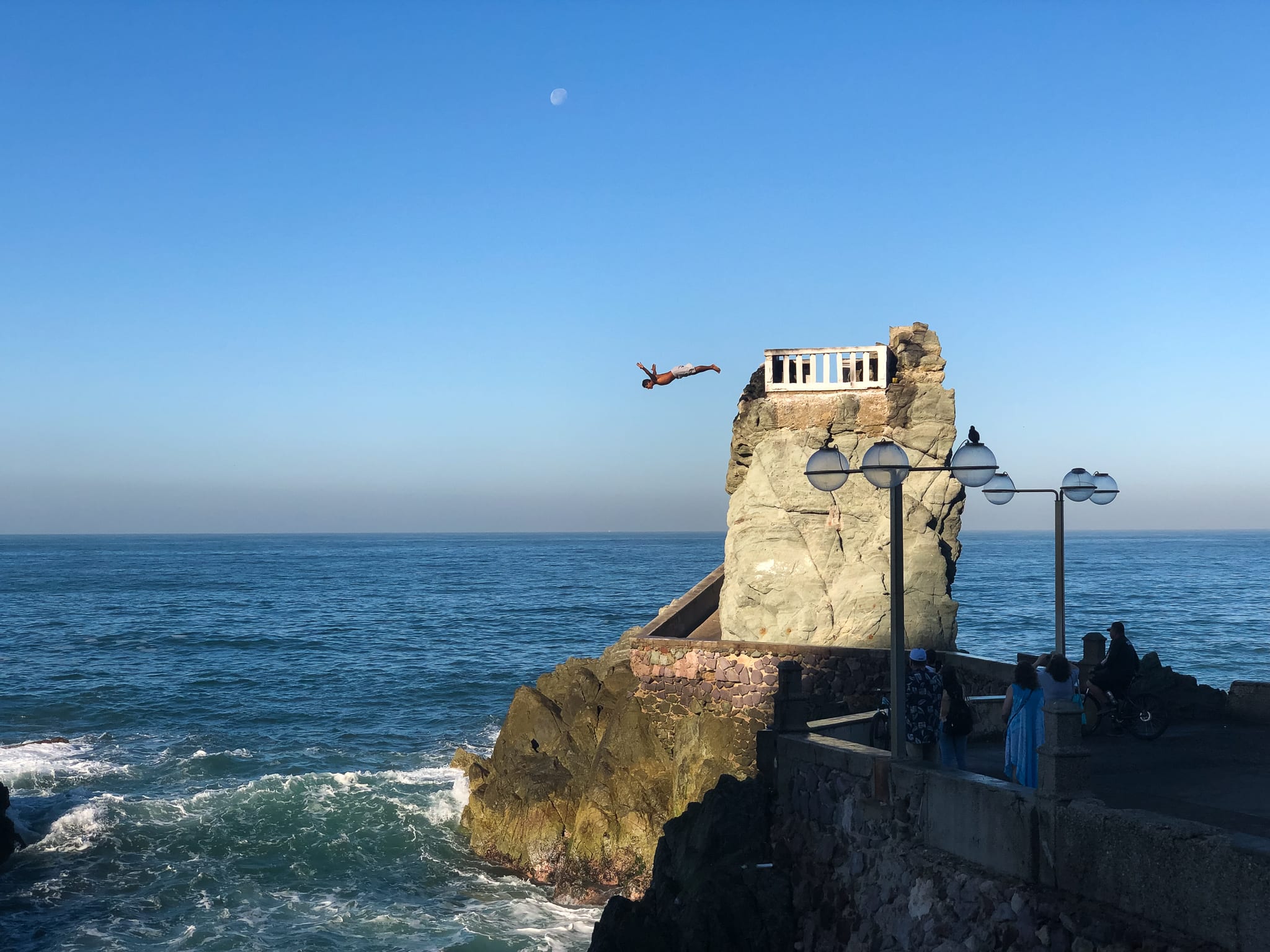
mazatlan Mexico cliff diver

Cliff Diver

Mazatlan, Mexico: Captivating Contradictions

Firstly, Mazatlan, Mexico is a bustling metropolis on the Mexican Riviera. It’s one of Mexico’s most interesting west coast cities. Moreover, you’re never far from the laid-back pleasures of miles of beaches. And oceanfront pedestrian pathways are abundant here. So put on your poncho; it’s time to explore!

Mazatlan’s Cliff Divers

While there are many pleasures to pursue, the most popular attraction may be Mazatlan’s famous “cliff divers.” If you’re up for some real excitement, catch these daredevils in action! These guys make the death-defying leap all day! You can reward their bravery with a voluntary donation. The show is well worth the “price of admission!”

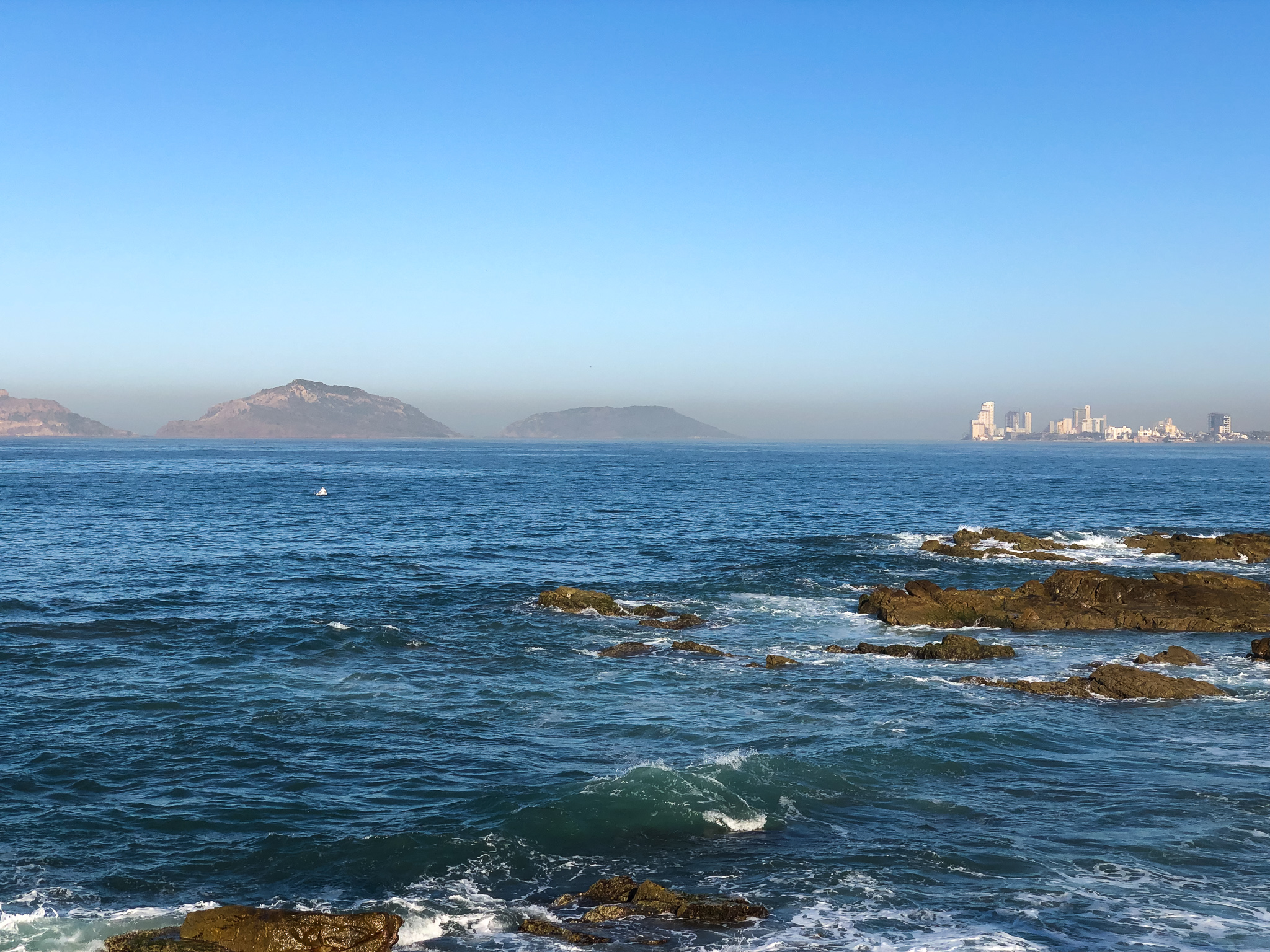
beachesinmazatlan

Big city, big beaches!

Beautiful Beaches

The beaches seemingly are endless here. Enjoy views of the city skyline, and tiny islands in the distance. Warm waves wash over you. The vibrant cobalt waters crash along craggy cliffs along the coast. Mazatlan boasts over 20 miles of beautiful sandy beaches. Some of Mazatlan’s high rated beaches are Playa Olas Altas, Playa Cerritos, and Play Brujas. So have fun finding your favorite!

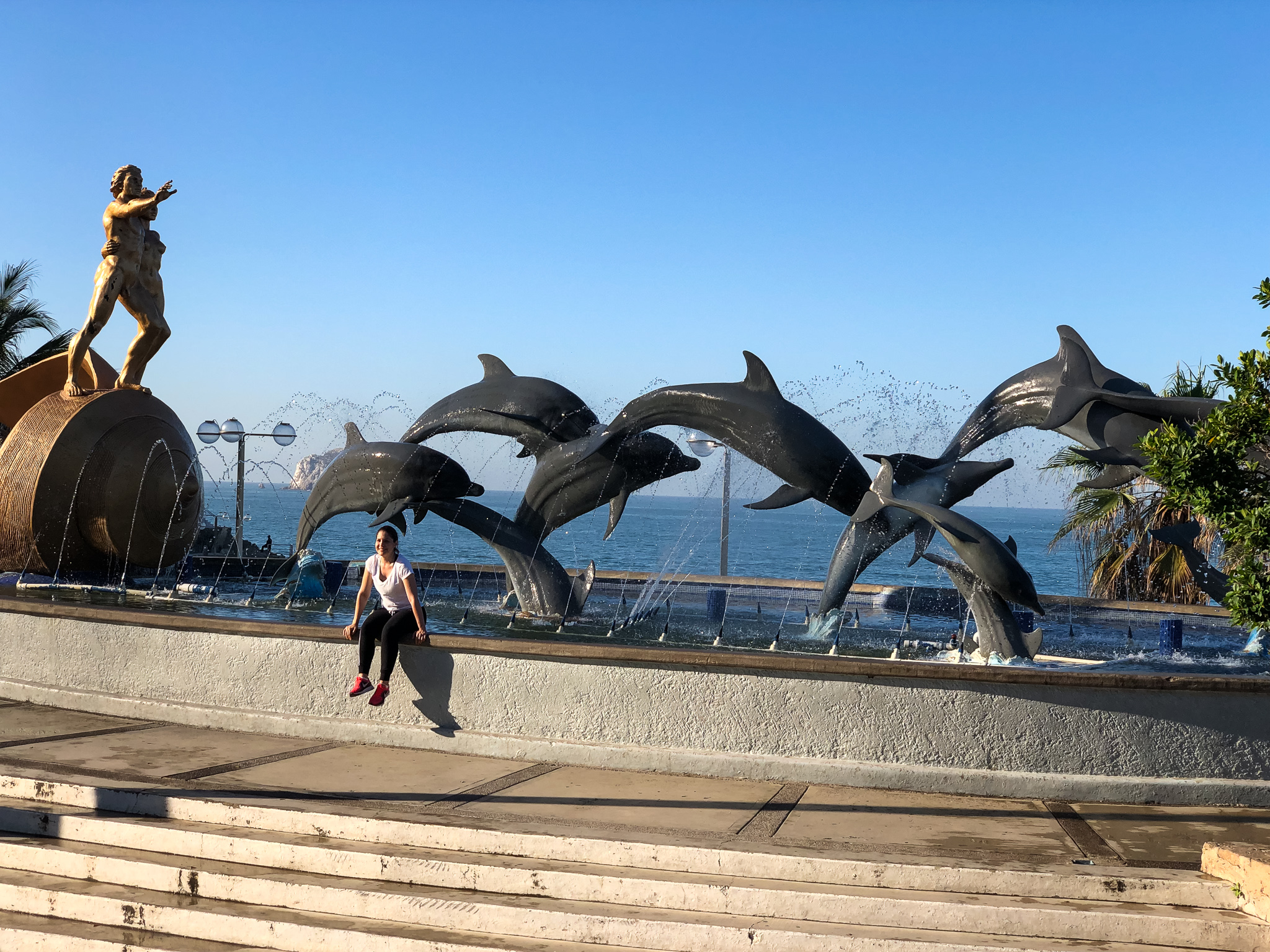
mazatlanmexicoesplanade

Miles of oceanfront walkways

Mazatlan’s Esplanade

Swimming’s not your thing? There are miles of pedestrian pathways sporting the same spectacular views! Statues and other art guide the way like cultural signposts. On the esplanade, you can have a leisurely stroll with the sights, smells, and sounds of the sea. There are many opportunities to stop, sit, and soak it all in. And for people-watching, the esplanade can’t be beat! So set your sights on this seaside paradise!

mazatlanmexicocathedraloutside

Mazatlan Cathedral, exterior

Mazatlan Cathedral

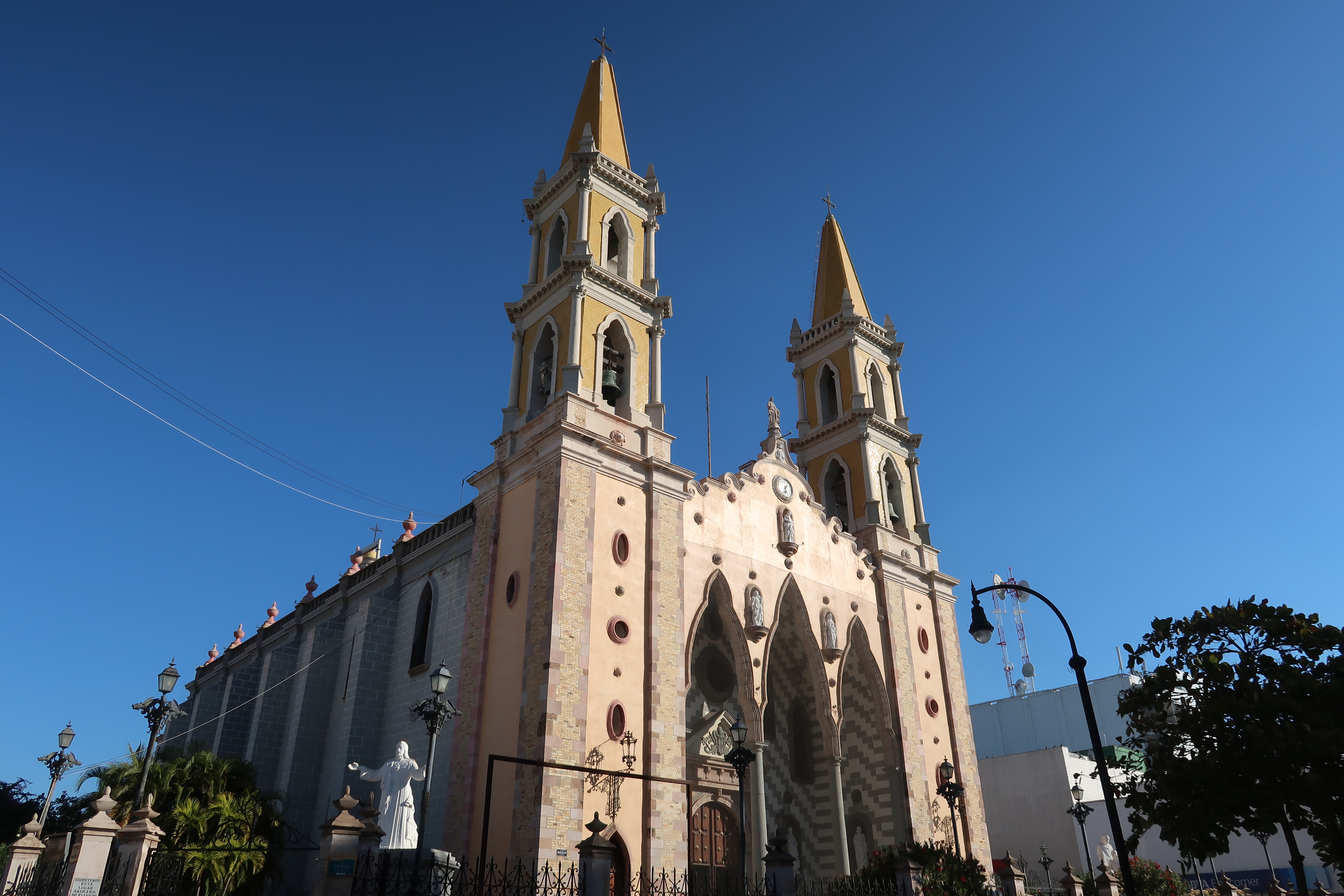
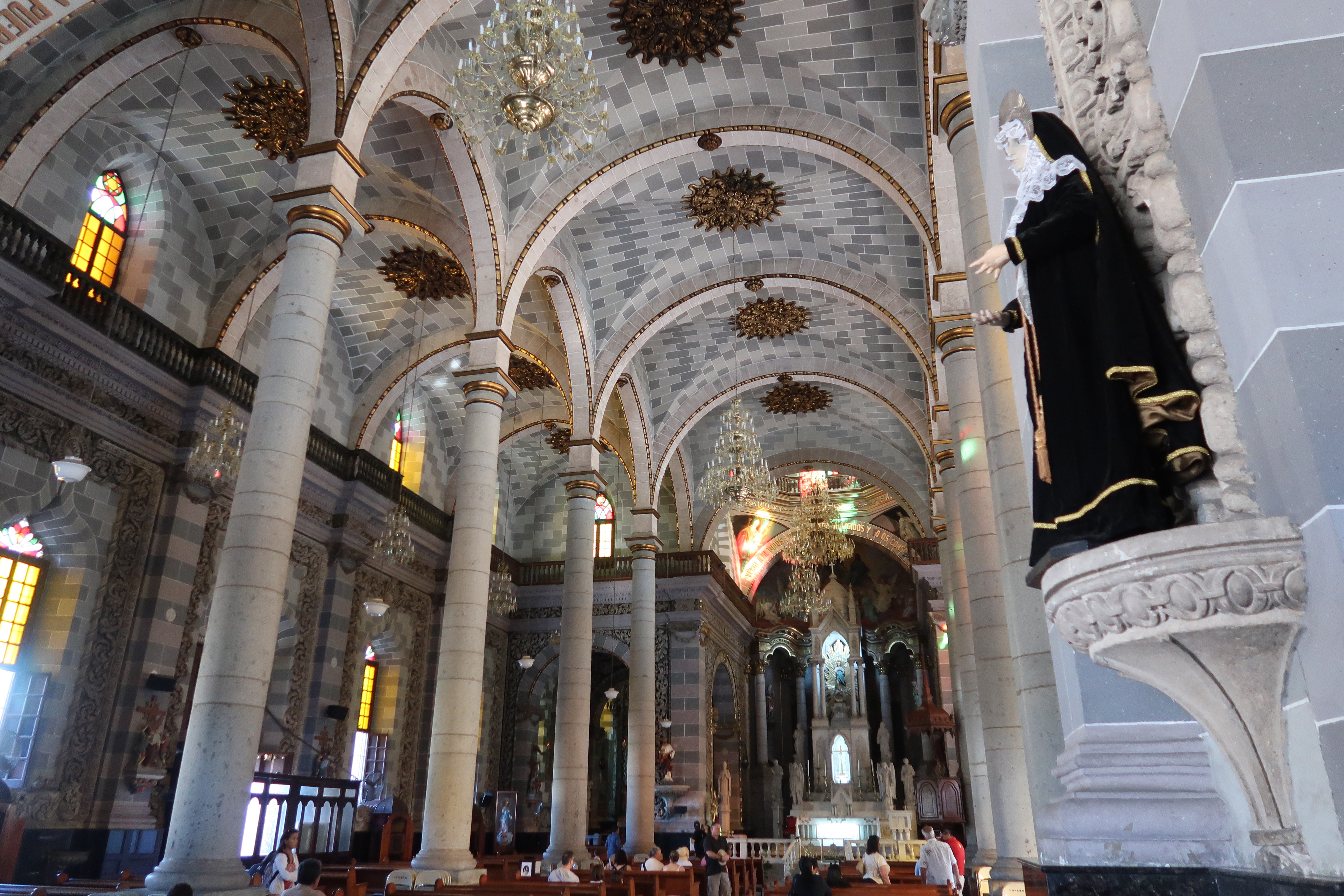
Mazatlan’s most striking architectural highlight may be the  Mazatlan Cathedral, although its more formal name is the Cathedral Basilica of the Immaculate Conception. This baroque revival style building was finished in 1899. The interior is truly inspiring. The sunlight glow beaming through the stained glass windows bathe the sanctuary in brilliantly bold color. And towering pillars line the aisle like exclamation points paying tribute to the undeniable beauty of this place. The building is exquisitely decorated and brilliantly restored, and a Mazatlan must-see. It’s a welcome sanctuary of peace compared to the bustling city outside.

mazatlanmexicocathedral

Mazatlan Cathedral, interior

More of Amazing Mazatlan, Mexico!

In conclusion, Mazatlan is at once old and new, and peaceful and exciting. It is a city to experience contradictions. While it’s a major city, it’s not without its peaceful pleasures.

Check out my full video tour of Mazatlan here!:

And for more great destinations, as well as hotel and cruise ship tours, check out my YouTube channel here!:

Ultimate Travel Adventures YouTube Channel

Want more Mexico? If so, check out my Chichen Itza Mayan ruins blog post!:

Chichen Itza, Mexico: Ancient Mayan City

Travel Michigan! (Part 2: the Mainland)

Time to Travel Michigan!

This is the second installment in my two part Travel Michigan series. We visited the Upper Peninsula last time. Today we’ll explore the mainland, or, as locals call it, “the mitten.” Michigan was previously not on my radar. But it didn’t take long to reach the conclusion that Michigan is, in my opinion, the most underrated destination in the United States. The scenic beauty up there was well beyond what my wildest imagination could conceive! I plan to return to Michigan again and again… and that’s no exaggeration… I literally put my money where my mouth is on the topic and put an offer on a vacation cabin in Michigan. I will go over that in another post.

fortmichimailackinac

Fort Michimilackinac

Fort Michimilackinac

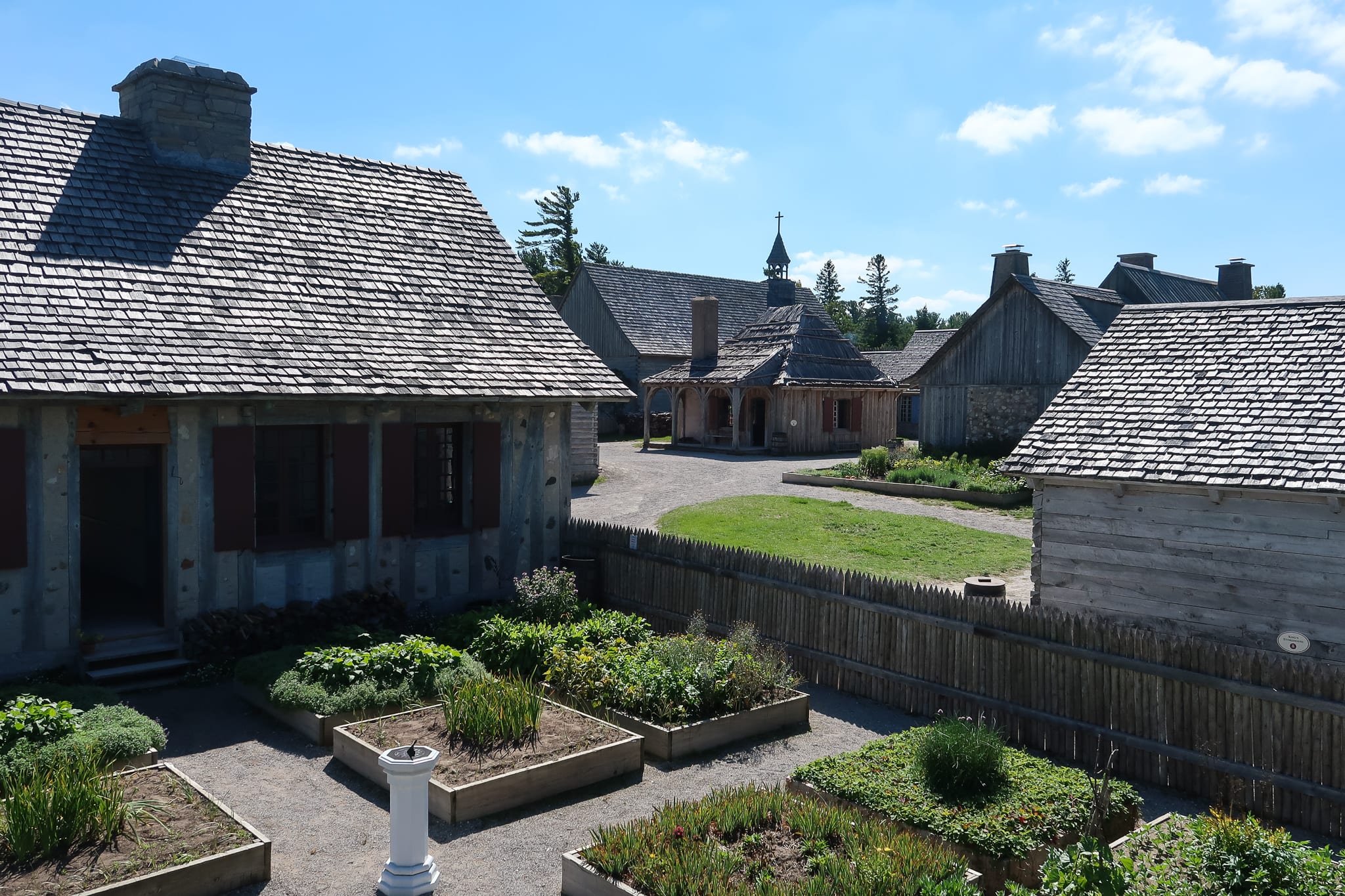
Fort Michimilackinac is a National Historic Landmark in Mackinaw, Michigan. It was built in 1715, and served first as a fort, trading post, and supply depot for the French and later for the British. Today you can explore the myriad of brilliantly restored buildings contemplating a much different way of life in an era lifetimes away. A blacksmith shop (complete with re-enactor) is among the buildings, along with barracks, officers’ quarters, a medical clinic, a chapel, Native American teepees, gardens, and so much more. Old cannons, weaponry, and artifacts are also on display. Get lost in history at Fort Michimilackinac – you might not be able to pronounce it but chances are you will be able to appreciate it!

MackinawLighthouse

Old Mackinac Point Lighthouse

Lots of Lighthouses!

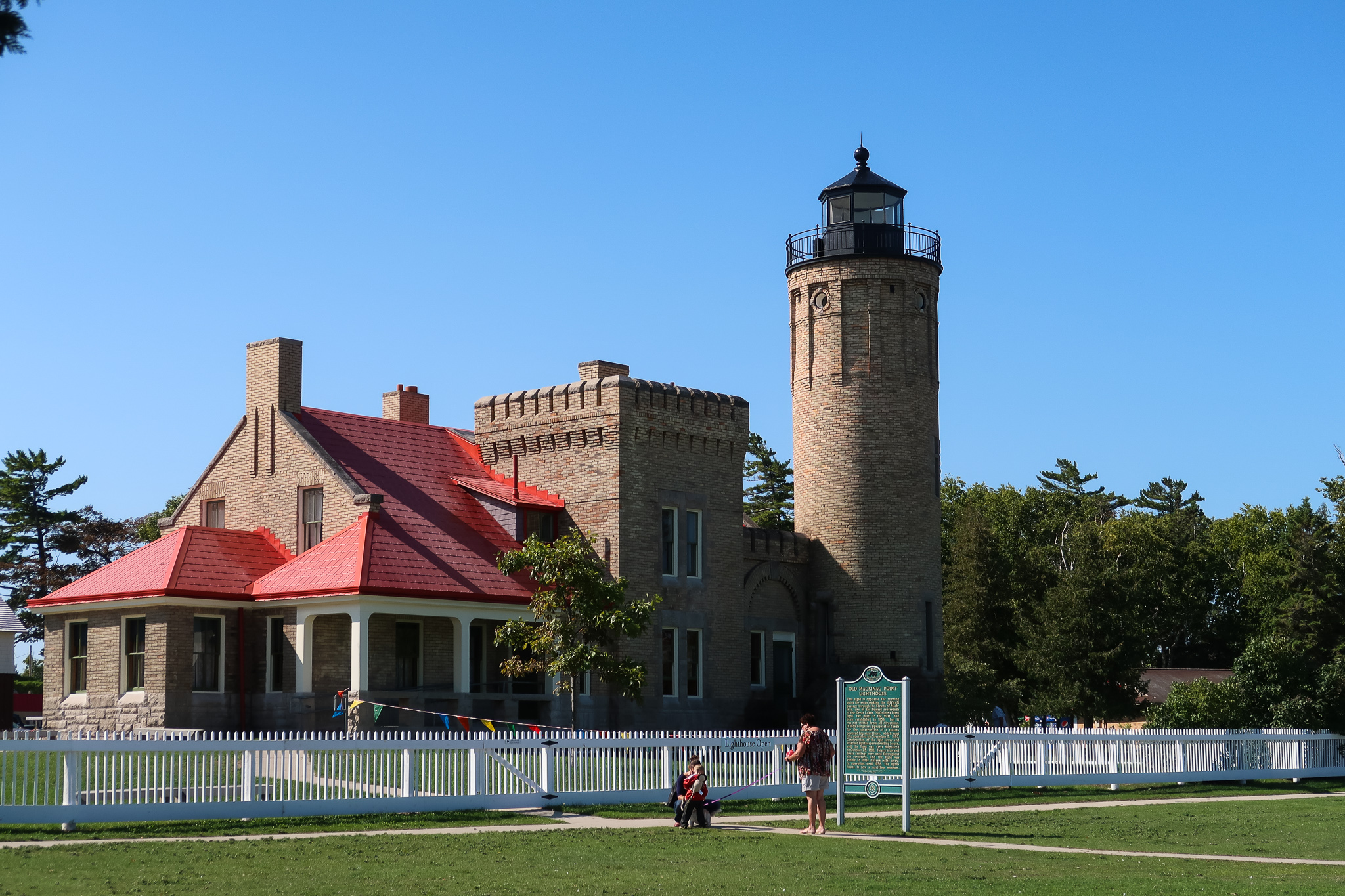
Hardy builders constructed the Old Mackinac Point Lighthouse in 1889. The lighthouse remained in operation until 1957. Durable and resilient, it served many a hard-bitten sailor in the treacherous waters and fierce fog of the Straits of Mackinac. This lighthouse is located next to Fort Michimilackinac in Mackinaw, so it makes a convenient stop during your day at the Fort. You’re welcome to head inside and browse the museum. Signature lighthouse pepper the Michigan coastline far and wide. Visit them and experience Michigan’s rich nautical history!

travelmichigan

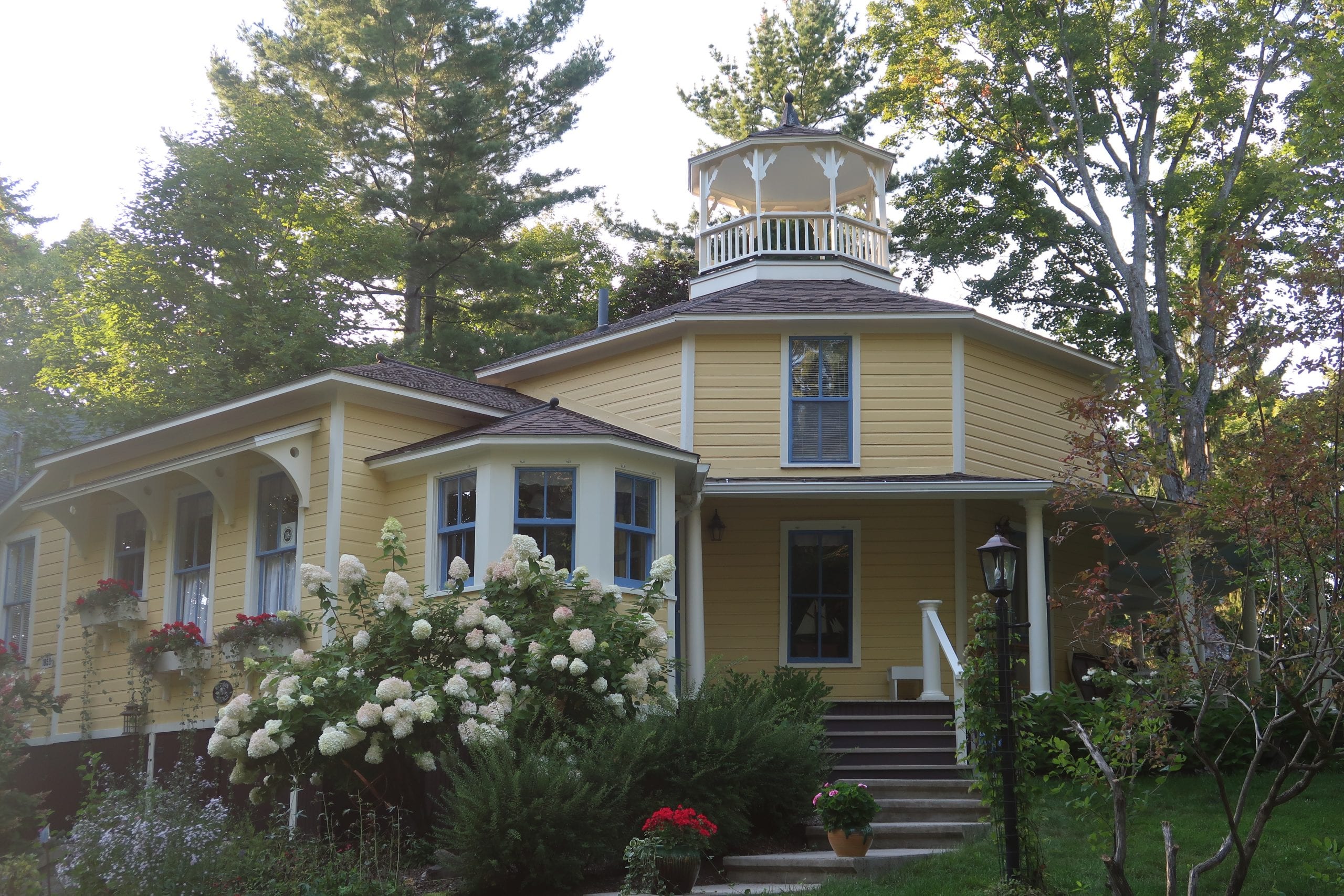
Petoskey Residential Architecture

Victorian Architecture in Petoskey

One of the reasons that road trips are such a great way to travel are the unexpected pleasures you stumble upon just exploring – or, better yet, getting lost on purpose! I have enjoyed some of my most rewarding travel experiences ever this way. Petoskey has an attractive historic gaslight district in town with many buildings from the 1700s and 1800s and quaint cobbled streets and gas lamps. It’s well worth the detour!

Gingerbread Houses

The most fascinating neighborhood in Petoskey is off the beaten path, however. When you get back up into the residential areas you stumble on stopped time – a Victorian village of summer cottages (more like mansions) with the most intricate and ornate detail on each and every colorfully endowed house. The entire neighborhood is completely closed off for the winter, but blossoms in all of its beautiful brilliance again every spring. Don’t be afraid to get lost in Petoskey, and have the chance to enjoy this hidden gem!

travelmichiganorchards

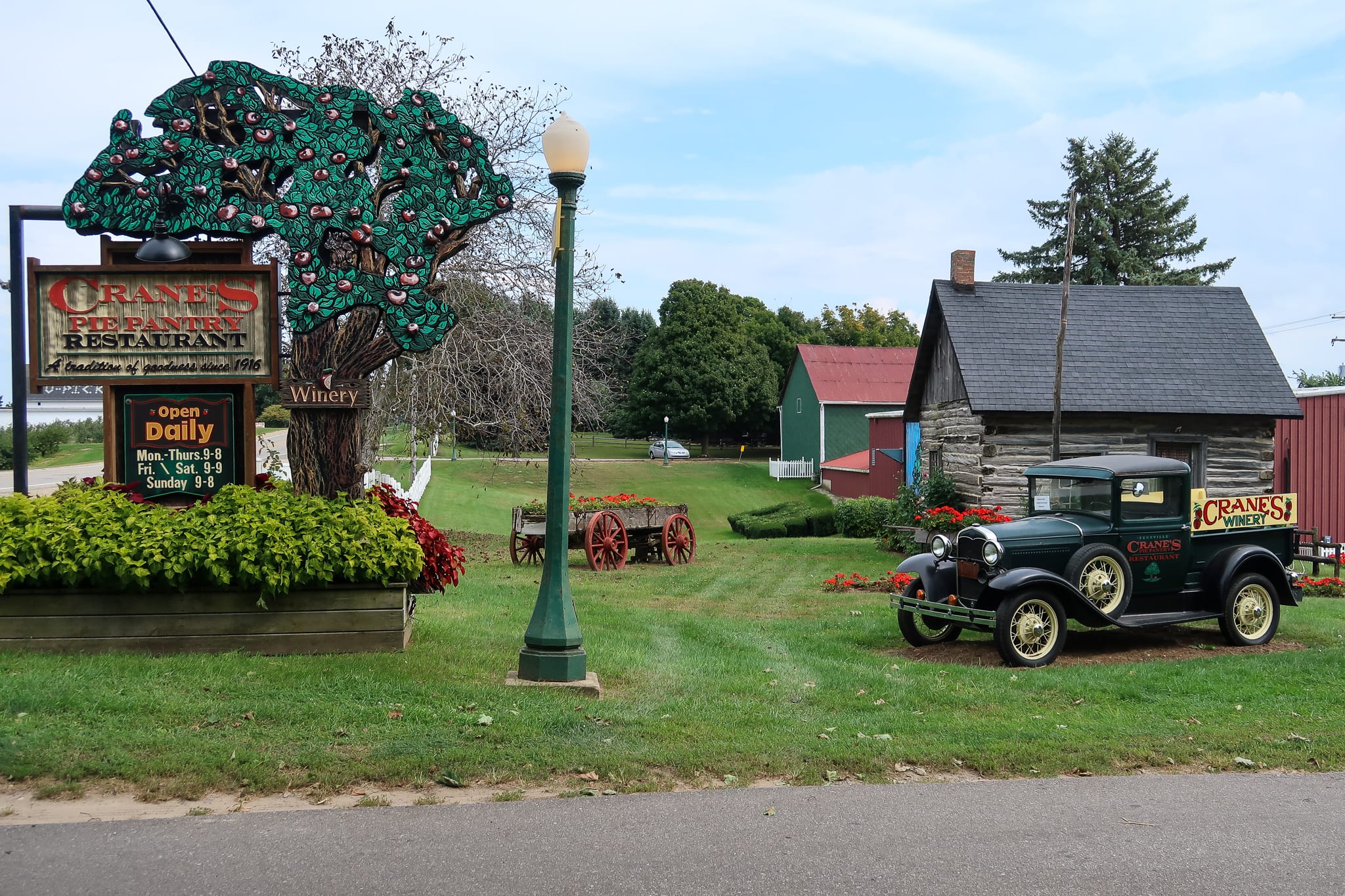
Crane’s Orchards

Apple Orchards

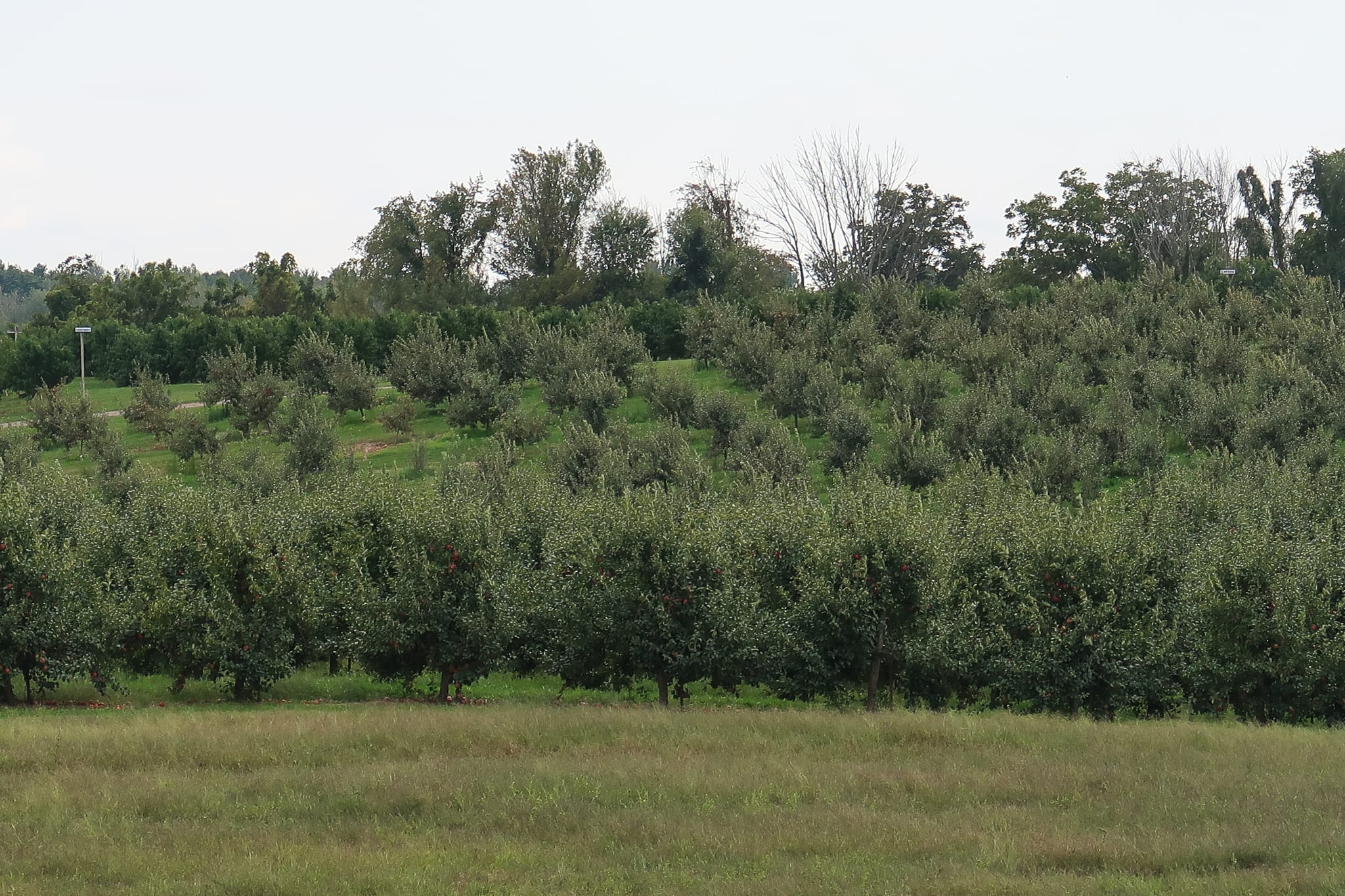
One of my favorite things about Michigan are the apple orchards. Miles of rows of apple trees, cider mill barns, and wineries dot the landscape. Crane’s Apple Orchard in Fennville is one of my favorites. Here you can pick-your-own apples, and you have a choice from many different varieties. My favorite are the Honeycrisp! It was here that I picked the most delectable, delicious, sweet and juicy fresh apples I’ve ever tried in my life. You haven’t had an apple until you’ve picked one fresh in Michigan!

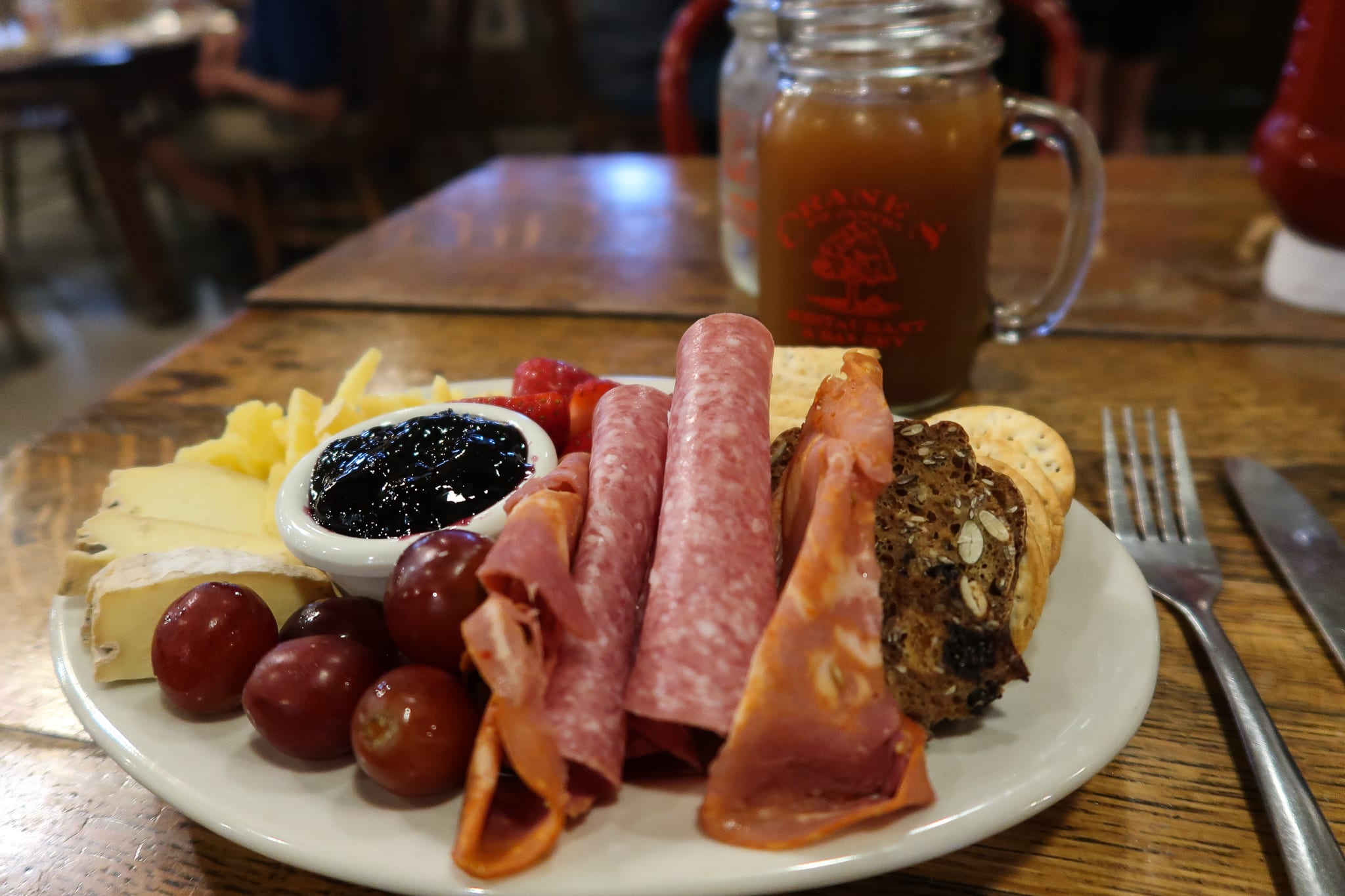
CranesOrchardfood

Local Delicacies!

Delicious Local Delights

When you’re done filling up your apple sack, head over to the restaurant, where you can try a flight of pie (think flight of beer or whiskey – only with fresh-baked pie varieties instead…), fresh milled apple cider, piping hot apple cider donuts (a Michigan specialty!), and many other local delicacies. Many delicious products are grown and produced locally, including a cheese selection from local farms, local fruits and jams, and farmhouse breads. I always advocate experiencing a travel destination with all five senses – and this is the perfect place to do that. The sights, sounds, scents, touches, and tastes are all here to delight.

michiganappleorchards

Apple Orchard

Hard Cider and Wine Tastings

Uncle John’s Cider Mill in St. Johns, Michigan is another great stop on the apple hopping trail. Here you can indulge in a hard cider tasting (or, if you prefer, wine) for free! Servers hand you a menu, and you choose from a variety of hard ciders, wines, and more. And you get to imbibe on a gauntlet of your own selections after that! Uncle John’s produces all of the delicious ciders and wines on-site. I didn’t want the experience to end, so I got some to go! You can also visit Uncle John’s country store. Let your nose guide you to the freshly baked pies and cider donuts. And while you’re there, watch the cider-making process in action with a bird’s-eye view above the small factory. Travel Michigan and stimulate ALL of your senses!

Traverse2

Traverse City

Traverse City

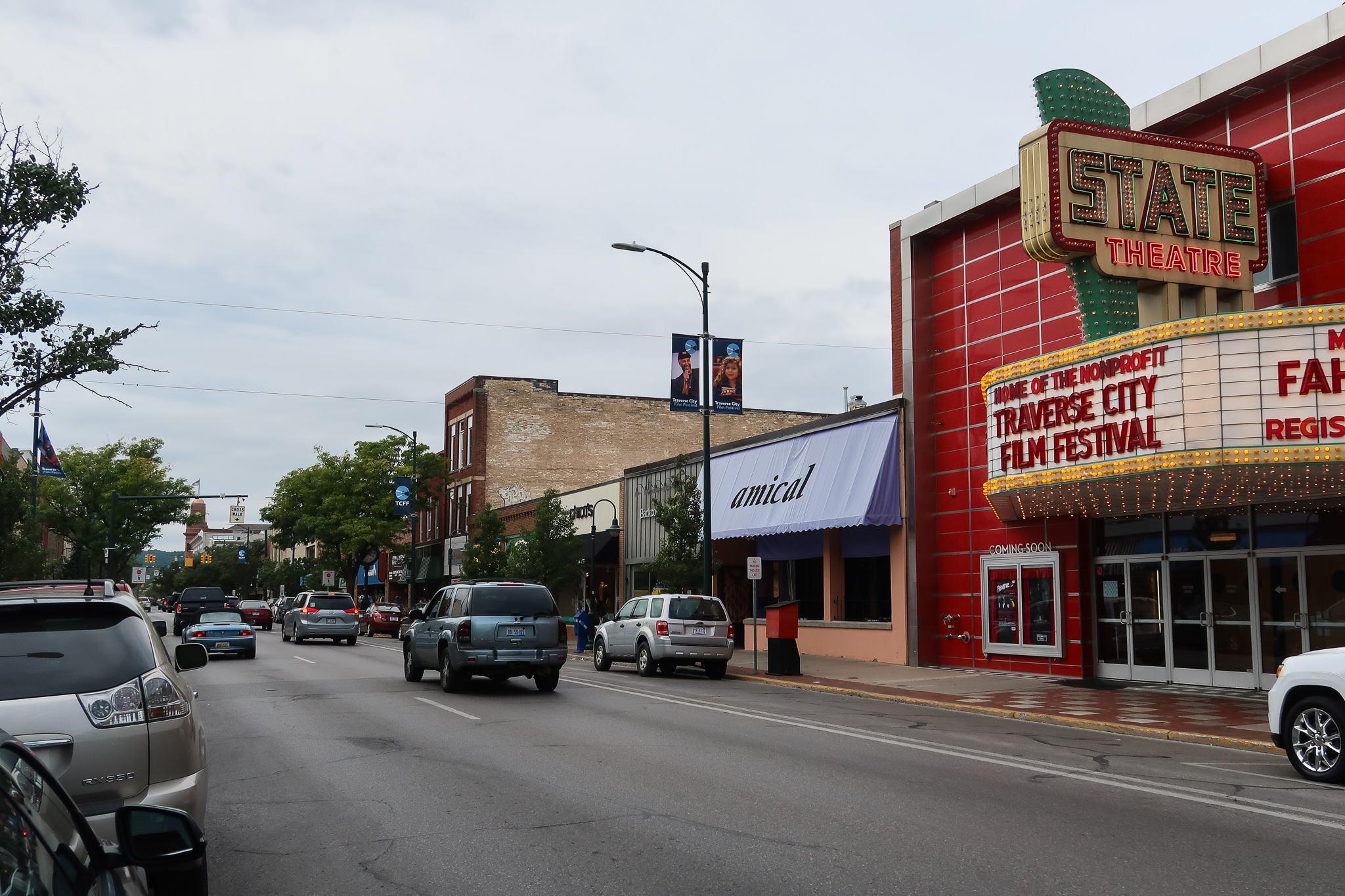
As enthralling as Michigan’s countryside is, you’ll want to venture out into some of the bigger cities, too. Traverse City is the largest city in the northern area of the state, and the largest cherry producer in the country. TripAdvisor has named Traverse City the number 2 “small town travel destination in the U.S.” While I wouldn’t call it a “small town,” more of a small “city,” I would agree it’s a travel destination worth venturing to. The older buildings and quirky shops and pubs are bursting with character, and a stroll along the lake is a great pleasure indeed.

Higgins2

Higgins Lake

Higgins Lake

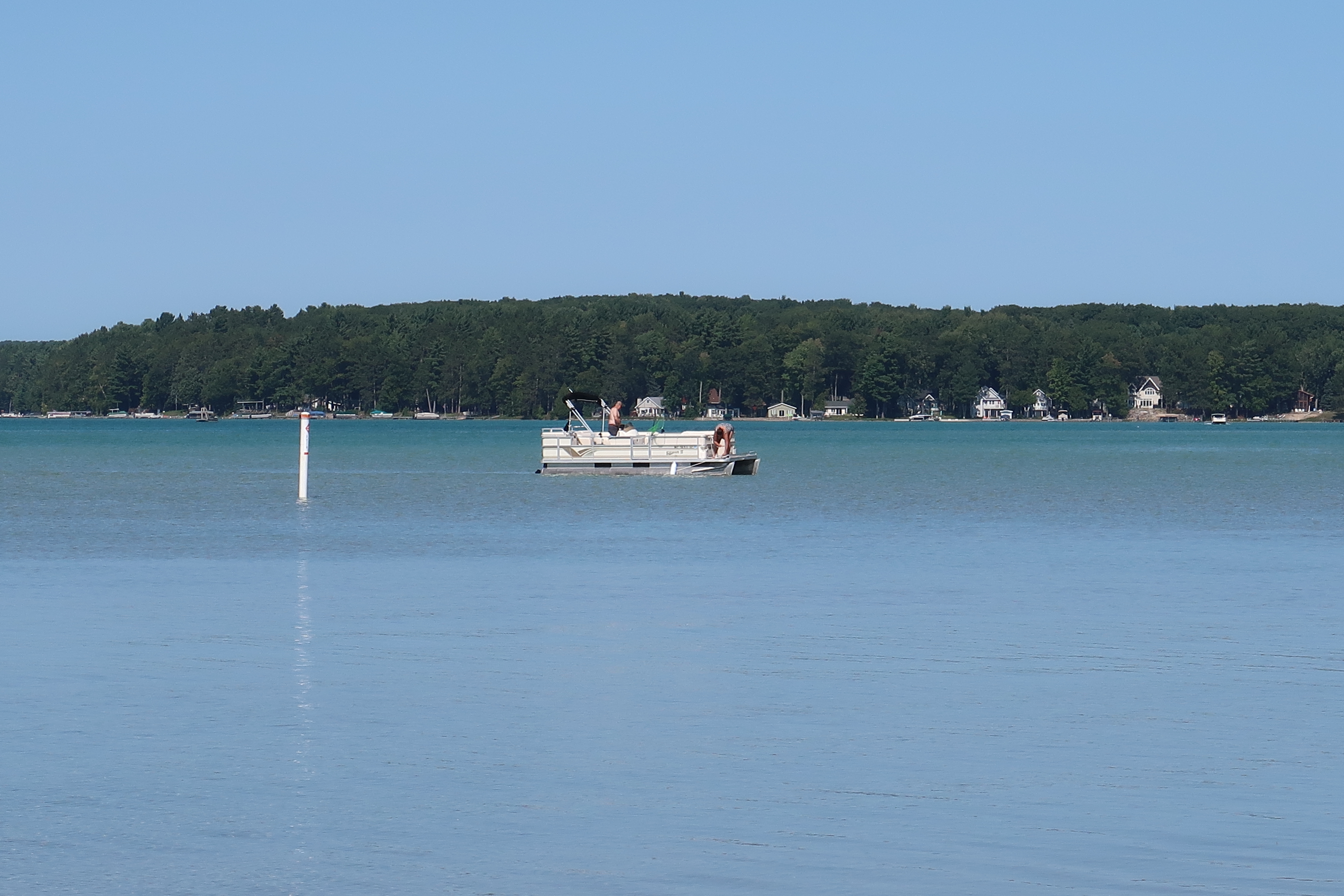
Higgins Lake is another media favorite. National Geographic rated Higgins Lake the 6th most beautiful lake in the world. The shallow waters are ideal for wading near the shoreline, and pontoon boats and jet skis provide playful pastimes here. Dogs particularly love it here, because they can splash and run to their heart’s content without running into a deep end. There is a state park on the shore with public access, where you can just breathe in the fresh air and enjoy the views from swing benches or delight in a peaceful picnic (hopefully with some local Michigan wine!) You will need to buy a $10 day pass at the gate if you’re not a Michigan resident with an annual pass for entry to all of the state parks.

ChocolateFactory

Chocolates by Grimaldi

Chocolate Factory

Chocolates by Grimaldi is a chocolate factory and shop in Grand Haven, Michigan. You can call ahead for a tour of the factory and see how the chocolate is made from scratch. The irresistible aromas will have your mouth watering long before the end of the tour… luckily it comes with a scrumptious goody bag to reward you for your patience at the end! For a fascinating, fun foodie experience be sure to check it out! What a great way to cap things off when you travel Michigan.

tourmichiganroadtrip

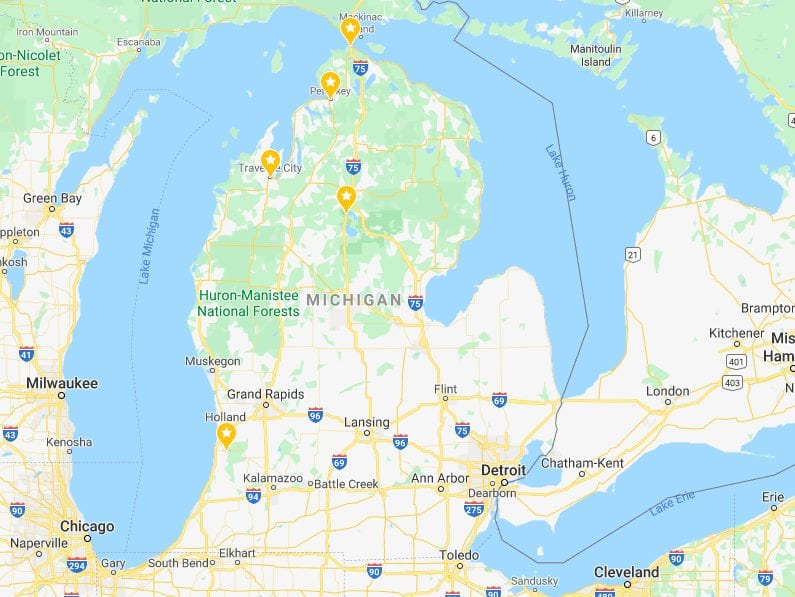
My Recommended Road Trip (courtesy Google Maps)

Travel Michigan and Make your Adventure!

Michigan is one of the best places in the country for a road trip, because so many of its delights are off the beaten path. I love road trips, so I just can’t get enough of marvelous Michigan! Michigan is amazing; it’s one of the United States’ hidden gems! If you haven’t had a chance to check out my other blog posts on Michigan, you can do so here! (I will probably post more Michigan travel soon!)

Michigan Vacation Cabin Tour!

Outdoor Delights in the Upper Peninsula, Michigan!

A German Christmas in Frankenmuth, Michigan!

Also, view the video of my Mainland Michigan Road Trip tour here!:

Finally, check out my Michigan cabin video tour!:

For more great travel adventures, check out my YouTube channel here!:

Ultimate Travel Adventures YouTube Channel