Category: history

Celebrating America in Great Smoky Mountains National Park

Historic colonial water wheel at Cades Cove
Cades Cove Water Wheel

The Great Smoky Mountains

Great Smoky Mountains National Park is undeniably one of the most cherished National Parks in the United States. According to the National Park Service, the Great Smoky Mountains National Park receives more visitors than any other National Park in the country. And this is a particularly impressive feat considering there are 59 National Parks in the system.

In this picturesque Park you will discover many natural wonders, including sweeping vistas, majestic mountains, crystal-clear waters, and wondrous wildlife. The Park straddles the states of Tennessee and North Carolina in the southeastern United States, and spans more than 800 square miles of natural backdrops that bewilder.

Practicing Patriotism in the Park

Visiting our National Parks is an act of patriotism. And Smoky Mountains National Park is a great place to celebrate our country’s beauty and bounty. Here we can reflect on the country we cherish, while surrounded by one of the great reasons why. As Theodore Roosevelt famously said, “Here is your country. Cherish these natural wonders, cherish the natural resources, cherish the history and romance as a sacred heritage, for your children and your children’s children.” Our National Parks are one of our country’s greatest treasures, and, thankfully, one we can pass on from generation to generation.
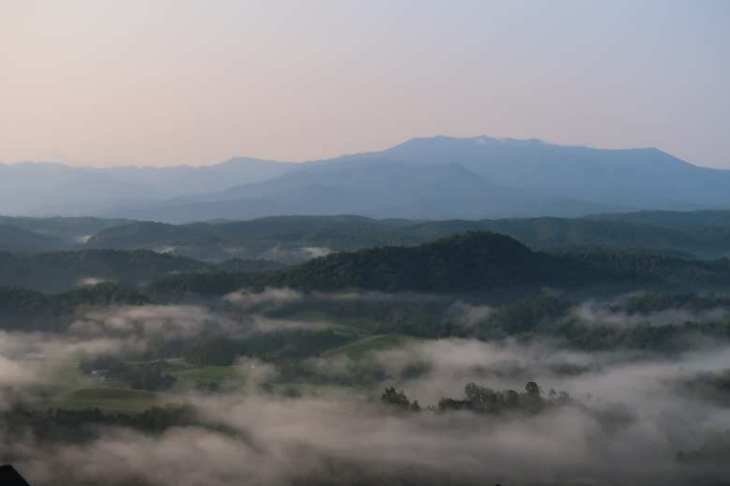
Smoky mountains bathed in morning mist
Typical foggy mountain morning

A Free-for-All

Significantly, Smoky Mountains National Park is one of the only National Parks that remains completely free to visitors, and we have the State of Tennessee to thank for that. The States of Tennessee and North Carolina cooperatively constructed Newfound Gap Road, which runs through the park. They later donated the road to the federal government to be a part of the National Park. As a stipulation to this donation, Tennessee included a deed requirement that “no toll or license fee shall ever be imposed…” as a way to assure their State’s residents would continue to have access to efficient transportation through the area. Presently, everyone has free admission.

Take the Slow Road

On the downside of free admission, the park tends to be very crowded, especially during peak season. But consider the traffic an opportunity to slow down, enjoy the scenery, and meditate on how amazing it is that we can all share in this breathtaking spectacle together! In this fast-paced world, it’s not every day we can stop and smell the pine trees. Occasionally we need to decompress. Amid the peace of the Park, this is possible.

Historic colonial cabin of John Oliver, from 1822
John Oliver Cabin – 1822

Being Steeped in History

The National Park Service explains here that, “One of the best collections of log buildings in the Eastern United States [is here]. Over 90 historic structures – houses, barns, outbuildings, churches, schools, and grist mills – have been preserved or rehabilitated in the park.” (nps.gov) These charming yet rustic structures give a good glimpse of what life was like in the 1800s in the rural South. Not surprisingly, many of these historic cabins and other buildings in the park are registered with the National Register of Historic Places. When you freely explore them inside and out, you can imagine a life in a distant time.

Woman hiking on a forested hiking trail
Hiking heaven

Hit the Hiking Trails

For the energetically-inclined there are an array of hiking trails available. No matter what your preferred difficulty level, there’s a trail here to suit you. They range from short to long, and from easy to challenging. You can plan ahead, as hiking options are listed on the National Park Service’s Smoky Mountains website here. Once on-site, hiking trail maps are conveniently available at the Welcome Center.

Exploring on foot surrounds you with remarkable waterfalls, streaming creeks, and dense forests hosting an encyclopedic variety of trees, many of which are inaccessible by car. A hike here stimulates all of the senses… The spectacular views of the mountains, soothing sounds of bubbling brooks and trees rustling in the wind, plus the pristine smell of pine… there’s truly a feast for the senses to indulge in here.

Want to commemorate the memories of your hike? For $1 you can purchase a book to log your miles. Those who’ve hiked 100 miles or more can share their mileage booklet with the Visitor Center to receive a mileage pin and be immortalized in their “Hike the Smokies” record book.

Giant black bear
Grin and bear it

Black Bears and Other Wildlife

Observing the fascinating antics of the local wildlife is one of the greatest perks of a visit to Smoky Mountains National Park. The Park is most well-known for its black bear population. When you see a log jam of cars parked illegally along the road and no scenic overlook, you can safely assume it’s a makeshift wildlife viewing stop. And if people are looking up into the trees, your first thought might be that they’re bird-watching. But, instead, they are likely viewing black bears: surprisingly highly capable climbers! The National Park Service suggests on their website here that there are approximately 1,500 black bears who call the Park home. Deer and other wildlife are also abundant in the park. Your next furry friend might be around the next bend…

Joy-Riding

With 384 miles of road, there’s plenty of opportunity to get off the beaten path here. Driving is certainly the most efficient way to explore the many historic buildings in the park and enjoy the scenery in two different states. Yet patience is still advised, however. As the most-visited park in the country, the roads and parking areas can get pretty crowded. So you may not be able to make every stop, or may need to repeat your tracks more than once if you don’t want to miss a thing. Savor every minute of it! Auto tour maps are available at the Park’s information center, to help you navigate your way to all of the historic sites, hiking trails, scenic overlooks, facilities, and more.

Cozy Camping

If your idea of a great night’s sleep is a night under the stars breathing in the pristine, pine-scented air, you may want to consider staying in one of the Park’s campsites. Indeed, a variety of options are available depending on your tolerance level for “roughing it.” For the truly adventurous, there are back-country campsites that can only be reached via hiking several miles. Front-country campsites are accessible by car and offer facilities with modern plumbing. Campsites for groups, and others that are able to accommodate horses, are also available should they better suit your needs.

Conclusion

The Great Smoky Mountains are named for the puffy plumes of mist that float freely among their plentiful peaks. Bask in the mist, and the beauty and vitality of our great nation that this charming Park exemplifies. This Park is free, but the scenery is priceless! To find out more about Great Smoky Mountains National Park, you can visit their official website here. If you want to read more from us, check out our last blog post here.
St. Patrick’s Day: History, Traditions, and Global Celebrations

Amazing Landscapes

Celebrating Ireland

Every year on March 17, millions of people around the world celebrate St. Patrick’s Day—a holiday filled with parades, music, green clothing, and festivities honoring Irish culture. What began as a religious feast day dedicated to Ireland’s patron saint has evolved into a global celebration of Irish heritage. From church services in Ireland to massive parades in North America and festivals across Asia and the Caribbean, St. Patrick’s Day illustrates how cultural traditions can spread and transform across the world. This article explores the history of St. Patrick’s Day, the life of the saint it commemorates, and the many ways the holiday is celebrated today.

The Historical Origins of St. Patrick’s Day

St. Patrick’s Day commemorates St. Patrick, the patron saint of Ireland, who lived during the fifth century. Although strongly associated with Irish identity, Patrick was not Irish by birth. Most historical sources indicate that he was born in Roman Britain in the late fourth century. At age sixteen he was kidnapped by Irish raiders and taken to Ireland, where he was enslaved and forced to work as a shepherd. After several years, he escaped and returned to Britain. According to tradition, Patrick later experienced a religious calling that compelled him to return to Ireland as a missionary.¹

Patrick returned to Ireland around 432 CE and spent decades spreading Christianity across the island. He established churches, schools, and monasteries and became one of the most influential figures in early Irish Christianity. Over time, stories and legends about Patrick grew within Irish culture. One famous legend claims he used a three-leaf clover, or shamrock, to explain the Christian concept of the Holy Trinity—Father, Son, and Holy Spirit.² Another popular myth says he drove snakes out of Ireland, though historians consider this symbolic rather than literal.³

Patrick is believed to have died on March 17, around the year 461 CE. The date later became his feast day in the Christian liturgical calendar.⁴ By the ninth or tenth century, Irish Christians were commemorating the day with religious observances, making it one of the earliest traditions associated with the holiday.⁵

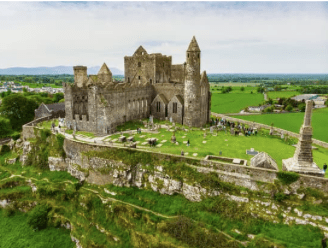
Cozy Castles

Early Religious Celebrations in Ireland

For centuries, St. Patrick’s Day in Ireland was primarily a religious occasion. Families attended church services in the morning and spent the rest of the day with modest celebrations. Because the feast day occurred during the Christian season of Lent—a time traditionally marked by fasting and restrictions on eating meat—the church allowed those restrictions to be lifted for the day. As a result, families often celebrated with special meals, typically featuring Irish bacon and cabbage.⁶

Interestingly, some aspects of the modern holiday were absent from early Irish celebrations. Parades, large public festivals, and widespread drinking were not traditional features in Ireland until relatively recently. In fact, Irish law required pubs to close on March 17 until 1970, reinforcing the holiday’s religious character.⁷

Over time, however, the meaning of the holiday began to change—largely due to Irish emigrants abroad.

The Role of the Irish Diaspora

Irish migration, particularly to North America, played a crucial role in transforming St. Patrick’s Day from a religious observance into a large cultural celebration. Irish immigrants in the United States used the holiday as a way to express pride in their heritage and maintain a connection to their homeland.

The first recorded St. Patrick’s Day parade did not occur in Ireland but in the Spanish colony of St. Augustine, Florida, in 1601.⁸ Later, Irish soldiers serving in the British army marched in New York City in 1762 to honor their patron saint. These early parades gradually evolved into annual celebrations organized by Irish community groups.

During the nineteenth century, waves of Irish immigrants—particularly those fleeing the Great Famine—arrived in North America. Many faced discrimination and poverty, and public celebrations of St. Patrick’s Day became a way to demonstrate unity and cultural pride. By the mid-1800s, cities such as Boston, New York, Chicago, and Philadelphia were hosting large parades and community gatherings.⁹

Today, the New York City St. Patrick’s Day Parade is considered the largest in the world, drawing more than 150,000 participants and millions of spectators each year.¹⁰

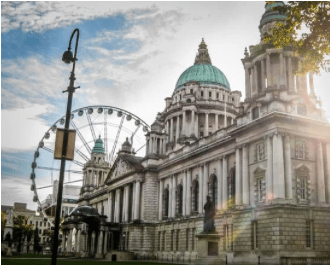
Spectacular Cities

Symbols and Traditions

Several well-known symbols are closely associated with St. Patrick’s Day.

The Color Green

Green has become the dominant color of the holiday, although historically blue was originally associated with St. Patrick. Over time, green became linked to Irish nationalism and the lush landscape of Ireland, often called the “Emerald Isle.”¹¹ Wearing green clothing on March 17 is now one of the most recognizable traditions of the holiday.

The Shamrock

The shamrock remains one of the most enduring symbols of St. Patrick’s Day. According to legend, Patrick used the plant’s three leaves to explain Christian theology. Today it represents Irish identity and heritage.¹²

Leprechauns and Folklore

Irish folklore also contributes to the imagery of the holiday. Leprechauns—small mythical shoemakers said to guard hidden pots of gold—are often featured in decorations and popular culture. While they are not directly connected to St. Patrick historically, they have become a playful part of the holiday’s imagery.

Food and Drink

Traditional foods associated with St. Patrick’s Day include Irish soda bread, champ (mashed potatoes with butter and green onions), and corned beef with cabbage—especially popular in North America.¹³ Drinking Irish beer or whiskey is also common, although this aspect developed largely in diaspora communities.

St. Patrick’s Day in Ireland Today

Modern celebrations in Ireland combine religious tradition with cultural festivities. Many people still attend church services on the morning of March 17, particularly in smaller communities. However, the holiday now includes large public events such as parades, music performances, and cultural festivals.

In 1995, the Irish government launched the St. Patrick’s Festival in Dublin to promote tourism and showcase Irish culture to the world. The multi-day festival includes parades, concerts, historical exhibitions, and community events.¹⁴ The main parade attracts hundreds of thousands of spectators each year and features elaborate floats, performers, dancers, and marching bands.

Other Irish cities, including Cork, Galway, and Limerick, also host major celebrations.

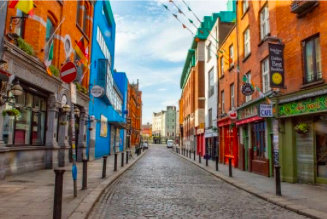
Charming Towns

Global Celebrations

Today, St. Patrick’s Day is celebrated in more countries than almost any other national holiday. The global reach of Irish migration and culture has transformed the event into an international festival.

North America

The United States and Canada host some of the largest celebrations outside Ireland. Major cities organize parades, cultural festivals, and public gatherings.

Chicago is famous for dyeing the Chicago River green each year, a tradition that began in 1962 when city workers discovered that dye used to trace pollution could also create a festive effect.¹⁵ Montreal hosts one of the oldest St. Patrick’s Day parades in North America, dating back to 1824.¹⁶

Europe

Across Europe, cities with Irish expatriate communities host parades and festivals. London, Munich, and Paris all organize large St. Patrick’s Day celebrations featuring Irish music, dance, and food.

Asia and Oceania

The holiday has spread far beyond traditional Irish diaspora regions. Tokyo has hosted St. Patrick’s Day parades since 1992, organized partly by Japanese enthusiasts of Irish culture.¹⁷ Similar celebrations occur in Singapore, Seoul, and Sydney.

The Caribbean

One of the most unique celebrations occurs on the Caribbean island of Montserrat. Because of its strong Irish heritage dating to the seventeenth century, the island hosts a week-long St. Patrick’s festival that blends Irish and Afro-Caribbean cultural traditions.

Global “Greening”

In recent years, landmarks around the world have participated in a symbolic “greening” campaign, illuminating famous sites with green lights. Structures such as the Sydney Opera House, the Eiffel Tower, and Niagara Falls have all been lit green in honor of the holiday.

A Global Cultural Celebration

What began as a religious feast day in medieval Ireland has become one of the most widely celebrated cultural holidays in the world. St. Patrick’s Day now represents not only the legacy of a fifth-century missionary but also the enduring influence of Irish culture across continents.

The transformation of the holiday demonstrates how traditions evolve as communities migrate and adapt to new environments. Irish immigrants helped reshape St. Patrick’s Day into a public celebration of identity and heritage, while modern globalization has turned it into a worldwide festival of music, culture, and shared joy.

Whether through attending a parade, wearing green, sharing traditional foods, or simply learning about Irish history, people across the globe participate in this annual tribute to Ireland’s patron saint and the vibrant culture he came to symbolize.

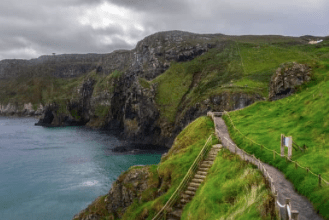
Lucious Landscapes

References (Chicago)

Britannica Editors. “St. Patrick’s Day.” Encyclopaedia Britannica. Last updated December 20, 2025. https://www.britannica.com/topic/Saint-Patricks-Day

History.com Editors. “History of St. Patrick’s Day.” History.comhttps://www.history.com/topics/st-patricks-day/history-of-st-patricks-day

History.com Editors. “St. Patrick’s Day Traditions and Origins.” History.comhttps://www.history.com/articles/history-of-st-patricks-day

“Saint Patrick.” Wikipediahttps://en.wikipedia.org/wiki/Saint_Patrick

“Saint Patrick’s Day.” Wikipediahttps://en.wikipedia.org/wiki/Saint_Patrick%27s_Day

Cronin, Mike. “St. Patrick’s Day Is the Most Global National Holiday.” TIMEhttps://time.com/3746018/st-patricks-day-global/