Introduction
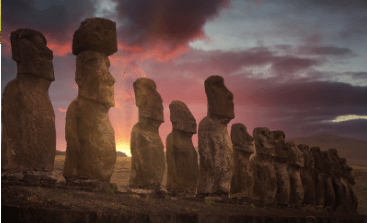
Located in the southeastern Pacific Ocean, Easter Island—known locally as Rapa Nui—is one of the most isolated inhabited places on Earth. Situated roughly 3,700 kilometers west of mainland Chile, the island is famous for its mysterious moai statues, monumental stone figures carved centuries ago by the island’s early inhabitants. Today, Easter Island is both a UNESCO World Heritage Site and a fascinating travel destination where archaeology, Polynesian culture, and dramatic landscapes converge.
For travelers, the island offers a unique combination of history, natural beauty, and cultural heritage. This blog post explores the history of Easter Island and highlights the most important places visitors should see when exploring this extraordinary location.
The Early History of Easter Island
Archaeological evidence suggests that Easter Island was first settled by Polynesian voyagers sometime between 300 and 1200 CE. These settlers likely arrived in large seafaring canoes from other islands in the Polynesian triangle. Once established, they developed a unique culture largely isolated from outside influences.
Over several centuries, the inhabitants of Rapa Nui built a complex society characterized by monumental architecture and elaborate religious traditions. The most iconic creations of this civilization are the moai, enormous stone statues carved from volcanic rock. From approximately the 10th to the 16th centuries, the Rapa Nui people carved hundreds of these statues and erected them on ceremonial platforms known as ahu.
The moai typically represent deified ancestors or important leaders. Facing inland toward villages, they were believed to protect communities and channel spiritual power known as mana. Today, nearly 900 moai statues are known to exist across the island, forming one of the most remarkable archaeological landscapes in the world.
Despite the achievements of the early Rapa Nui society, the island experienced significant internal conflict and social change. Oral histories and archaeological evidence indicate that civil wars and shifts in political power led to many moai being toppled from their platforms. Some sites were later restored in modern times.
The island came into contact with Europeans in 1722, when Dutch explorer Jacob Roggeveen arrived on Easter Sunday, giving the island its modern name. Over the following centuries, outside contact, disease, slave raids, and colonial pressures dramatically affected the indigenous population. Eventually, the island was annexed by Chile in 1888, and today it remains a special territory of the country while retaining a strong Indigenous cultural identity.
Rapa Nui National Park: A Living Cultural Landscape
Much of Easter Island is protected within Rapa Nui National Park, a UNESCO World Heritage Site that preserves the archaeological and cultural remains of the ancient Rapa Nui civilization. The park contains hundreds of ceremonial platforms, agricultural structures, and moai statues spread across a dramatic volcanic landscape.
The island itself is triangular and shaped by extinct volcanoes, including Terevaka, Poike, and Rano Kau. Rolling grasslands, rugged coastlines, and volcanic craters create a striking natural setting for the archaeological sites. Visitors exploring the park can experience not only ancient monuments but also the environmental context that shaped Rapa Nui culture.
Major Historical and Archaeological Attractions
Ahu Tongariki
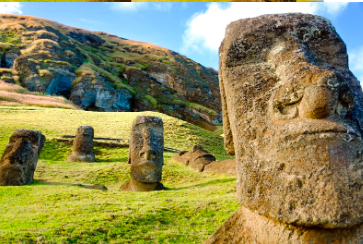
Ahu Tongariki is the largest ceremonial platform on Easter Island and one of the most impressive sights for travelers. The site features 15 massive moai statues standing in a row facing inland.
Historically, this location served as the political and ceremonial center for the Hotu-iti clan. During periods of internal conflict, the statues were knocked over, and in 1960 a tsunami caused by an earthquake in Chile pushed them inland. A major restoration project in the 1990s returned the moai to their current positions.
For visitors, sunrise at Ahu Tongariki is considered one of the most memorable experiences on the island. As the sun rises over the Pacific Ocean, it illuminates the towering statues, creating a powerful and unforgettable view.
Rano Raraku Quarry
Rano Raraku is the volcanic quarry where most of the island’s moai were carved. Here visitors can see dozens of statues in various stages of completion—some partially buried, others still attached to the bedrock.
The quarry provides valuable insight into the production process of the statues. Craftspeople carved the moai from volcanic tuff using stone tools before transporting them to ceremonial platforms across the island. Modern research suggests that the statues may have been “walked” upright using ropes and coordinated movements.
This site is often considered the most important archaeological location on the island.
Orongo Ceremonial Village
Located on the rim of the Rano Kau volcanic crater, Orongo is a stone ceremonial village associated with the famous Birdman cult. The site consists of dozens of low stone houses built along dramatic sea cliffs.
The Birdman ritual was a major religious competition in which representatives from different clans attempted to retrieve the first egg of a migratory seabird from nearby islets. The winner’s sponsor would gain political and spiritual authority for the year.
Today, visitors can walk among the restored stone houses while enjoying spectacular views of the crater lake and the Pacific Ocean.
Anakena Beach
Anakena is one of the few sandy beaches on Easter Island and holds both historical and recreational importance. According to Rapa Nui tradition, this was the landing place of Hotu Matu’a, the legendary Polynesian chief who founded the first settlement on the island.
The beach is also home to restored moai on the platform Ahu Nau Nau, making it one of the most photogenic sites on the island. Visitors often combine sightseeing with swimming or relaxing beneath the palm trees.
Father Sebastian Englert Anthropological Museum
Travelers interested in learning more about Rapa Nui culture should visit the Father Sebastian Englert Anthropological Museum in the town of Hanga Roa. The museum houses thousands of artifacts related to the island’s archaeology, language, and traditions, including items associated with the mysterious rongorongo script.
Exhibits help visitors understand the cultural significance of the moai, the island’s settlement history, and the challenges faced by the Rapa Nui people during the colonial period.
Travel Tips for Visiting Easter Island
Traveling to Easter Island requires careful planning because of its remote location. Most visitors arrive by flight from Santiago, Chile, which takes about five hours. The island’s main town, Hanga Roa, serves as the hub for accommodations, restaurants, and tour services.
Some helpful travel tips include:
- Rent a car or bike: Many archaeological sites are spread across the island, making independent exploration easier.
- Purchase a national park ticket: Most historical sites are within Rapa Nui National Park.
- Hire local guides: Indigenous guides can provide valuable cultural context and stories behind the monuments.
- Respect cultural heritage: The moai are sacred ancestral symbols for the Rapa Nui people.
Conclusion
Easter Island is far more than a collection of mysterious statues. It is a living cultural landscape shaped by centuries of Polynesian history, spiritual traditions, and remarkable engineering achievements. From the imposing moai of Ahu Tongariki to the dramatic cliffs of Orongo and the tranquil sands of Anakena Beach, the island offers a unique travel experience unlike any other destination on Earth.
For visitors willing to journey to one of the world’s most remote islands, Easter Island provides a rare opportunity to explore ancient history while witnessing the enduring culture of the Rapa Nui people.
References (Chicago)
Flenley, John, and Paul Bahn. The Enigmas of Easter Island: Island on the Edge. Oxford: Oxford University Press, 2003.
UNESCO World Heritage Centre. “Rapa Nui National Park.” Accessed March 2026.
Wikipedia contributors. “Rapa Nui National Park.” Accessed March 2026.
Wikipedia contributors. “Ahu Tongariki.” Accessed March 2026.
Wikipedia contributors. “Orongo.” Accessed March 2026.
Wikipedia contributors. “Anakena.” Accessed March 2026.
Wikipedia contributors. “Father Sebastian Englert Anthropological Museum.” Accessed March 2026.
EasterIsland.travel. “Rapa Nui National Park: Protection, Heritage, and Living Culture.” Accessed March 2026.
 Ultimate Travel Adventures