Category: Opinion

Camera Bans in Museums Violate the Concept of Art!


castle edit 2

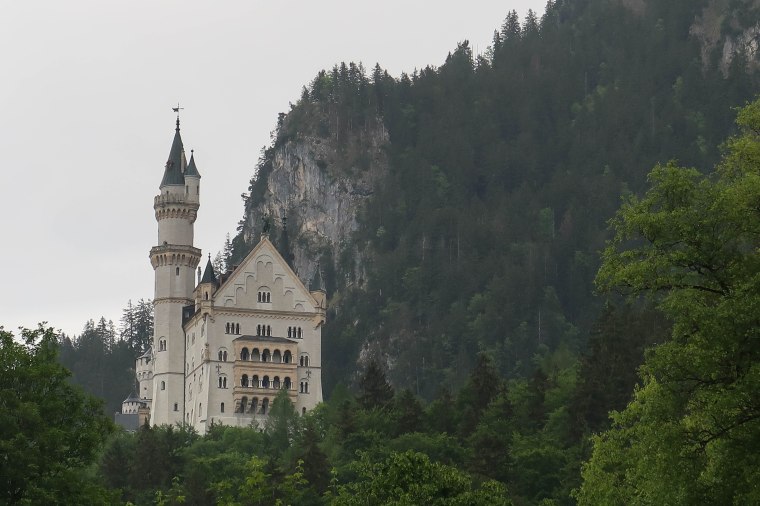
Castle in Germany: No photography of any kind allowed inside

In a number of museums, cameras and filming are not allowed – and the restriction is not limited only to flash cameras. Every attempt I make at grasping the logic in this results in failure. In some instances, it is argued that if people have had a chance to see what the place looks like in film or photograph, the motivation to visit in person will be gone. Yet these museums allow film crews of travel television shows to visit – eliminating any validity in this argument. If being able to see the place in advance in photo and film reduces peoples’ desire to visit then why not restrict ALL photo and filming? On the contrary, I think being able to see a “teaser,” which is all a photo or film can give you – it will never be quite the same as an in-person visit – only makes people even more motivated to visit.

Enjoying a destination on film or photograph is a very worthwhile experience. I get tremendous pleasure out of binge-watching “Rick Steves’ Europe” or thumbing through picture books of exciting destinations. But comparing that experience to an actual visit is akin to comparing apples to oranges. They are not the same thing.

It has put a great damper on my experience visiting a place to find out I cannot capture the experience in photos and film. Sure, I can “remember” what I saw, but not in the same vivid way I can relive the experience watching video I filmed live. Memories may last, but memories fade. That which is digitally captured can be enjoyed and shared throughout a lifetime.

The enjoyment and sharing of digital media which captures our travel memories inspires and promotes travel. ALL museums should be open to allowing cameras, and should also educate their staff on camera equipment. More than once I’ve had museum staff think my stabilizer was a “selfie stick” and ban it for that reason, because selfie sticks are not allowed. This only further displays a lack of understanding of the photographic arts, and appreciation of it as an art form. If anyone should appreciate an art form, shouldn’t it be a museum?

Yes, it’s true that some flash photography can damage sensitive works of fine art. For this reason, I can understand a ban specifically on flash photography. Other forms of photography should be allowed in these cases.

Video and film of travel excites the sense of sight, and, in the case of film, sound. But it cannot capture that which we experience with our other senses. We can never truly be immersed in a place without exploring it in person, first hand. Photos and film, while a very enjoyable indulgence, and great introduction to the places we are considering visiting, can never replace actually going. Why do so many museums feel threatened that this will happen?

I think it’s more about museums making money in their gift shops than a concern about losing future visitors or damaging the art. The one argument that probably does hold true is that if you took a picture of something in the museum, you are less likely to buy the postcard. But if this is the concern then why not just offer a photography “pass” for an additional charge?

Camera bans in museums disrespect the whole concept of art. Great art promotes interactivity with its viewer: reaction, response, discussion, and sharing. It’s all about the iconography or message. Art is not ultimately meant to be hidden away and forgotten, but exposed and contemplated, and endowed with as many divergent viewpoints as possible! Ironic that so many museums don’t “get” the whole point of art (or, worse, don’t care)!

I want to challenge the museums that currently ban photography and filming to reconsider. Readers please leave your comments below whether you agree or disagree!

Back to my travels soon – I’m still away from my home office (and most of my photography equipment and media) attempting to sell this house out of state, where what I anticipated to be a 3 day venture has morphed into over 3 weeks!

Hope you are having a great new year!
Graffiti Critique: Staining Europe’s Beautiful Landscape

IMG_0638

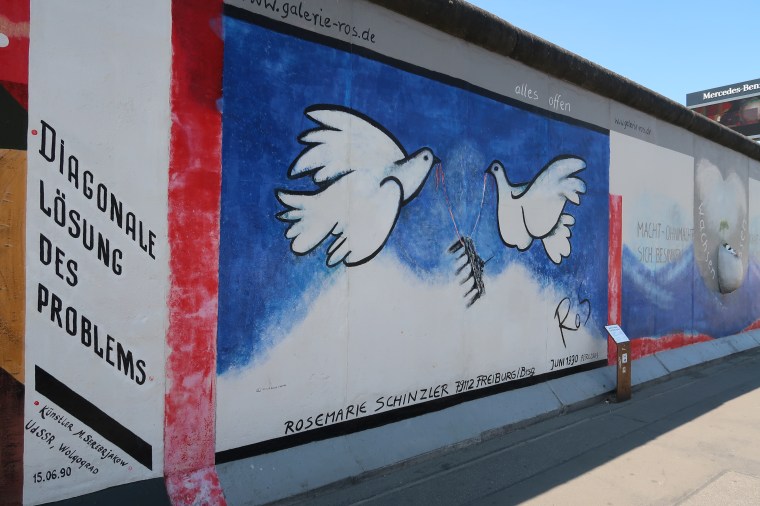
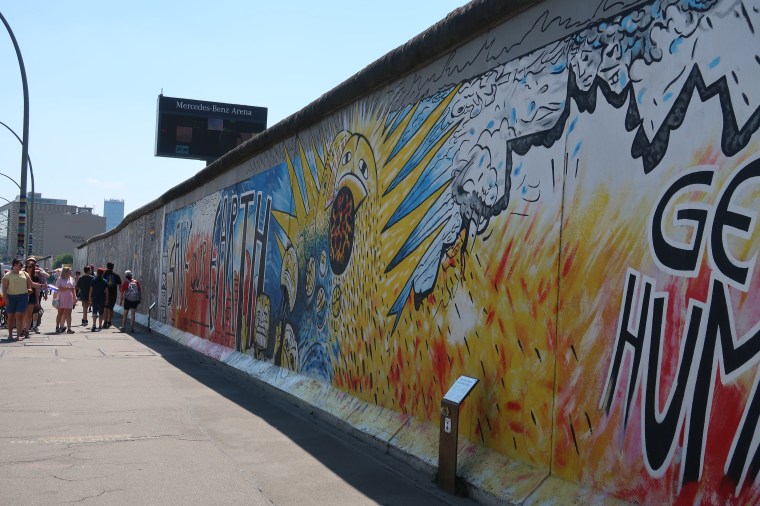
“Good” graffiti on the Berlin Wall

There is “good” graffiti and “bad” graffiti. But most of it is bad, and the problem is rampant in Europe these days! I thought the U.S. had a graffitti problem… until I returned to Europe after a long hiatus – and found it virtually unrecognizable. In the U.S., you see graffitti mostly on abandoned and condemned buildings on the outskirts, in decaying neighborhoods, and around subway and bus terminals in some, not all, cities. Across Europe, it seems, these hoodlums are happy to leave their mark anywhere and everywhere – including around historic sights, tourist neighborhoods, and the formerly pristine countryside.

IMG_0639

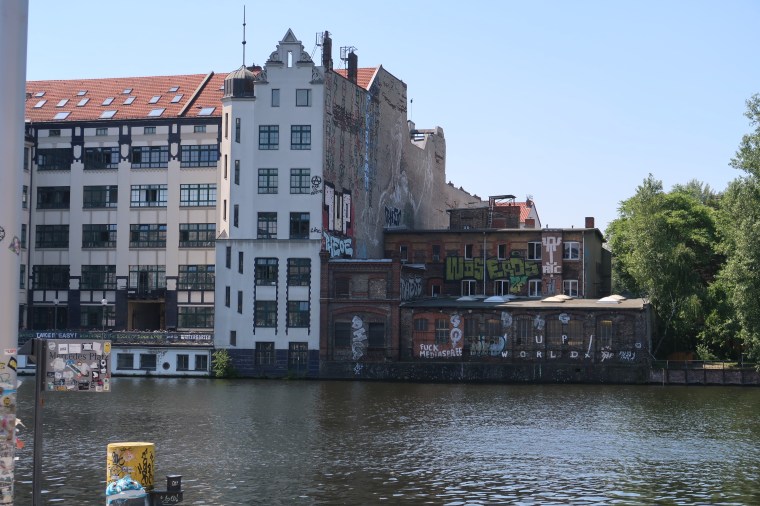
“Bad” graffiti across the river from the tourist-mobbed Berlin Wall

As an Art History major in college, most graffiti really offends my sense of aesthetic sensibility. I can’t believe there’s actually a raging debate about whether it’s o.k. because “it’s freedom of expression!” and “it’s art!” If you buy a building and spray paint it until your heart’s content, or you paint where it is allowed, that qualifies as self-expression and may even qualify you as an artist. But when you deface property that is not your own and without permission, you are a criminal, not an artist. And, frankly, even if it were art, that still wouldn’t give you the right to alter another’s property without permission! Yet there are a number of articles on the internet suggesting this is actually a debatable topic.

Another “argument” given by some is that the practice of grafitti is ancient, and that there is ancient grafitti which is considered art to us today. As a student of Art History, I agree that due to its historic value and cultural insight, ancient “graffiti” certainly is art. But we do not live in Ancient Rome today, and we were not there, as much as we may have studied and know about Ancient history. Their culture was different – and their laws. Just because something was acceptable then does not automatically make it acceptable now. That goes for grafitti, slavery, a lower status for women, and butchering animals in the arena. I’m fascinated by Ancient Rome, but Roman society has its place in Ancient history. Would these same people who argue grafitti is ok now because it was ok then say the same of these other activities? Their argument is deeply flawed.

IMG_0592

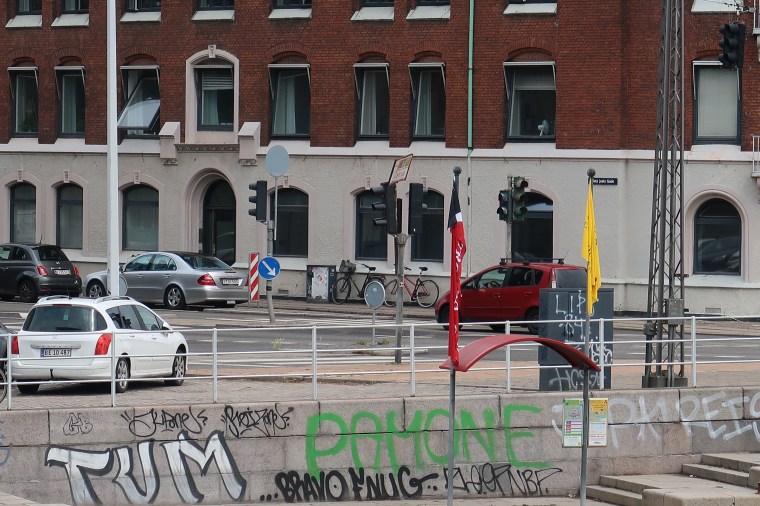
“Bad” graffiti steps away from Kronborg Castle deep in Copenhagen’s tourist district

I wonder why the graffitti isn’t removed and I ponder whether, perhaps, the problem is so rampant that building and other property owners have just given up. I wonder how many times they removed the offending marks just to have them turn up again?

I believe there IS a place for graffitti, and I believe it can be art. There are locations where the spray painting has been allowed – in confined areas where it is not imposing on another’s personal property, or on a person’s appropriate use of property (such as when grafitti “artists” paint over train windows obstructing the view of customers who paid 4.50 Euros for reserved window seats…!) The Berlin Wall is an ideal (and rare) example of the positive impact graffiti can have on a structure.

IMG_0640

Graffiti as art on the Berlin Wall

In the U.S., unless a building is abandoned, in many cases an owner will expeditiously remove unwelcome graffiti. It sends a message that this behavior is not tolerated. In Europe, I fear that by not responding, the opposite message is being sent, potentially making the problem even more rampant. Europe is already buried under the weight of the blanket of graffiti everywhere you look.

IMG_0668

Berlin’s Holocaust Memorial’s gray blocks – covered in anti-graffiti coating

The Holocaust Memorial in Berlin shows that on some large-scale projects, efforts are being taken to deter the graffiti scourge. The memorial is covered in anti-graffiti coating, and the gray color resists shadowing. I hope other civil engineering projects in Europe will follow suit with this defense against the graffiti that threatens the integrity of our treasured monuments.

I understand that property owners may be concerned the graffiti will just come back, and are hesitant to spend the money for removal for that reason. That is why the government needs to step in and make penalties far more severe for the defacement of private property. Perhaps then owners would be more inclined to respond, and “taggers” would be less inclined to repeat their bad behavior.

Donation

I am extremely grateful for your generous donation to help keep the site running! This site and individual posts are not sponsored! A dollar may not be a lot, but every dollar counts!

$1.00

How do you feel about the graffiti covering the landscape of Europe? Comment below!